
Haftungsverpackung
- Calendar blister formats with clear day-by-day dosing cues
- Easy-open cold seal wallets accessible for elderly and dexterity-impaired patients
- Proven to improve medication adherence by up to 30%


Half of your patients are not taking their medication as prescribed. The right packaging changes that.
Medication non-adherence affects approximately 50% of patients with chronic conditions across Europe, contributing to an estimated 200,000 preventable deaths per year and costing healthcare systems between EUR 80 and 125 billion annually. The consequences for pharmaceutical companies are equally severe: poor patient outcomes, higher hospitalisation rates, and lost revenue from unfilled prescriptions.
Adherence packaging addresses this directly. By integrating dosing schedules, calendar layouts, and clear visual cues into the primary pack, your packaging becomes an active part of the treatment. Patients see at a glance whether they have taken today's dose. Complex multi-drug regimens become manageable. Ecobliss has designed adherence packaging solutions since 1996, creating a unique design for every single project. As the inventor of cold seal wallet technology, we offer a format that combines dosing guidance, patient instructions, and medication in one compact, easy-to-open pack.

Cold seal wallet technology: invented by Ecobliss, built for adherence.
Our cold seal technology uses pressure instead of heat to seal blister packs. This protects temperature-sensitive compounds and enables printed wallet panels that integrate calendar dosing layouts, safety instructions, and patient information directly alongside the medication. The water-based, solvent-free adhesive is fully recyclable with the cardboard component, supporting your sustainability goals without compromising functionality.
The easy-open mechanism is critical for adherence. Unlike conventional push-through blisters that require significant force, cold seal wallets open with minimal effort, making them accessible for elderly patients and those with reduced dexterity. Combined with tamper-evident design and optional child-resistant features through our patented Locked4Kids platform, certified for both EU and US markets, you get a pack that is safe, accessible, and effective. 90% of our clients choose cold seal for exactly these reasons.
 Speak with our adherence packaging specialists
Every therapeutic area has different adherence challenges. We design for yours.
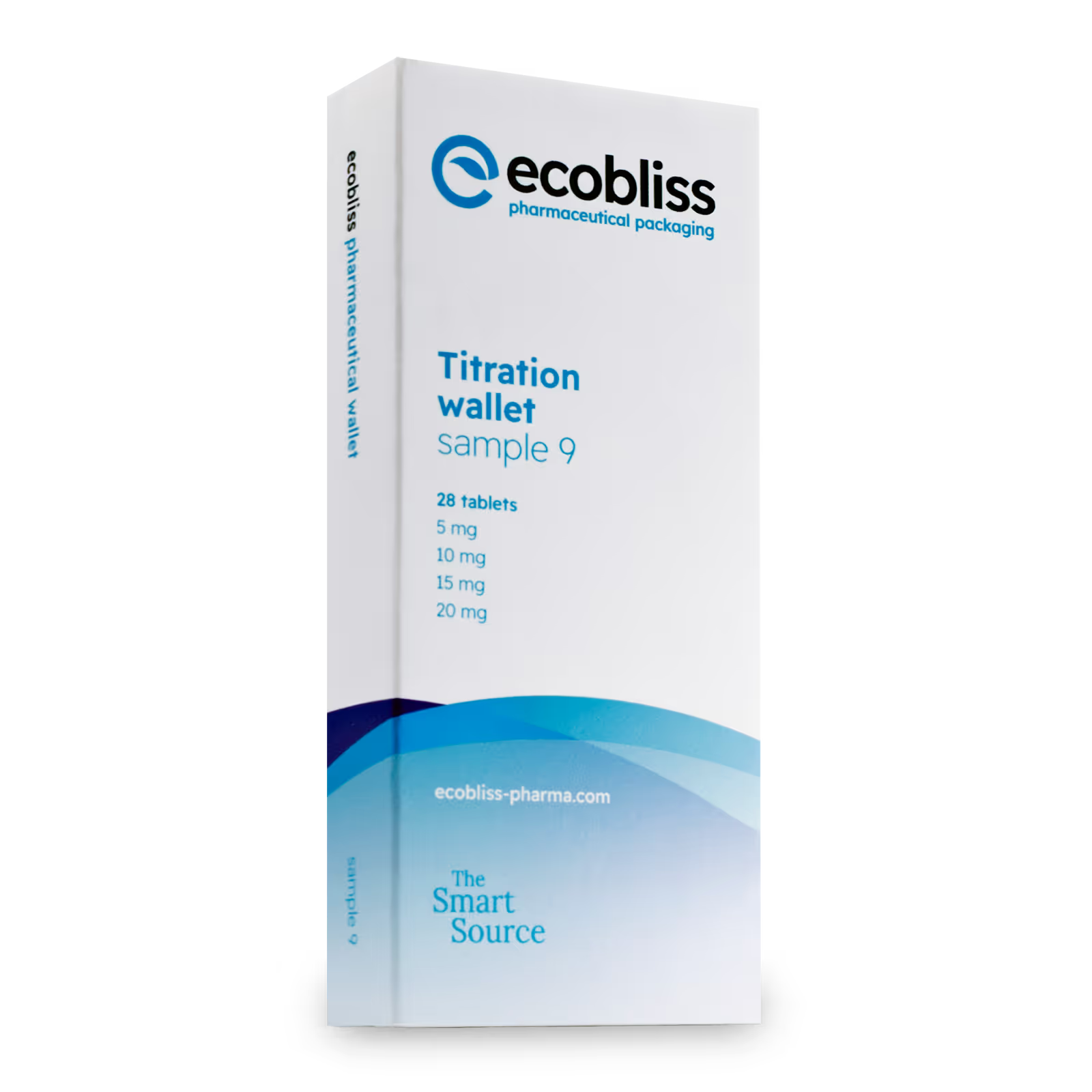
A cardiovascular maintenance therapy benefits from a 28-day calendar layout with clear day markings. A CNS titration regimen requires step-by-step dose escalation cues that guide the patient through the first weeks. An oncology oral therapy needs precise dosing guidance for complex treatment cycles. Ecobliss designs each adherence packaging solution from your specific product, dosage form, and patient population outward. Our in-house design team develops concepts and delivers physical prototypes within 5 to 10 working days, so you can evaluate formats quickly and make decisions based on what you can hold in your hands, not just what you see on screen.
From first concept to commercial supply, with the same team of 40 specialists.
Ecobliss manages your adherence packaging from initial concept through prototyping, GMP production, FMD-compliant serialization, and GDP-compliant warehousing. Our team of 40 packaging specialists works as an extension of your team, with a dedicated contact who knows your product and your patients. For products moving from clinical development into commercial launch, the packaging concepts, artwork, and quality documentation carry forward directly. No vendor switch, no re-validation. For orphan drugs and specialty medications with smaller patient populations, this continuity is especially valuable because the attention to detail remains the same regardless of volume.
What to expect from your adherence packaging project
Product and patient assessment
We review your medication, dosage form, dosing regimen, and target patient population. Within one week you receive a packaging assessment recommending the optimal adherence format, whether that is a calendar blister, multi-dose wallet, titration pack, or combination. We consider patient demographics, dexterity requirements, child-resistance needs, and regulatory requirements for your target markets.
Custom design and prototyping
Our in-house design team creates a packaging concept unique to your product. Every project gets its own design; we never reuse templates. You receive physical prototypes with printed dosing calendars, patient instructions, and visual cues to evaluate usability before committing to production. Typical turnaround: 5 to 10 working days.
Usability validation and trial production
Where needed, we test the packaging concept for opening forces, readability, and patient handling. A trial batch is produced under GMP conditions so you can review the final product before full-scale production begins. FMD-compliant serialization is integrated into every packaging line.
Production, storage, and ongoing supply
Full-scale production in our GMP-certified facility in Echt, the Netherlands. Finished packs are stored in our GDP-compliant warehouse. For ongoing commercial supply, repeat orders are managed against call-off schedules with your dedicated contact coordinating every run.
Tell us about your medication and your patients. We will design an adherence pack around them.
Share your product details, dosing regimen, and patient population. Our team will assess which adherence format best supports your therapy and come back with a custom packaging concept, timeline, and budget indication within one week.
Questions about adherence packaging
What evidence exists that adherence packaging improves compliance?
Calendar blister packs have been shown to improve medication adherence by up to 30% compared to standard packaging formats. The visual cue of a day-by-day layout helps patients track their intake and identify missed doses immediately. For complex regimens involving titration or multiple daily doses, the structured format reduces confusion and dosing errors.
Can adherence packaging be customised for different dosing regimens?
Yes. We design each pack specifically for your product's dosing schedule. This includes simple once-daily calendar formats, twice-daily layouts with morning and evening markings, weekly titration packs with escalating doses, and multi-drug combination formats. Every project receives a unique design tailored to your specific regimen.
How does cold seal technology help with adherence?
Cold seal uses pressure instead of heat to seal blister packs. This allows printed wallet panels to integrate dosing calendars, patient instructions, and visual cues directly alongside the medication without heat distortion. The easy-open mechanism requires minimal force, making it accessible for elderly patients and those with reduced dexterity, which directly supports adherence in these populations.
Is adherence packaging compatible with child-resistant requirements?
Yes. Our patented Locked4Kids platform provides certified child-resistant packaging for both EU and US markets that integrates directly into cold seal wallet formats. This means you can have packaging that is child-resistant yet senior-friendly, addressing both safety and adherence in one solution.
What is the minimum order quantity for adherence packaging?
We have no fixed minimum. Our equipment ranges from manual packaging stations for small launch quantities to fully automated lines for large commercial volumes. This makes us suitable for orphan drugs with small patient populations as well as high-volume chronic therapies.
Can you handle serialization for adherence packs?
Yes. FMD-compliant serialization and aggregation are integrated into every packaging line. All adherence formats, including cold seal wallets, are fully compatible with EU Falsified Medicines Directive requirements.
How sustainable is adherence packaging?
Our cold seal technology uses water-based, solvent-free adhesive that is fully recyclable with the cardboard component. We are FSC-certified (license C194323) and continuously work toward reducing material use while maintaining packaging functionality and patient experience.
Contact the team


Or send a message
One moment please, loading calendar...


