

Att välja läkemedelsförpackningsmaterial ser ut som ett upphandlingsbeslut. Det är det inte. Det är en regulatorisk process som avgör om din stabilitetsstudie blir godkänd, om din batch överlever transporten och om FDA godkänner din ansökan. Att välja fel material kostar inte bara pengar. Det kostar månader av kvalificeringsarbete och ibland lanseringen.
Glas: den inerta standarden för vätskor och injektionsvätskor
Glasflaskor, ampuller och injektionsflaskor dominerar sterila injektionsläkemedel, frystorkade produkter och de flesta flytande formuleringar. Anledningen: glas är kemiskt inert. Det reagerar inte med produkten, lakar inte ut mjukgörare och förändrar inte API:ens kemi under hållbarhetstiden.
Nackdelen är ömtålighet och vikt. En glasampull går sönder. En glasflaska är tung att frakta. För fasta orala lösningar där det inte finns någon fördel med kemi med glas, vinner plast nästan alltid.
Plast: mångsidig, billig, reglerad
PVC, PVDC, HDPE, PP, PET. Var och en har en unik barriärprofil. Var och en lakar ut olika mängder av olika ämnen under olika tidsramar, vilket är anledningen till att det finns tester för extraherbara och lakbara ämnen enligt USP och Ph. Eur.
- PVC: billigaste alternativet, grundläggande fuktbarriär, standard för de flesta fasta orala läkemedelsberedningar.
- PVDC-belagd PVC: bättre fukt- och syrebarriär.
- HDPE: standard för receptfria flaskor. Bra fuktbarriär, barnsäkra lock finns tillgängliga.
- PP: starkare, högre värmebeständighet. Används i vissa förpackningar för medicintekniska produkter.
- PET: klar, stark, används där presentationen är viktig.
Den biologiska frågan med plaster är alltid extraherbara ämnen: vad som kommer ut ur polymeren med tiden, in i API:n. Den regulatoriska frågan är lakbara ämnen: överskrider dessa extraherbara ämnen säkerhetströskeln för patienten. Båda måste karakteriseras för varje ny förpackning.
Aluminium: den bästa barriären du kan köpa
Aluminiumfolie som lock på en termoformad blister, eller kallformad Alu-Alu som både formningsfilm och lock. Barriärvärdena är en storleksordning bättre än plast. Om din API är hygroskopisk, syrekänslig eller ljuskänslig, är aluminium det som står mellan lyckade stabilitetsdata och en misslyckad batch.
Det kostar mer. Ingen fara. Kostnaden för en Alu-Alu blister är liten jämfört med kostnaden för en missad lansering.
Kartong och laminat: det sekundära lagret
Kartongförpackningar och blister wallets klassas vanligtvis inte som primärförpackningar eftersom de inte direkt berör API:n. Men de är märkta med patientinformation, varumärke, förseglingsband och FMD 2D Data Matrix-koden. Valet handlar främst om tryckbarhet, FSC-certifiering och återvinningsbarhet.
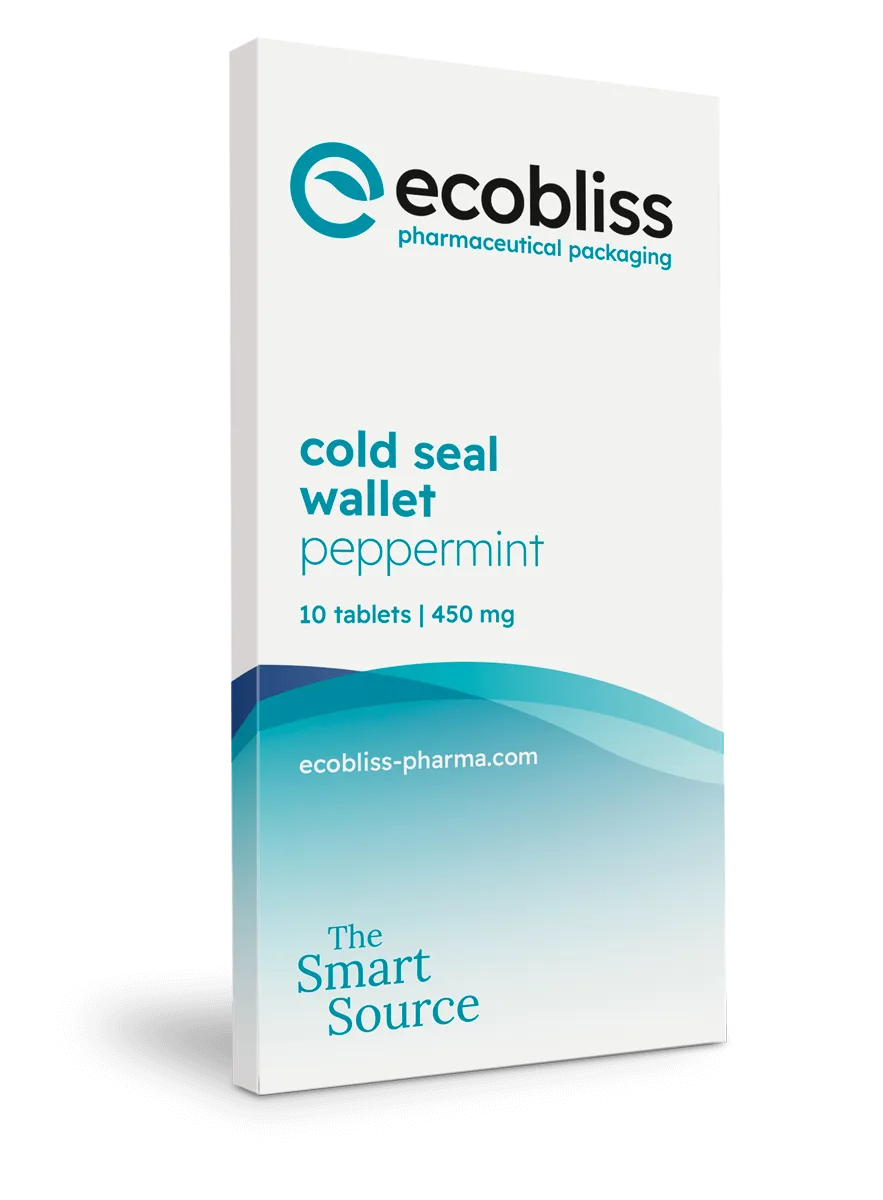
All Ecobliss-kartong är FSC-licensierad (licens C194323). Cold seal wallets kombinerar återvinningsbar kartong med blisterförpackningens insida, vilket ger dig både barriären av plast eller aluminium och återvinningsbarheten av papper för den synliga delen.
Förfyllda sprutor och specialbehållare
För självadministrerade injektioner: förfyllda sprutor av glas eller polymer. Valet styrs av API (vissa tolererar inte kisel som används i glassprutor), av patienten (ett barn eller en vuxen med artrit kan behöva en polymerspruta med autoinjektor) och av kostnaden.
För läkemedelsavgivande implantat och liknande specialförpackningar börjar biologiskt nedbrytbara polymerer och keramik långsamt komma in i mainstream-fasen. Mestadels i forskningsstadiet år 2026, med ett fåtal godkända produkter.
Hur man egentligen väljer rätt material
Från stabilitetsstudien, uppifrån och ner. API anger barriärkravet. Barriärkravet anger materialet. Materialet anger formfaktorn (blister, flaska, injektionsflaska, spruta). Formfaktorn anger sekundärförpackningen.
Det som företag slösar tid på är att bakvänt rekonstruera detta. De väljer en formfaktor först för att den ser bra ut och försöker sedan få materialet att passa stabilitetsdata. Det fungerar sällan. Om du vill ha en andra bedömning av ett materialbeslut, skicka oss stabilitetsdata och aktuella specifikationer. Vi berättar om du har rätt material eller om lanseringen kommer att skada ert rykte.
Begär ett gratis prov nu!