.avif)

Man schraubt eine neue Tablettenflasche auf und findet obenauf einen Wattebausch. Die meisten ziehen ihn heraus, werfen ihn weg und fragen sich nie, warum er da war. Doch die Watte hat einen triftigen Grund für ihre Existenz, sogar drei, und sie ist ein Stück Pharmageschichte, das viel über die Entwicklung von Verpackungen aussagt.
Die erste Aufgabe: Das Klappern der Tabletten stoppen
Die Tabletten alter Art waren spröde. Sie wurden aus härteren, weniger gut beschichteten Tabletten hergestellt als die heutigen, und der sechswöchige Schiffstransport von einer Fabrik in New Jersey zu einer Apotheke in Madrid setzte ihnen stark zu. Die Tabletten rissen, zerbrachen und splitterten. Am Flaschenboden sammelte sich Staub.
Baumwolle löste das Problem. Ein lockerer Wattebausch füllte den Leerraum in der Flasche und verhinderte, dass die Tabletten aneinander rieben. Ab den 1940er Jahren wurden alle festen Arzneiformen auf diese Weise ausgeliefert.
Die zweite Aufgabe: überschüssige Feuchtigkeit aufnehmen
Baumwolle ist hygroskopisch. Sie zieht Feuchtigkeit aus der Umgebungsluft. In einer verschlossenen Flasche, die monatelang im Regal stand, wirkt die Baumwolle als passives Trockenmittel und saugt die Feuchtigkeit auf, die durch den Verschluss eingedrungen ist. Für Tabletten, die sich in feuchter Umgebung zersetzen, verschafft das Zeit.
Moderne Flaschen funktionieren anders. Sie verwenden Kieselgelbehälter oder Molekularsiebe, die weitaus mehr Feuchtigkeit aufnehmen können als Baumwolle. Baumwolle war jedoch das ursprüngliche Material.
Die dritte Aufgabe: Manipulationsschutz, so weit er reicht
Wenn die Flasche während des Transports geöffnet wurde, lag die Watte nicht mehr unversehrt auf den Tabletten. Sie wurde verrutscht oder zerknittert. Dieses sichtbare Anzeichen ersetzte zwar keine Versiegelung oder Schrumpffolie, stellte aber eine zusätzliche Schutzschicht dar.
Dies ist heute der schwächste der drei Gründe. Moderne Manipulationssicherheitsmerkmale sind Foliensiegel, perforierte Laschen und 2D-Data-Matrix-Codes, die in der Apotheke gescannt werden.
Warum gibt es Baumwolle also auch im Jahr 2026 noch?
Größtenteils Gewohnheit, teils Wahrnehmung. Tabletten sind heute beschichtet, robust und werden in gepolsterten Kartons versendet. Silicagel-Trockenmittel sind Baumwolle in puncto Feuchtigkeitsregulierung überlegen. Foliensiegel bieten einen besseren Manipulationsschutz als Baumwolle. Die Argumente für Baumwolle sind heute deutlich schwächer als noch vor vierzig Jahren.
Viele Pharmaunternehmen haben die Verwendung eingestellt. Einige behalten sie bei, weil die Verbraucher es erwarten, eine Frage der Markenbindung. Manche kleinere Hersteller betreiben ältere Anlagen, die die Watte noch automatisch zuführen, und der Austausch dieser Anlage kostet mehr als die Watte selbst.
Die Blisterverpackungsalternative
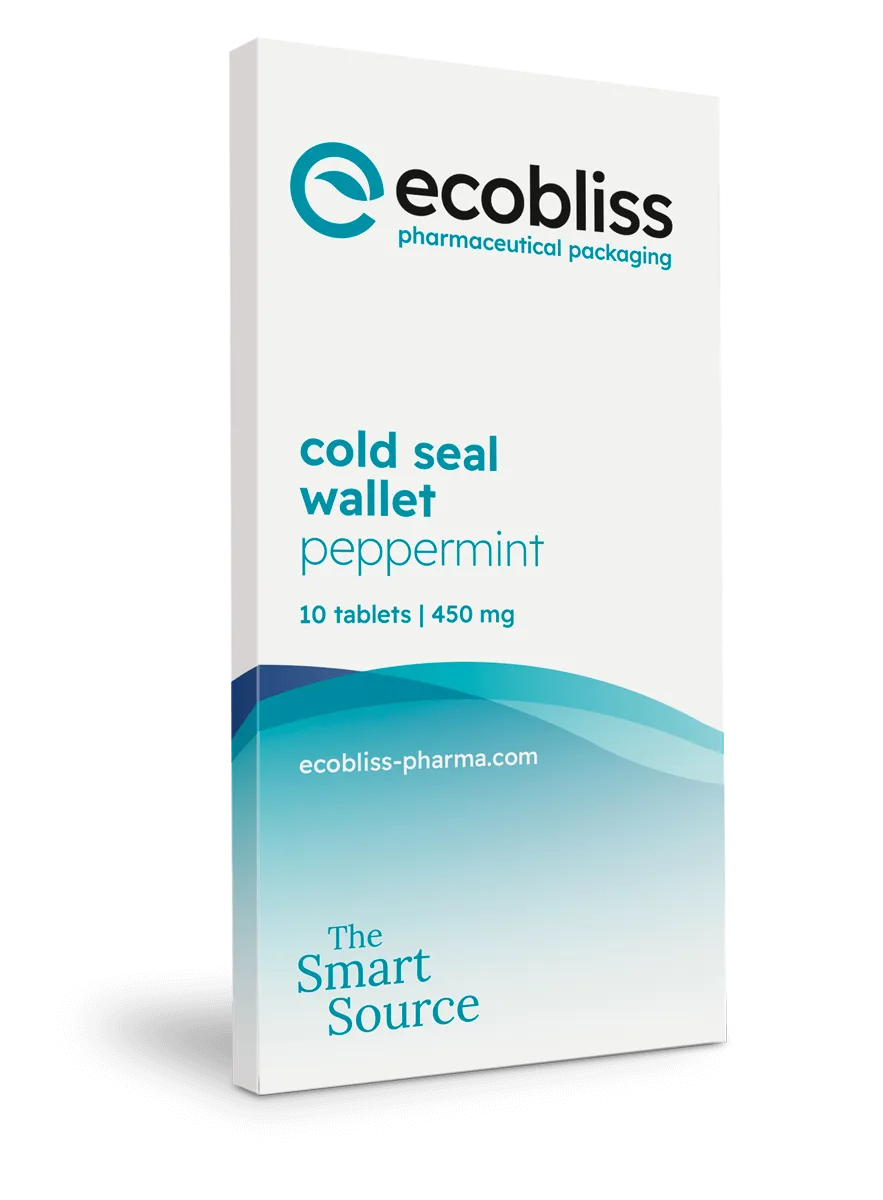
Wenn Ihnen Feuchtigkeitsschutz, Bruchsicherheit und Manipulationssicherheit wirklich wichtig sind, bietet eine blister pack alle drei Vorteile besser als eine Flasche mit Watte. Jede Tablette befindet sich in einem eigenen, versiegelten Fach. Es findet kein Feuchtigkeitsaustausch zwischen den Dosen statt. Die Folie ist manipulationssicher. Und Sie müssen nicht den losen Staub zerbrochener Tabletten um die Welt versenden. Cold seal blister wallets gehen noch einen Schritt weiter und bieten zusätzlich Hinweise zur Patientenadhärenz und kindersichere Funktionen in derselben Verpackung.
Wenn Sie von Flaschenverpackungen auf Blisterverpackungen umsteigen und die jeweiligen Vorteile für Ihren spezifischen Wirkstoff vergleichen möchten, erläutern wir Ihnen gerne die Vor- und Nachteile. Die Baumwolle war damals eine clevere Lösung. Die dazugehörigen Verpackungen haben sich weiterentwickelt.
Fordern Sie jetzt ein kostenloses Muster an!