

Die Wahl von Verpackungsmaterialien für pharmazeutische Produkte mag wie eine Beschaffungsentscheidung erscheinen. Doch das ist sie nicht. Es handelt sich um einen regulatorischen Prozess, der darüber entscheidet, ob Ihre Stabilitätsstudie erfolgreich ist, Ihre Charge den Transport unbeschadet übersteht und die FDA Ihren Zulassungsantrag akzeptiert. Die Wahl des falschen Materials kostet nicht nur Geld, sondern auch monatelange Qualifizierungsarbeit und mitunter sogar die Markteinführung.
Glas: der inerte Standard für Flüssigkeiten und Injektionspräparate
Glasfläschchen, Ampullen und Flaschen dominieren bei sterilen Injektionspräparaten, Lyophilisaten und den meisten flüssigen Formulierungen. Der Grund: Glas ist chemisch inert. Es reagiert nicht mit dem Produkt, gibt keine Weichmacher ab und verändert die chemische Zusammensetzung des Wirkstoffs während der gesamten Haltbarkeitsdauer nicht.
Der Nachteil liegt in der Zerbrechlichkeit und dem Gewicht. Ein Glasfläschchen zerbricht. Eine Glasflasche ist schwer zu transportieren. Bei festen oralen Darreichungsformen, bei denen keine chemischen Wechselwirkungen mit Glas möglich sind, ist Kunststoff fast immer die bessere Wahl.
Kunststoffe: vielseitig, billig, reguliert
PVC, PVDC, HDPE, PP, PET: jedes dieser Materialien weist ein unterschiedliches Barriereprofil auf. Jedes gibt unterschiedliche Mengen verschiedener Stoffe über unterschiedliche Zeiträume ab, weshalb es Prüfverfahren für extrahierbare und auslaugbare Stoffe gemäß USP und Ph. Eur. gibt.
- PVC: günstigste Option, grundlegende Feuchtigkeitsbarriere, Standard für die meisten festen oralen Präparate.
- PVDC-beschichtetes PVC: bessere Feuchtigkeits- und Sauerstoffbarriere.
- HDPE: Standard für OTC-Flaschen. Gute Feuchtigkeitsbarriere, kindersichere Verschlüsse erhältlich.
- PP: robuster, höhere Hitzebeständigkeit. Wird in einigen Verpackungen für Medizinprodukte verwendet.
- PET: klar, robust, geeignet dort, wo die Präsentation eine Rolle spielt.
Die biologische Frage bei Kunststoffen betrifft stets extrahierbare Stoffe: Was tritt im Laufe der Zeit aus dem Polymer in den Wirkstoff über? Die regulatorische Frage betrifft auslaugbare Stoffe: Überschreiten diese extrahierbaren Stoffe den Sicherheitsgrenzwert für den Patienten? Beide müssen für jede neue Verpackung charakterisiert werden.
Aluminium: die höchste Barriere, die man für Geld kaufen kann
Aluminiumfolie als Deckel für tiefgezogene Blisterverpackungen oder kaltgeformtes Alu-Alu, das sowohl als Formfolie als auch als Deckel dient. Die Barrierewirkung ist um eine Größenordnung besser als bei Kunststoff. Wenn Ihr Wirkstoff hygroskopisch, sauerstoffempfindlich oder lichtempfindlich ist, entscheidet Aluminium über den Erfolg der Stabilitätsprüfung und das Scheitern der Charge.
Es kostet mehr. Na gut. Die Kosten einer Alu-Alu-Blisterpackung sind gering im Vergleich zu den Kosten eines verpassten Starts.
Karton und Laminate: die Sekundärschicht
Kartonverpackungen und blister wallets gelten üblicherweise nicht als Primärverpackung, da sie den Wirkstoff nicht direkt berühren. Sie enthalten jedoch Patienteninformationen, den Markennamen, den Originalitätssiegel und den FMD-2D-Data-Matrix-Code. Die Wahl hängt hauptsächlich von der Bedruckbarkeit, der FSC-Zertifizierung und der Recyclingfähigkeit ab.
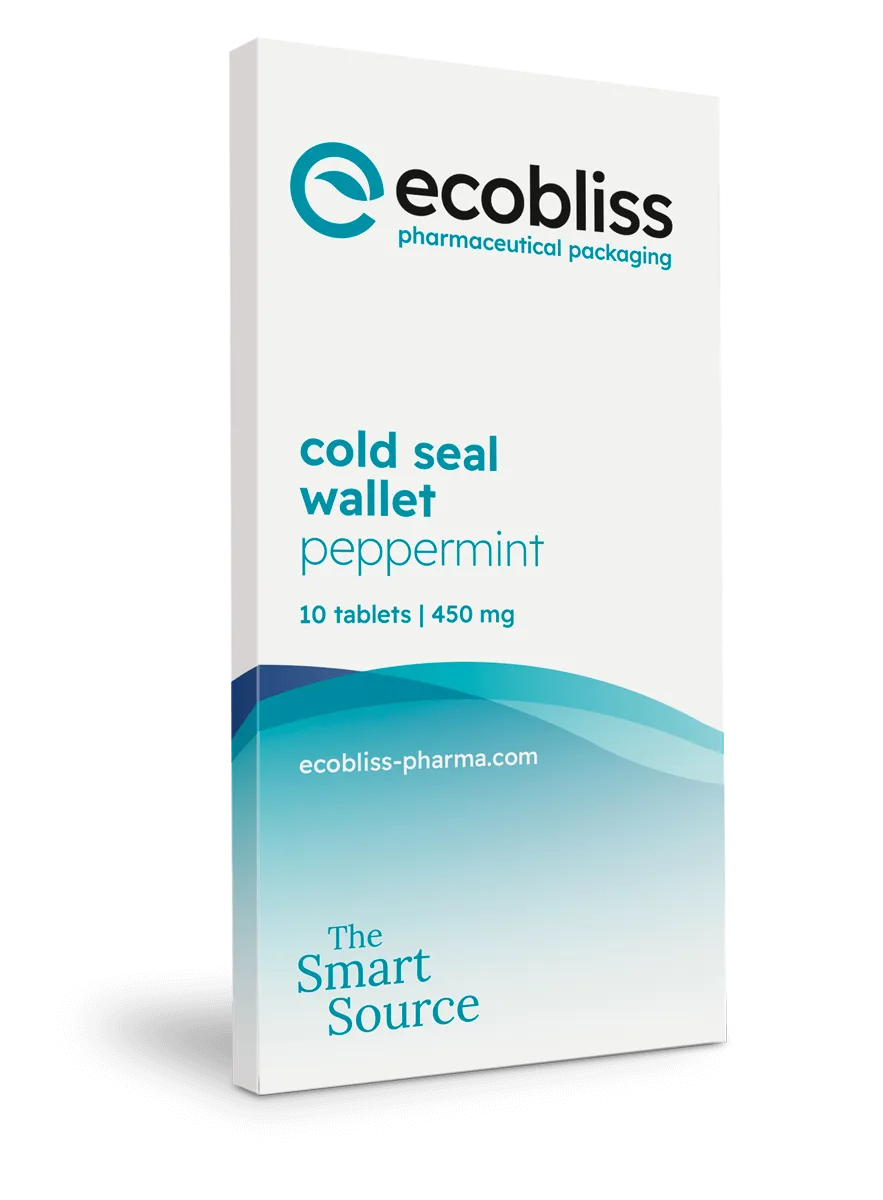
Alle Ecobliss-Kartonverpackungen sind FSC-zertifiziert (Lizenz C194323). Cold Seal Wallets kombinieren recycelbaren Karton mit der Blisterverpackung im Inneren. Dadurch erhalten Sie sowohl die Barrierewirkung von Kunststoff oder Aluminium als auch die Recyclingfähigkeit von Papier für den sichtbaren Teil.
Vorgefüllte Spritzen und Spezialbehälter
Für die Selbstverabreichung von Injektionspräparaten: vorgefüllte Spritzen aus Glas oder Polymer. Die Wahl hängt vom Wirkstoff ab (manche Wirkstoffe vertragen das in Glasspritzen verwendete Silikon nicht), vom Patienten (ein Kind oder ein Erwachsener mit Arthritis benötigt möglicherweise eine Polymerspritze mit Autoinjektor) und von den Kosten.
Bei medikamentenfreisetzenden Implantaten und ähnlichen Spezialverpackungen finden biologisch abbaubare Polymere und Keramiken langsam breite Anwendung. Stand 2026 befinden sich die meisten noch im Forschungsstadium, mit wenigen zugelassenen Produkten.
Wie man das richtige Material auswählt
Ausgehend von der Stabilitätsstudie, von oben nach unten: Der Wirkstoff (API) gibt die Barriereanforderungen vor. Die Barriereanforderungen bestimmen das Material. Das Material bestimmt die Darreichungsform (Blister, Flasche, Durchstechflasche, Spritze). Die Darreichungsform bestimmt die Sekundärverpackung.
Unternehmen verschwenden Zeit, indem sie diesen Prozess rückwärts durchführen. Sie wählen zunächst eine Form, weil sie gut aussieht, und versuchen dann, das Material an die Stabilitätsdaten anzupassen. Das gelingt selten. Wenn Sie eine zweite Meinung zu einer Materialentscheidung wünschen, senden Sie uns die Stabilitätsdaten und die aktuellen Spezifikationen. Wir sagen Ihnen, ob Sie das richtige Material gewählt haben oder ob die Markteinführung peinlich wird.
Fordern Sie jetzt ein kostenloses Muster an!