
Cold seal blister packaging
- Invented by Ecobliss in 1995, pressure-only sealing without heat
- Up to 80% less energy and up to 10x faster sealing speeds
- Fully recyclable, FSC-certified, solvent-free adhesive
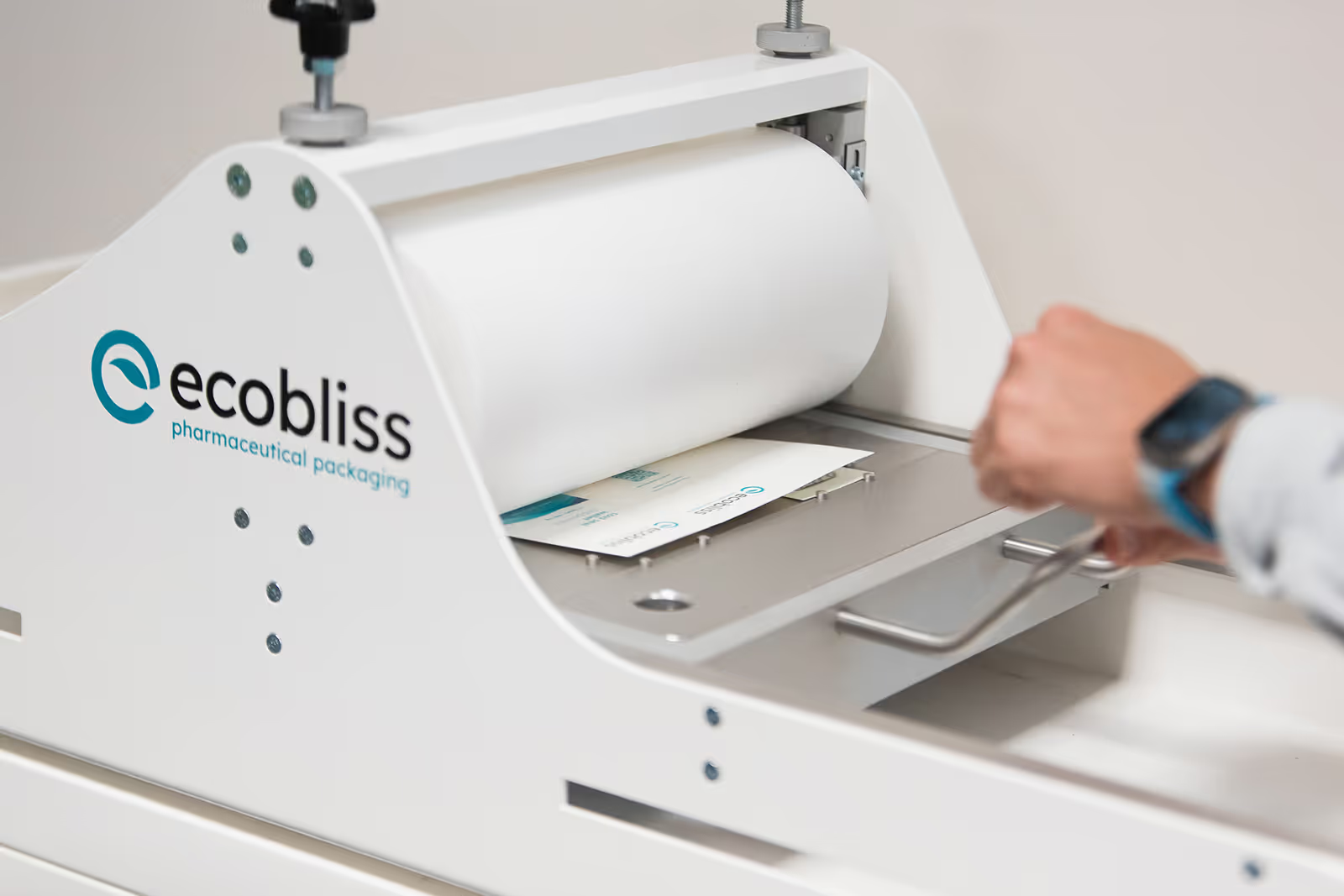


Why heat sealing limits your packaging options
Traditional heat seal packaging exposes your product to temperatures that can compromise sensitive formulations. The thermal process is energy-intensive, slows down production speeds, and restricts your choice of lidding materials. For pharmaceutical companies working with heat-sensitive compounds, biologics, or moisture-critical products, these are not minor inconveniences. They are real constraints on product integrity and manufacturing efficiency.
In 1995, Ecobliss founder Ron Linssen and Prof. G. Wouters developed cold seal technology to eliminate these limitations entirely. Cold seal is a sealing method, not a blister type: a pre-formed blister of any material (thermoform PVC, PVdC, ACLAR, cold-form Alu-Alu, or all-paper) is sealed into a cardboard wallet using pressure alone, at room temperature. No heat reaches your product, ever. The result: faster sealing speeds, lower energy consumption, and complete freedom to package sensitive formulations without compromise. Today, 90% of our clients choose cold seal because the advantages are that clear.
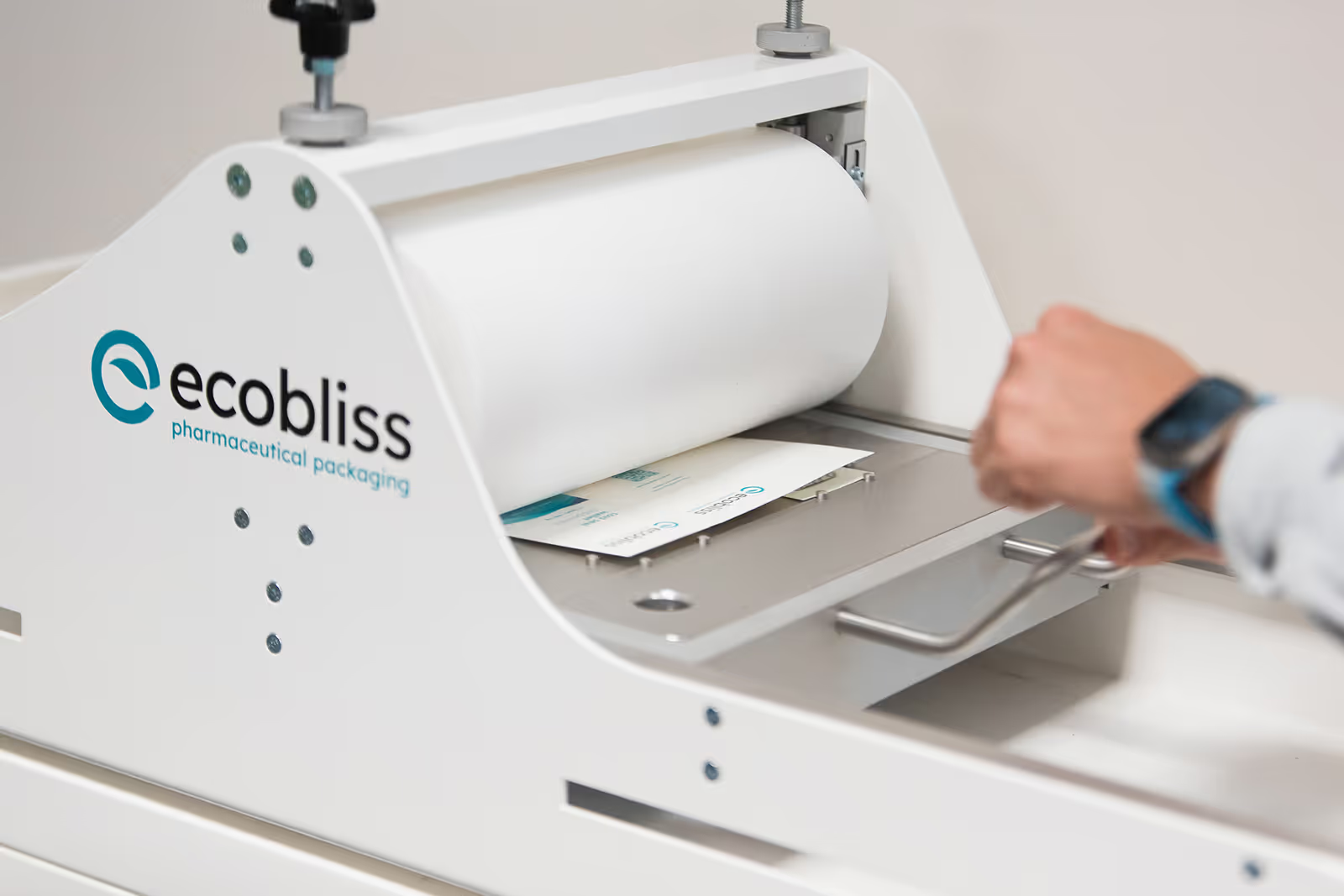
Sustainable and patient-first by design
Cold seal technology was built around sustainability before it became a requirement. The water-based, solvent-free adhesive and FSC-certified materials make our cold seal wallets fully recyclable. Our facility in Echt runs on 450,000 kWh of solar energy per year from 1,000 panels, and cold seal's reduced energy demand, up to 80% less than heat seal, further minimises your packaging footprint.
Patient experience is engineered into every pack. Cold seal wallets are easy to open, making them accessible for elderly patients and people with limited hand function. Research shows this can improve medication adherence by up to 30%. When your packaging helps patients take their medication correctly, it becomes part of the therapy, not just a container.


Every format, including child-resistant
Cold seal technology supports the full range of pharmaceutical packaging formats: compliance wallets, wallet packs, multi-dose packs, and titration packs. The blister inside the wallet can be made from any material suited to your product, including thermoform PVC, PVdC, ACLAR, cold-form Alu-Alu, or all-paper substrates. Whether you need a simple push-through configuration or a complex multi-compartment design, the pressure-only sealing process adapts to your requirements without additional tooling constraints.
For products requiring child-resistant packaging, our patented Locked4Kids platform integrates seamlessly with cold seal technology. Certified to both EU and US standards, Locked4Kids provides tested child resistance while maintaining the easy-open properties that adult patients depend on. No fixed minimum batch sizes, both manual and automated production lines, and GMP-certified quality throughout.
The inventor as your long-term packaging partner
Ecobliss did not adopt cold seal technology. We created it. That distinction matters because it means 30 years of accumulated knowledge in formulation compatibility, material science, and production optimisation that no other packager can replicate. When you work with us, you work with the team that understands cold seal at its deepest level, from adhesive chemistry to line configuration.
Our clients, including Organon, Lundbeck, Sanofi, Merck KGaA, Novartis, and Janssen, choose Ecobliss because we combine inventor-level expertise with full-service contract packaging. FMD serialisation, GDP-compliant logistics, and a flexible production setup that handles both small clinical batches and large commercial runs. One partner, from concept to delivered product.
How your cold seal project comes together
Technical consultation
We assess your product, stability requirements, and packaging objectives. Our specialists recommend the optimal cold seal configuration, including blister material selection, wallet format, and child-resistant options if needed.
Design and prototyping
Your packaging design is developed and validated with physical samples. We test seal integrity, opening force, and barrier properties to confirm the design meets all specifications before production begins.
GMP production and serialisation
Your cold seal packs are produced on our GMP-certified lines in Echt, with FMD serialisation integrated into the process. Both manual and automated lines are available depending on batch size and complexity.
Quality release and delivery
Every batch undergoes full quality control before GDP-compliant delivery to your distribution network. Documentation, certificates, and batch records are provided as standard.
Start your cold seal packaging project with the inventors
Tell us about your product and packaging requirements. Our team will respond with a tailored cold seal proposal, typically within 48 hours.
Frequently asked questions about cold seal blister packaging
What is the difference between cold seal and heat seal packaging?
Heat seal packaging uses thermal energy to bond the lidding to the formed blister. Cold seal packaging uses pressure alone at room temperature, with a water-based adhesive, to seal a blister into a cardboard wallet. This eliminates the risk of heat damage to sensitive formulations, reduces energy consumption by up to 80%, and allows sealing speeds up to 10x faster.
Can cold seal packaging protect heat-sensitive medications?
Yes. Because no heat is applied during sealing, cold seal is the preferred technology for heat-sensitive compounds, biologics, and moisture-critical formulations. The product is never exposed to elevated temperatures at any point in the packaging process.
Are cold seal wallets recyclable?
Fully. Our cold seal wallets use a water-based, solvent-free adhesive and FSC-certified cardboard. The packaging is designed for standard recycling streams, supporting your sustainability targets without compromising product protection.
What blister materials can be used inside a cold seal wallet?
Any pharmaceutical blister material can be sealed into a cold seal wallet: thermoform PVC, PVdC, ACLAR, cold-form Alu-Alu (CFF), or all-paper substrates. The choice depends on your product's barrier and stability requirements.
What packaging formats are available with cold seal?
Cold seal supports all common pharmaceutical wallet formats: compliance wallets, wallet packs, multi-dose packs, titration packs, and push-through configurations. Custom formats are also possible depending on your product requirements.
Is child-resistant packaging possible with cold seal?
Yes. Our patented Locked4Kids platform is fully compatible with cold seal technology. It is certified to EU and US child-resistant standards while remaining easy to open for adult patients.
What is the minimum order quantity for cold seal packs?
We have no fixed minimum batch size. Our production setup includes both manual and automated lines, allowing us to handle everything from small clinical trial batches to large commercial volumes.
Did Ecobliss really invent cold seal technology?
Yes. Cold seal blister packaging technology was developed in 1995 by Ecobliss founder Ron Linssen together with Prof. G. Wouters. We have been refining and advancing the technology for over 30 years, which is why 90% of our clients choose cold seal today.
Contact the team


Or send a message
One moment please, loading calendar...


