
Lääketieteellinen pakkaus suojaa lääkkeitä ja lääkinnällisiä laitteita varastoinnin, kuljetuksen ja käytön aikana. Se estää vaurioita, tukee hygieniaa ja auttaa potilaita ja terveydenhuollon työntekijöitä käyttämään tuotetta turvallisesti. Hyvä pakkaus täyttää myös steriiliyttä, jäljitettävyyttä ja lasten turvallisuutta koskevat vaatimukset tarvittaessa. Jokaisella kerroksella, sisäpakkauksesta kuljetuslaatikkoon, on oma roolinsa tuotteen turvallisuuden ja helpon käsittelyn varmistamisessa.
• Lääketieteelliset pakkaukset sisältävät kaikenlaisia lääke- ja laitepakkauksia läpipainopakkauksista steriileihin pusseihin.
• Pakkausten on suojattava kosteudelta, vaurioilta, saastumiselta ja sekaantumiselta kuljetuksen ja käytön aikana.
• Jokaisella pakkauskerroksella on selkeä rooli: ensisijainen suoraa kosketusta varten, toissijainen ryhmittelyä varten ja kuljetuspakkaus kuljetuksen suojaksi.
• Suunnittelu auttaa välttämään käyttäjävirheitä ja tukee luettavuutta, turvallisuutta ja oikeaa käyttöä.
• Uudelleenkäytettävät ja kierrätettävät materiaalit voivat auttaa vähentämään jätettä kestävissä lääketieteellisissä pakkauksissa.
Mitä lääketieteelliset pakkaukset tarkoittavat lääkkeille ja laitteille
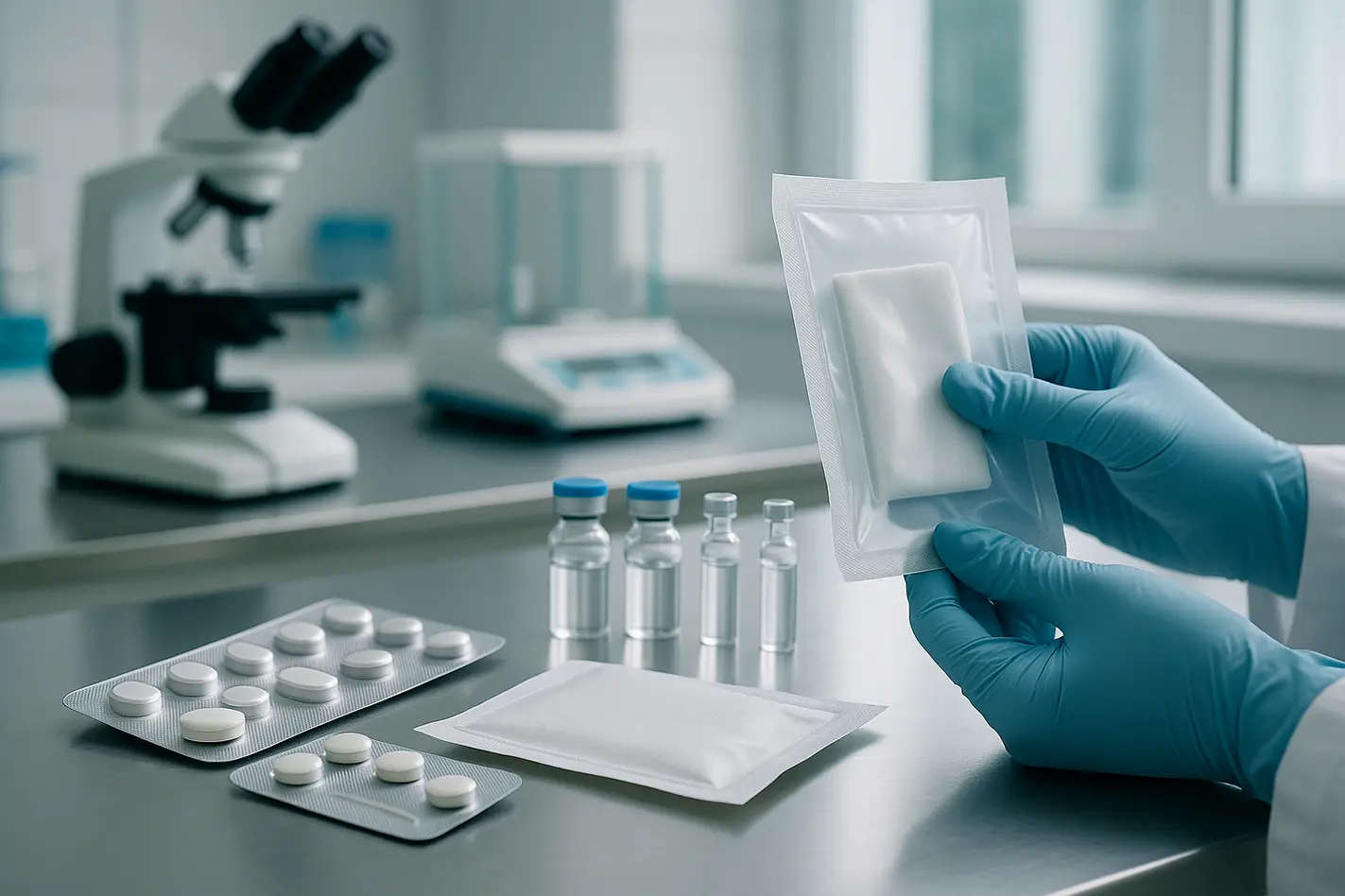
Lääketieteellinen pakkaus on laaja käsite. Se kattaa kaikenlaiset pakkaukset, joita käytetään lääkkeiden ja lääkinnällisten laitteiden säilyttämiseen, suojaamiseen ja esillepanoon. Lääkkeiden kohdalla nämä voivat olla tablettien läpipainopakkauksia, nesteiden injektiopulloja tai lapsiturvallisilla korkeilla varustettuja pulloja. Laitteet saattavat tarvita pusseja, tarjottimia tai erityisiä pidikkeitä, jotta ne pysyvät puhtaina ja käyttövalmiina. Tuotteet voivat vaihdella yksinkertaisista pillereistä tai voiteista monimutkaisiin annostelujärjestelmiin ja kirurgisiin välineistöön. Jokaisella tuotetyypillä on omat riskinsä ja sääntönsä. Joidenkin on pysyttävä kuivina tai steriileinä. Toisissa on oltava selkeät käyttöohjeet tai niiden on pysyttävä ehjinä kuljetuksen aikana. Saman pakkauksen on suojattava tuotetta, suojattava käyttäjää ja tuettava oikeaa käyttöä. Katso esimerkkejä lääkinnällisten laitteiden pakkaussivultamme.
Lääketieteellisen pakkauksen kerrokset: ensisijainen, toissijainen ja kuljetussuojaus
Lääketieteelliset pakkaukset toimivat kerroksittain. Jokainen kerros lisää suojaa ja auttaa turvallisessa käsittelyssä:
•Ensisijainen pakkaus: Tämä koskettaa suoraan lääkettä tai laitetta. Se voi olla läpipainopakkaus, injektiopullo, esitäytetyn ruiskun sylinteri tai steriili pussi. Sen on suojattava sisältöä kosteudelta, valolta tai bakteereilta.
•Toissijainen pakkaus: Tämä ympäröi yhtä tai useampaa ensisijaista pakkausta. Se voi sisältää pahvilaatikoita, taskuja tai laatikoita, joissa on tietoja ja viivakoodeja. Se auttaa ryhmittelyssä ja turvallisemmassa avaamisessa.
•Kuljetussuoja: Tämä on uloin pakkaus, kuten pahvilaatikot, väliseinät tai tyynyt. Se suojaa tuotetta vaurioilta kuljetuksen ja varastoinnin aikana.
Kaikkien kolmen käyttö pitää tuotteet turvallisina, parantaa tehokkuutta linjoilla ja tekee käytöstä kotona tai sairaalassa helpompaa ja turvallisempaa.
Miten lääkepakkaus suojaa tuotetta
Pakkausten on suojattava monilta riskeiltä. Näitä ovat kosteus, happi ja valo, jotka voivat muuttaa lääkkeen laatua. Pakkauksen suojakerrokset auttavat estämään näitä. Pillerit ja jauheet tarvitsevat usein kuivuutta. Nesteet tarvitsevat vuotamattomat tiivisteet. Lääkinnällisten laitteiden terävien kärkien ja steriilien osien on pysyttävä turvassa ja puhtaina. Kuljetuksen aikana iskut ja putoamiset ovat yleisiä, joten pakkausten on oltava lujia. Kaiken tämän vuoksi käytämme pakkausten validointia testataksemme, kuinka hyvin suunnittelu suojaa tuotetta koko matkan ajan.
Steriiliys, steriili suojajärjestelmä ja ISO 11607
Kehon sisälle menevien tai steriileissä olosuhteissa käytettävien lääkinnällisten laitteiden pakkauksen on pidettävä ne bakteerittomina käyttöön asti. Tässä kohtaa steriili suojajärjestelmä astuu kuvaan. Se on pakkauksen osa, joka estää bakteereja tai pölyä pääsemästä tuotteeseen ennen sen avaamista. Varmistaaksemme järjestelmän toiminnan testaamme sen pakkauksen, steriloinnin, varastoinnin ja kuljetuksen jälkeen. Nämä testit noudattavat ISO 11607-standardia, joka on kansainvälinen standardi, joka selittää, miten steriili pakkaus tulisi valmistaa ja testata. Varhaiset suunnitteluvalinnat voivat helpottaa tätä työtä, joten autamme asiakkaita tekemään asiat oikein alusta alkaen.
Miten lääkepakkaukset vähentävät todellisia riskejä
Hyvä suunnittelu estää virheitä ja onnettomuuksia päivittäisessä käytössä. Lääketieteelliset pakkaukset voivat auttaa välttämään ongelmia, kuten:
• Kontaminaatio käsistä tai ilmasta avaamisen aikana.
• Rikkoutuminen tai vuodot kuljetuksen aikana.
• Eri vahvuisten tai saman tuotteen versioiden sekaantuminen.
• Unohtuneet tai kaksinkertaiset annokset epäselvän asettelun vuoksi.
• Väärä käyttö huonojen ohjeiden tai suunnittelun vuoksi.
Suunnittelutyökalut, kuten värikoodaus, muotoillut pakkaukset tai annoskohtaiset läpipainopakkaukset, auttavat ihmisiä käyttämään tuotteita oikein. Helposti käsiteltävät ja luettavat pakkaukset vähentävät tarvetta kiertoteille, kuten läpipainopakkausten leikkaamiselle tai pillereiden siirtämiselle laatikoihin ilman etikettejä.
Luottamus, sinettipakkaukset sekä serialisointi ja jäljitettävyys
Luottamus on terveydenhuollossa avainasemassa. Pakkauksen avaamisen osoittava rakenne osoittaa, onko joku avannut tai muuttanut pakkausta ennen kuin se päätyi käyttäjälle. Näihin merkintöihin voivat kuulua repäisyläpät, murtokohdat tai sinetit, joita ei voi vaihtaa. Nämä merkit auttavat potilaita tuntemaan olonsa turvalliseksi. Pakkauksissa on myös yksilölliset koodit, jotka tukevat serialisointia ja jäljitettävyyttä. Nämä koodit auttavat jäljittämään jokaisen pakkauksen tehtaalta käyttäjälle ja tarkistamaan, onko tuote aito. Tällaiset pakkausominaisuudet ovat nyt osa monia turvallisuuslakeja ja auttavat torjumaan väärennettyjä lääkkeitä.
Käytettävyys ja inhimilliset tekijät lääketieteellisissä pakkauksissa
Kaikenlaiset ihmiset käyttävät lääkinnällisiä tuotteita. Näihin kuuluvat potilaat, vanhemmat, sairaanhoitajat ja apteekkarit. Käytettävyys ja inhimilliset tekijät tarkastelevat sitä, miten nämä käyttäjät avaavat, lukevat ja käsittelevät pakkauksia. Joillakin käyttäjillä voi olla vaikeuksia nähdä pientä tekstiä, avata tiukkoja sinettejä tai lukea epäselviä etikettejä. Pakkausten tulisi olla helppoja tarttua, avata ja ymmärtää. Selkeät ohjeet ja asettelu auttavat estämään virheitä. Suunnittelemme pakkaukset potilaita ajatellen, joten turvallisuus ja helppokäyttöisyys ovat edelleen keskeisiä.
Lapsiturvallinen pakkaus ja ikäihmisille sopiva pakkaus tasapainossa
Joidenkin pakkausten on pidettävä lapset poissa, mutta oltava silti aikuisten käytettävissä. Lapsiturvalliset pakkaukset testataan sen varmistamiseksi, etteivät lapset voi avata niitä helposti. Samalla niiden on toimittava myös henkilöille, joilla on rajoittunut käsivoima tai nivelkipuja. Senioriystävälliset pakkaukset on suunniteltu aikuisten, myös vanhusten, käyttöön. Ratkaisuja, kuten painettavia-kierrettäviä korkkeja ja kuorittavia-läpipainopakkauksia, testataan tasapainon saavuttamiseksi. Tuemme asiakkaita kehittämällä ja jalostamalla tällaisia järjestelmiä varhaisessa vaiheessa, jotta myöhemmät testaukset ja muutokset ovat helpompia hallita. Nämä ominaisuudet vaativat usein virallisia testejä ennen hyväksyntää kunkin markkina-alueen lakisääteisistä säännöistä riippuen.
Miten lääketieteellisten pakkausten on toimittava oikeilla tuotantolinjoilla
Vahvojen ja turvallisten pakkaussuunnitelmien on toimittava moitteettomasti myös tuotannon aikana. Tämä tarkoittaa:
• Vakaa muotoilu ja tiivistys, joten pakkaukset eivät vuoda tai repeä.
• Alhainen virhe- ja hukkaprosentti, joten aikaa ja materiaalia ei mene hukkaan.
• Helppo formaatin vaihto nopeita linjanvaihtoja varten.
• Riittävästi tilaa tarkastus- ja tulostusmerkeille.
Joskus käyttäjien suunnitteluvalinnat, kuten tartunta-alueiden lisääminen tai etikettitilan lisääminen, voivat vaikuttaa linjan nopeuteen tai taittoon. Tuemme lääkepakkausten suunnittelua ja kehitystä keskittyen sekä turvallisuuteen että valmistettavuuteen, joten suunnittelu alkaa jo konseptivaiheessa.
Kestävät lääkepakkaukset: turvallisuus ensin, älykkäät valinnat seuraavaksi
Kestävät lääkepakkaukset pitävät turvallisuuden vahvana ja vähentävät samalla ympäristöhaittoja. Lähtökohtana on sääntö, että pakkausten turvallisuus ei saa koskaan heikentyä. Älykkäät muutokset voivat kuitenkin vähentää jätettä ja käyttää vähemmän resursseja. Näitä muutoksia voivat olla:
• Käytetään kevyempää materiaalia, jos suojaus pysyy vahvana.
• Valitsemalla materiaaleja, jotka on helpompi kierrättää kullakin markkina-alueella.
• Suunnitellaan osia, jotka käyttäjät voivat irrottaa toisistaan, kuten paperi muovista.
• Ylimääräisten kerrosten tai tarjottimien poistaminen, jotka eivät lisää turvallisuutta.
Käytämme cold seal-pakkausta, joka sulkeutuu paineen, ei lämmön, avulla. Tämä säästää energiaa ja auttaa käyttäjiä purkamaan pakkausten osia lajittelua varten. Voit lukea lisää kestävästä lähestymistavastamme lääkepakkauksissa.
Teoriasta käytäntöön: esitäytetyt ruiskut ja ympäristöystävällinen syringe wallet
Valmiiksi täytettyjä ruiskuja käytetään sairaaloissa ja potilaiden kodeissa. Niiden pakkausten on suojattava neulaa taipumiselta ja rikkoutumiselta, pidettävä tuote puhtaana ja oltava turvallinen avata. Pakkauksen on myös tehtävä käsittely helpoksi, näytettävä jäljellä olevien yksiköiden määrä ja tarjottava tilaa selkeille ohjeille.
Kehitimme 10 ruiskua yhdessä wallet-pakkauksessa. Tässä pakkauksessa käytetään cold seal -tekniikkaa, joten siinä ei ole liimaa eikä lämpöä. Se tarjoaa tasaisen tilan tiedoille, pitää ruiskut paikoillaan käytön ja kuljetuksen aikana ja helpottaa käytettyjen ja jäljellä olevien ruiskujen laskemista. Se auttaa myös vähentämään muovin käyttöä ja tukee parempaa jätteen lajittelua. Tämä esimerkki osoittaa, että älykkäät lääkepakkaukset voivat täyttää samanaikaisesti turvallisuus-, käytettävyys- ja kestävyystavoitteet.
Milloin tehdä yhteistyötä lääketieteellisten pakkausten yhteistyökumppanin kanssa
Uudet tuotteet, markkinat tai säännöt johtavat usein pakkausten tarkistuksiin. Myös potilasturvallisuuteen liittyvät huolet, virheilmoitukset tai jätteet käynnistävät päivityksiä. Monimutkaiset projektit voivat hidastua, jos toimittajia on paljon. Luovutukset lisäävät riskejä ja viivästyksiä. Voimme toimia yhtenä kumppanina suunnittelusta contract packaging-palveluihin GMP-sertifioidussa ympäristössä. Tämä auttaa säilyttämään hallinnan ja vähentämään uudelleensuunnittelua. Pakkausasiantuntijamme yhdistävät suunnittelun, riskienhallinnan ja käytettävyyden. Voit myös aloittaa quickscan-arvioinnilla nykyisten pakkaushaasteidesi kartoittamiseksi.
Lyhyt UKK lääkepakkauksista
Mitä eroa on ensisijaisella pakkauksella ja toissijaisella pakkauksella?
Ensisijainen pakkaus, kuten blister tai ruisku, koskettaa suoraan tuotetta. Toissijainen pakkaus ryhmittelee tai suojaa näitä yksiköitä ja sisältää etikettejä tai carton-laatikoita.
Miten pakkaus tukee steriiliyttä ja ISO 11607 -standardin noudattamista?
Steriilien laitteiden pakkauksissa on steriili suojajärjestelmä. ISO 11607 on tärkein standardi, jota käytetään testaamaan ja varmistamaan, että sinetti pysyy ehjänä koko säilyvyysajan ja käsittelyn ajan.
Miksi peukalointisuojausominaisuudet ovat tärkeitä potilaan luottamuksen kannalta?
Ne osoittavat selvästi, onko pakkaus avattu aiemmin, mikä auttaa käyttäjiä tietämään tuotteen turvallisuuden ja alkuperäisyyden.
Miten pakkaukset voivat olla sekä lapsiturvallisia että ikäihmisille sopivia?
Push-turn-korkeilla tai peel-push blister -pakkauksilla varustetut ratkaisut on testattu niin, että ne ovat lapsille vaikeat avata mutta aikuisille käyttökelpoisia. Tämä edellyttää huolellista suunnittelua ja testausta.
Mitkä ovat yksinkertaiset ensiaskeleet kohti kestävämpiä lääkepakkauksia?
Käytä vähemmän materiaalia siellä, missä se on turvallista, valitse kierrätettäviä materiaaleja ja suunnittele niin, että käyttäjät voivat erottaa osat helpommin.
Milloin on järkevää käyttää sopimuspakkauksia yhden kumppanin kanssa?
Se auttaa uusien tuotteiden lanseerauksessa, uusille markkinoille siirtymisessä tai GMP-vaatimusten mukaisessa ympäristössä, jossa halutaan vähemmän toimittajia ja enemmän hallintaa.
Pyydä ilmainen näyte nyt!