


Beskyttende emballage i farmaceutisk industri er paraplybetegnelsen for alt, der holder medicinen sikker mellem fremstilling og patientbrug. Det interessante spørgsmål er ikke, hvilke beskyttende funktioner der findes, men hvilke funktioner der rent faktisk løser hvilke trusler. Det meste af overforbruget i farmaceutisk emballage stammer fra lagdeling af forsvar mod problemer, som produktet ikke har.
De fire største trusler
Farmaceutiske produkter svigter under transport eller opbevaring af fire hovedårsager. Hver af dem kræver forskellige beskyttelsesfunktioner.
Miljønedbrydning. Fugt, ilt, lys, temperatur. Forskellige API'er nedbrydes med forskellige hastigheder fra hver. Den beskyttende løsning er barrierematerialer, der er tilpasset stabilitetsprofilen.
Mekanisk skade. Knusning af tabletter, brud på glasflasker, brud på folie. Den beskyttende løsning er strukturel dæmpning på sekundært eller tertiært niveau.
Forfalskning og manipulation. Pakken er åbnet eller ombyttet under transport. Den beskyttende løsning er manipulationsforsegling plus serialisering.
Patientmisbrug. Forkert dosis, forkert patient, utilsigtet indtagelse af børn. Det beskyttende svar er enhedsdosisemballage, børnesikring og design, der sikrer adhærens.
Materialebaseret beskyttelse
Forskellige materialer beskytter mod forskellige trusler:
Aluminiumsfolie. Den højeste fugt-, ilt- og lysbarriere i farmaceutisk emballage. Standarden for hygroskopiske, lysfølsomme eller iltfølsomme API'er. Bruges som låg på termoformede blisterpakninger eller som koldformet Alu-Alu.
PVDC-belagt plast. Fugtbarriere i mellemklassen, meget bedre end PVC alene. Omkostningseffektiv til moderat følsomme API'er.
ACLAR. Høj fugtbarriere med lysbeskyttelse.
Glas. Inert, reagerer ikke med produktet, gastæt. Standard til sterile injicerbare midler og frysetørrede produkter.
Tyvek. Porøs over for steriliseringsgas, men blokerer bakterier. Standard til steril barriereemballage til medicinsk udstyr.
Strukturel beskyttelse
Ud over materialerne beskytter pakkens geometri mod mekaniske skader:
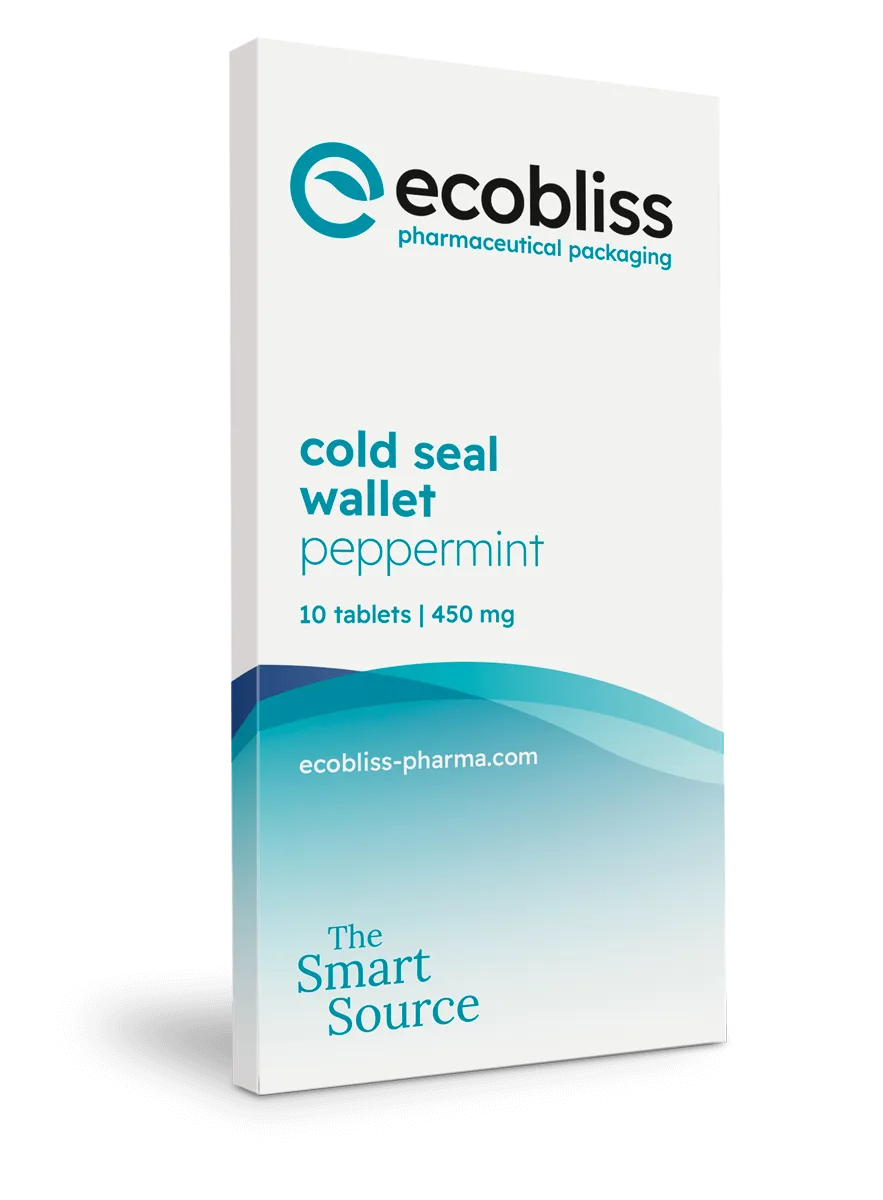
Cold seal wallets. Papkartonen tilføjer et stift ydre lag, der modstår knusning og beskytter blisteren indeni. Cold seal blister wallets er det format, vi bruger mest til kronisk medicin.
Polstrede termoformede bakker. Til medicinsk udstyr og ampuller holder brugerdefinerede hulrumsformer produktet tæt for at forhindre bevægelse under transport.
Foldekartoner. Standard ydre emballage, der tilføjer strukturel støtte til den primære pakke indeni.
Manipulationssikring og serialisering
Påkrævet af EU's FMD siden 2019 for receptpligtig medicin: en manipulationssikring plus en 2D-datamatrixkode. Almindelige implementeringer omfatter folieforseglinger, manipulationsbånd og krympeplast. Læs mere om tamper-evident emballage i farmaceutisk industri.
Beskyttelse på patientsiden
Børnesikret, seniorvenlig åbning, adhærensdesign. Disse beskytter mod fejl på patientsiden (utilsigtet indtagelse, glemte doser, doseringsfejl). Locked4Kids håndterer den børnesikre side. Calendar wallets håndterer adhærenssiden.
Sådan specificerer du den rigtige beskyttelse
Start med stabilitetsdataene. Derefter skal du vælge materialebeskyttelsen. Tilføj derefter de strukturelle, manipulationssikre og funktioner på patientsiden, som dit produkt har brug for. Spring de lag over, som dit produkt ikke har brug for, ellers overkonstruerer du.
Hvis du ønsker en second opinion på en aktuel pakkespecifikation, send os din brief. Vi vil pege på de beskyttelseslag, der rent faktisk er vigtige for dit produkt.
Anmod om en gratis prøve nu!
.avif)


