

De keuze van verpakkingsmaterialen voor farmaceutische producten lijkt een inkoopbeslissing. Dat is het echter niet. Het is een wettelijke procedure die bepaalt of uw stabiliteitsonderzoek slaagt, of uw batch het transport overleeft en of de FDA uw aanvraag accepteert. Het kiezen van het verkeerde materiaal kost niet alleen geld. Het kost maanden aan kwalificatiewerk en soms zelfs de lancering van uw product.
Glas: de inerte standaard voor vloeistoffen en injecteerbare stoffen
Glazen flacons, ampullen en flessen domineren de verpakking van steriele injecteerbare geneesmiddelen, gevriesdroogde producten en de meeste vloeibare formuleringen. De reden: glas is chemisch inert. Het reageert niet met het product, geeft geen weekmakers af en verandert de chemische samenstelling van de werkzame stof niet gedurende de houdbaarheid.
Het nadeel is de kwetsbaarheid en het gewicht. Een glazen flacon breekt. Een glazen fles is zwaar om te verzenden. Voor vaste orale geneesmiddelen, waarbij er geen chemisch voordeel is met glas, wint plastic bijna altijd.
Kunststoffen: veelzijdig, goedkoop, gereguleerd
PVC, PVDC, HDPE, PP, PET . Elk materiaal heeft een ander barrièreprofiel. Elk materiaal laat in verschillende mate verschillende stoffen door, afhankelijk van de tijdschaal. Daarom bestaan er tests voor extracteerbare en uitloogbare stoffen volgens de USP en de Europese Farmacopee.
- PVC: het goedkoopste, meest basale vochtwerende materiaal, standaard voor de meeste vaste orale producten.
- PVDC-gecoat PVC: betere vocht- en zuurstofbarrière.
- HDPE: standaard voor flacons die zonder recept verkrijgbaar zijn. Goede vochtbarrière, kindveilige doppen beschikbaar.
- PP: sterker, hogere hittebestendigheid. Gebruikt in sommige verpakkingen voor medische hulpmiddelen.
- PET: helder, sterk, gebruikt waar presentatie belangrijk is.
De biologische vraag bij kunststoffen betreft altijd de extracteerbare stoffen: wat komt er na verloop van tijd uit het polymeer in de werkzame stof terecht? De regelgevende vraag betreft de uitlogende stoffen: overschrijden deze extracteerbare stoffen de veiligheidsdrempel voor de patiënt? Beide aspecten moeten voor elke nieuwe verpakking worden gekarakteriseerd.
Aluminium: de hoogste barrière die je met geld kunt kopen
Aluminiumfolie als deksel op een thermogevormde blister, of koudgevormd Alu-Alu als zowel vormfolie als deksel. De barrière-eigenschappen zijn een orde van grootte beter dan die van plastic. Als uw API hygroscopisch, zuurstofgevoelig of lichtgevoelig is, is aluminium de factor die het verschil maakt tussen succesvolle stabiliteitsgegevens en een mislukte batch.
Het kost meer. Prima. De kosten van een Alu-Alu blister vallen in het niet vergeleken met de kosten van een mislukte lancering.
Karton en laminaten: de secundaire laag
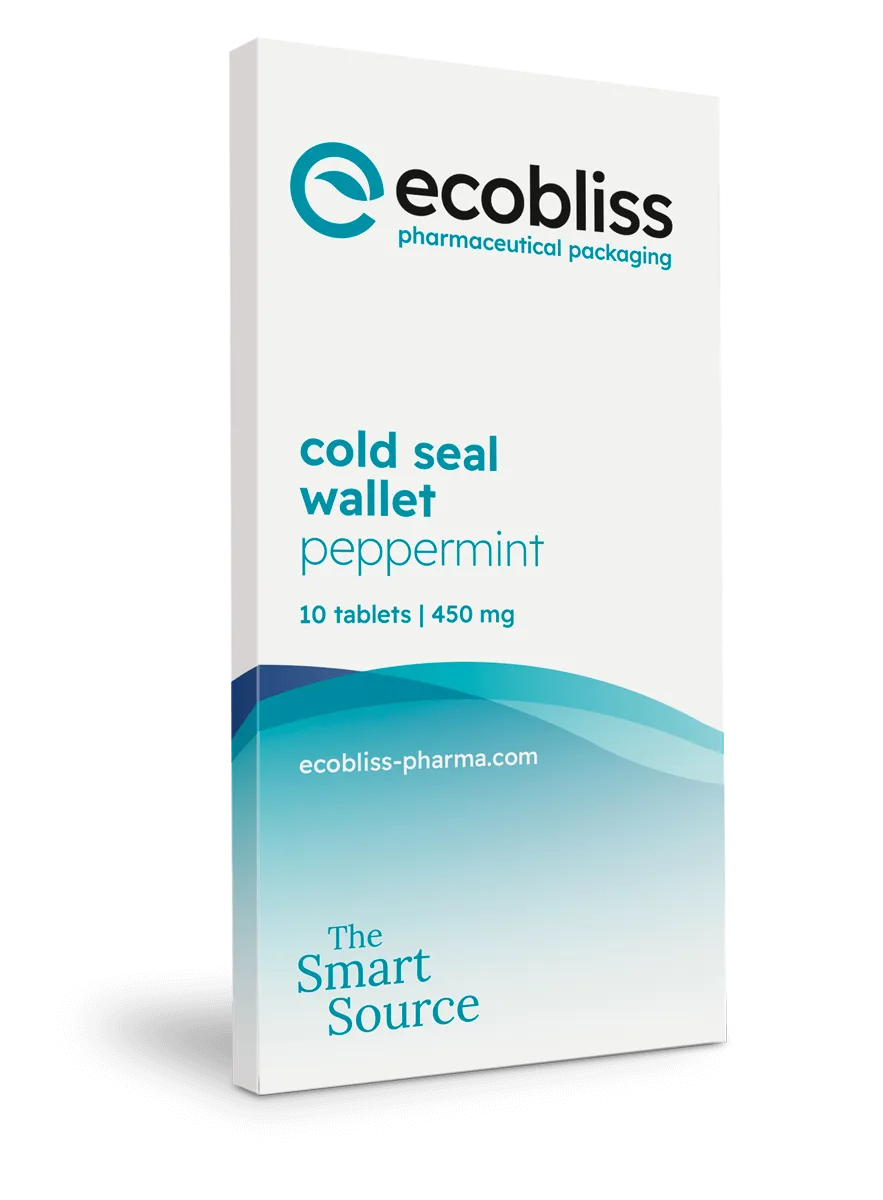
Kartonnen dozen en blister wallets worden doorgaans niet als primaire verpakking beschouwd, omdat ze niet rechtstreeks in contact komen met de werkzame stof. Ze bevatten echter wel de patiëntinformatie, het merk, de verzegeling en de FMD 2D Data Matrix-code. De keuze hangt voornamelijk af van de bedrukbaarheid, FSC-certificering en recyclebaarheid.
Al het karton van Ecobliss is FSC-gecertificeerd (licentie C194323). Cold Seal Wallets combineren recyclebaar karton met de blister aan de binnenkant, waardoor je zowel de bescherming van plastic of aluminium hebt als de recyclebaarheid van papier voor het zichtbare gedeelte.
Voorgevulde spuiten en speciale verpakkingen
Voor zelf toe te dienen injecteerbare geneesmiddelen: voorgevulde spuiten van glas of polymeer. De keuze hangt af van de werkzame stof (sommige zijn niet compatibel met siliconen die in glazen spuiten worden gebruikt), van de patiënt (een kind of een volwassene met artritis heeft mogelijk een polymeerspuit met auto-injector nodig) en van de kosten.
Voor medicijnafgivende implantaten en soortgelijke speciale verpakkingen vinden biologisch afbreekbare polymeren en keramiek langzaam hun weg naar de mainstream. In 2026 bevinden ze zich voornamelijk in het onderzoeksstadium, met een paar goedgekeurde producten.
Hoe kies je nu precies het juiste materiaal?
Vanuit het stabiliteitsonderzoek, van boven naar beneden. De API geeft de barrière-eisen aan. De barrière-eisen geven het materiaal aan. Het materiaal geeft de vormfactor aan (blisterverpakking, fles, ampul, spuit). De vormfactor geeft de secundaire verpakking aan.
Waar bedrijven tijd verspillen, is door dit achteraf te proberen te achterhalen. Eerst een vormfactor kiezen omdat die er mooi uitziet, en dan pas proberen het materiaal aan de stabiliteitsgegevens aan te passen. Dat lukt zelden. Wilt u een tweede mening over een materiaalkeuze? Stuur ons dan de stabiliteitsgegevens en de huidige specificaties. Wij vertellen u of u het juiste materiaal hebt gekozen of dat de lancering een blamage zal worden.
Vraag nu een gratis monster aan!