


En industrie pharmaceutique, le terme «emballage de protection» englobe tout ce qui garantit la sécurité du médicament entre sa fabrication et son utilisation par le patient. La question pertinente n'est pas de savoir quelles protections existent, mais plutôt lesquelles permettent de contrer efficacement quels risques. La plupart des dépenses excessives en emballages pharmaceutiques proviennent de la mise en place de systèmes de protection supplémentaires pour des problèmes inexistants pour le produit lui-même.
Les quatre principales menaces
Les produits pharmaceutiques peuvent se détériorer pendant le transport ou le stockage pour quatre grandes raisons. Chacune d'elles requiert des mesures de protection différentes.
Dégradation environnementale. Humidité, oxygène, lumière, température. Les différents principes actifs se dégradent à des vitesses différentes sous l'effet de ces facteurs. La solution consiste à utiliser des matériaux barrières adaptés au profil de stabilité.
Dommages mécaniques: écrasement des comprimés, bris des flacons en verre, déchirure des emballages. La solution consiste en un amortissement structurel de niveau secondaire ou tertiaire.
Falsification et contrefaçon. Emballage ouvert ou remplacé pendant le transport. La solution de protection: un dispositif de sécurité inviolable et une sérialisation.
Mauvaise utilisation par le patient: dose incorrecte, patient inadapté, ingestion accidentelle par des enfants. La solution consiste en un conditionnement unidoses, un emballage à l'épreuve des enfants et une conception favorisant l'observance du traitement.
Protection basée sur les matériaux
Différents matériaux protègent contre différentes menaces :
Feuille d'aluminium. Barrière maximale contre l'humidité, l'oxygène et la lumière pour les emballages pharmaceutiques. Solution de référence pour les principes actifs hygroscopiques, photosensibles ou sensibles à l'oxygène. Utilisée comme opercule sur les blisters thermoformés ou sous forme d'emballages Alu-Alu formés à froid.
Plastiques revêtus de PVDC. Barrière contre l'humidité de moyenne performance, bien meilleure que le PVC seul. Solution économique pour les principes actifs pharmaceutiques moyennement sensibles.
ACLAR. Barrière haute humidité avec protection contre la lumière.
Verre. Inerte, ne réagit pas avec le produit, étanche aux gaz. Matériau par défaut pour les injectables stériles et les produits lyophilisés.
Tyvek. Perméable aux gaz de stérilisation, il bloque les bactéries. Matériau de référence pour l'emballage barrière stérile des dispositifs médicaux.
Protection structurelle
Au-delà des matériaux, la géométrie de l'emballage protège contre les dommages mécaniques :
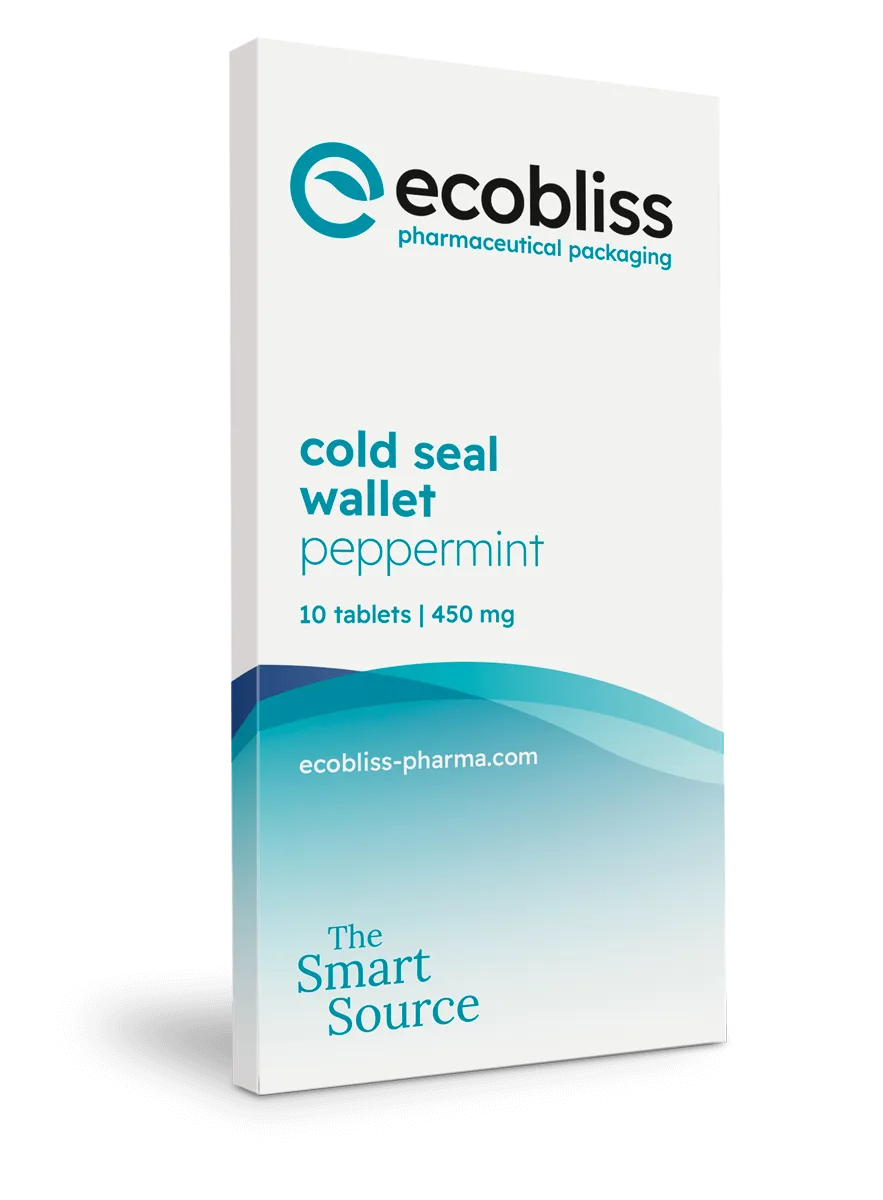
Cold seal wallets. L'étui en carton rigide ajoute une couche extérieure résistante à l'écrasement et protège la plaquette thermoformée. Les Cold seal blister wallets sont le format que nous utilisons le plus souvent pour les traitements de longue durée.
Plateaux thermoformés rembourrés. Pour les dispositifs médicaux et les ampoules, des cavités de forme personnalisée maintiennent fermement le produit afin d'éviter tout mouvement pendant le transport.
Boîtes pliantes. Emballage extérieur standard qui renforce la structure de l'emballage principal intérieur.
Inviolabilité et sérialisation
Depuis 2019, la directive européenne FMD impose un dispositif d'inviolabilité et un code Data Matrix 2D pour les médicaments sur ordonnance. Les solutions courantes comprennent les scellés en aluminium, les bandes d'inviolabilité et le film rétractable. Pour en savoir plus : les emballages inviolables dans l'industrie pharmaceutique.
Protection du côté patient
Sécurité enfant, ouverture adaptée aux seniors, conception favorisant l'observance du traitement. Ces dispositifs protègent contre les erreurs côté patient (ingestion accidentelle, oubli de doses, erreurs de dosage). Locked4Kids assure la sécurité enfant. Les calendar wallets facilitent l'observance du traitement.
Comment spécifier la protection adéquate
Commencez par les données de stabilité. Choisissez ensuite la protection des matériaux. Ajoutez les caractéristiques structurelles, d'inviolabilité et côté patient dont votre produit a besoin. Omettez les couches superflues, au risque de surdimensionner votre emballage.
Si vous souhaitez un deuxième avis sur les spécifications d'un emballage existant, envoyez-nous votre cahier des charges. Nous mettrons en évidence les couches de protection réellement importantes pour votre produit.
Demandez un échantillon gratuit maintenant !
.avif)