


Beschermende verpakkingen in de farmaceutische industrie is de overkoepelende term voor alles wat ervoor zorgt dat een geneesmiddel veilig blijft tussen de productie en het gebruik door de patiënt. De interessante vraag is niet welke beschermende eigenschappen er zijn, maar welke eigenschappen daadwerkelijk welke bedreigingen oplossen. De meeste overbesteding aan farmaceutische verpakkingen komt voort uit het toevoegen van meerdere beschermingslagen tegen problemen die het product niet eens heeft.
De vier belangrijkste bedreigingen
Farmaceutische producten kunnen tijdens transport of opslag om vier belangrijke redenen beschadigd raken. Elk van deze oorzaken vereist andere beschermingsmaatregelen.
Omgevingsdegradatie. Vocht, zuurstof, licht, temperatuur. Verschillende API's degraderen in verschillende mate onder invloed van elk van deze factoren. De beschermende oplossing bestaat uit barrièrematerialen die zijn afgestemd op het stabiliteitsprofiel.
Mechanische schade. Tabletten die breken, glazen flesjes die kapotgaan, folie die scheurt. De beschermende oplossing is structurele demping op secundair of tertiair niveau.
Manipulatie en vervalsing. Verpakking geopend of vervangen tijdens transport. De beschermende oplossing is een fraudebestendige verpakking in combinatie met serialisatie.
Verkeerd gebruik door de patiënt. Verkeerde dosering, verkeerde patiënt, accidentele inname door kinderen. De beschermende oplossing is verpakking in eenheidsdoseringen, kindveilige sluitingen en een gebruiksvriendelijk ontwerp.
Materiaalgebaseerde bescherming
Verschillende materialen bieden bescherming tegen verschillende bedreigingen:
Aluminiumfolie. Biedt de beste bescherming tegen vocht, zuurstof en licht in farmaceutische verpakkingen. De standaardkeuze voor hygroscopische, lichtgevoelige of zuurstofgevoelige API's. Wordt gebruikt als lidding op thermogevormde blisters of als koudgevormd Alu-Alu.
PVDC-gecoate kunststoffen. Middelmatige vochtbarrière, veel beter dan PVC alleen. Kosteneffectief voor API's met een gemiddelde gevoeligheid.
ACLAR. Hoge vochtbarrière met lichtbescherming.
Glas. Inert, reageert niet met het product, gasdicht. Standaard voor steriele injecteerbare en gevriesdroogde producten.
Tyvek. Doorlaatbaar voor sterilisatiegas, maar blokkeert bacteriën. Standaardmateriaal voor steriele barrièreverpakkingen van medische hulpmiddelen.
Structurele bescherming
Naast de materiaaleigenschappen biedt de geometrie van de verpakking bescherming tegen mechanische schade:
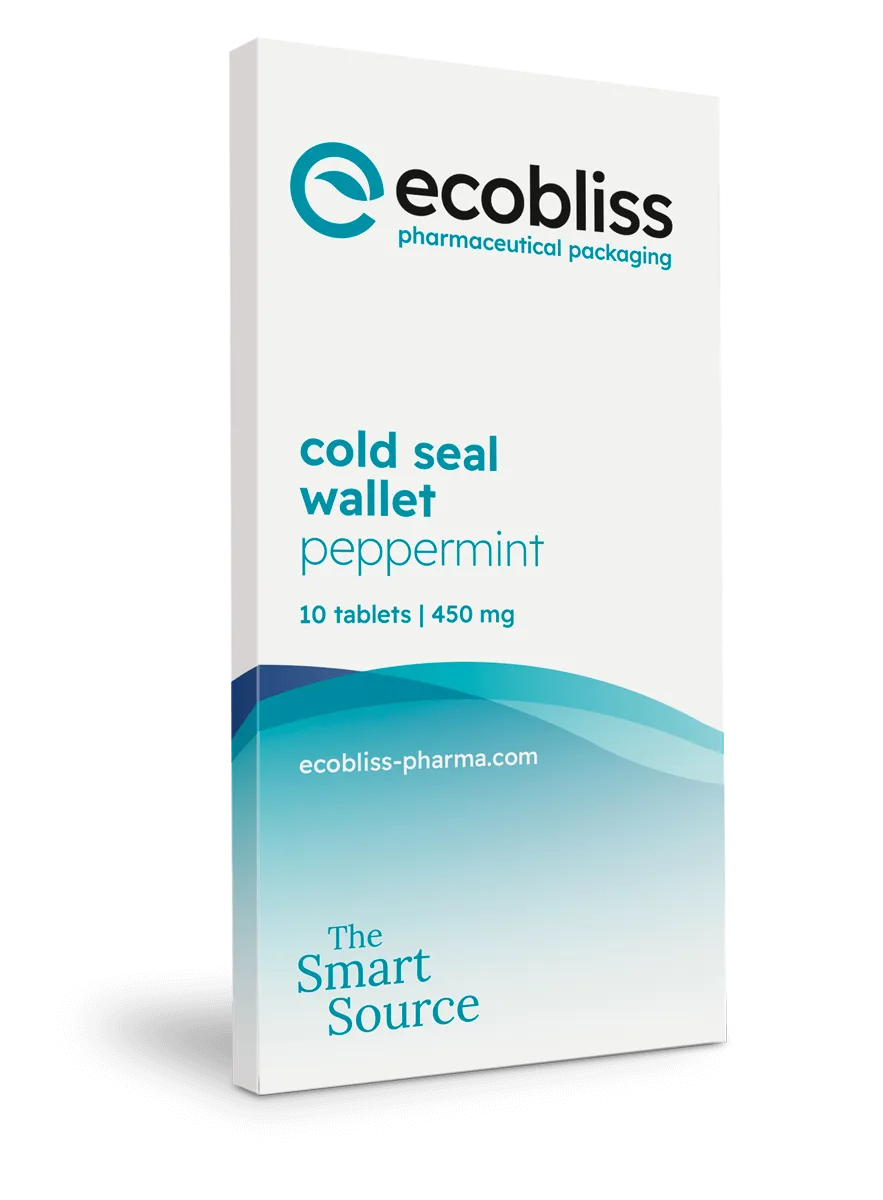
Cold seal wallets. De kartonnen wallet voegt een stevige buitenlaag toe die bestand is tegen pletten en de blister binnenin beschermt. Cold seal blister wallets zijn het formaat dat we het meest gebruiken voor chronische medicatie.
Gevoerde thermogevormde trays. Voor medische hulpmiddelen en ampullen zorgen op maat gemaakte holtes ervoor dat het product stevig vastzit en niet verschuift tijdens transport.
Vouwdozen. Standaard buitenverpakking die extra stevigheid biedt aan de binnenverpakking.
Manipulatiebeveiliging en serialisatie
Volgens de EU-richtlijn FMD is sinds 2019 voor geneesmiddelen op recept een verzegeling tegen manipulatie vereist, in combinatie met een 2D Data Matrix-code. Veelgebruikte toepassingen zijn foliezegels, verzegelbanden en krimpfolie. Lees meer over verzegelde verpakkingen in de farmaceutische industrie.
Bescherming aan de patiëntkant
Kindveilige opening, seniorvriendelijke opening en een ontwerp dat therapietrouw bevordert. Deze beschermen tegen fouten aan de kant van de patiënt (accidentele inname, gemiste doses, doseringsfouten). Locked4Kids zorgt voor de kindveilige sluiting. Calendar wallets zorgen voor therapietrouw.
Hoe kies je de juiste bescherming?
Begin met de stabiliteitsgegevens. Kies vervolgens de materiaalbescherming. Voeg daarna de structurele, fraudebestendige en patiëntgerichte eigenschappen toe die uw product nodig heeft. Sla de lagen over die uw product niet nodig heeft, anders maakt u het te complex.
Wilt u een tweede mening over de huidige verpakkingsspecificaties? Stuur ons dan de beschrijving. Wij wijzen u op de beschermingslagen die er echt toe doen voor uw product.
Vraag nu een gratis monster aan!
.avif)


