


Beskyttende emballasje i farmasøytisk industri er paraplybetegnelsen for alt som holder medisinen trygg mellom produksjon og pasientbruk. Det interessante spørsmålet er ikke hvilke beskyttende funksjoner som finnes, men hvilke funksjoner som faktisk løser hvilke trusler. Mesteparten av overforbruket innen farmasøytisk emballasje kommer fra lagvis forsvar mot problemer som produktet ikke har.
De fire viktigste truslene
Farmasøytiske produkter svikter under transport eller lagring av fire hovedårsaker. Hver av dem krever forskjellige beskyttelsesfunksjoner.
Miljøforringelse. Fuktighet, oksygen, lys, temperatur. Ulike API-er brytes ned med ulik hastighet. Den beskyttende løsningen er barrierematerialer tilpasset stabilitetsprofilen.
Mekanisk skade. Knusing av tabletter, knuste glassflasker, riving av folie. Den beskyttende løsningen er strukturell demping på sekundært eller tertiært nivå.
Forfalskning og manipulering. Pakken åpnes eller byttes ut under transport. Den beskyttende løsningen er manipulasjonssikring og serialisering.
Feilbruk av pasienter. Feil dose, feil pasient, utilsiktet inntak av barn. Den beskyttende løsningen er unit dose-emballasje, barnesikring og design for etterlevelse.
Materialbasert beskyttelse
Ulike materialer beskytter mot forskjellige trusler:
Aluminiumsfolie. Høyeste fuktighets-, oksygen- og lysbarriere i farmasøytisk emballasje. Standard for hygroskopiske, lysfølsomme eller oksygenfølsomme API-er. Brukes som lokk på termoformede blisterpakninger eller som kaldformet Alu-Alu.
PVDC-belagt plast. Fuktbarriere i middels spekter, mye bedre enn PVC alene. Kostnadseffektiv for moderat sensitive API-er.
ACLAR. Høy fuktbarriere med lysbeskyttelse.
Glass. Inert, reagerer ikke med produktet, gasstett. Standard for sterile injiserbare midler og frysetørkede produkter.
Tyvek. Porøs for steriliseringsgass, men blokkerer bakterier. Standard for steril barriereemballasje for medisinsk utstyr.
Strukturell beskyttelse
Utover materialene beskytter pakningsgeometrien mot mekanisk skade:
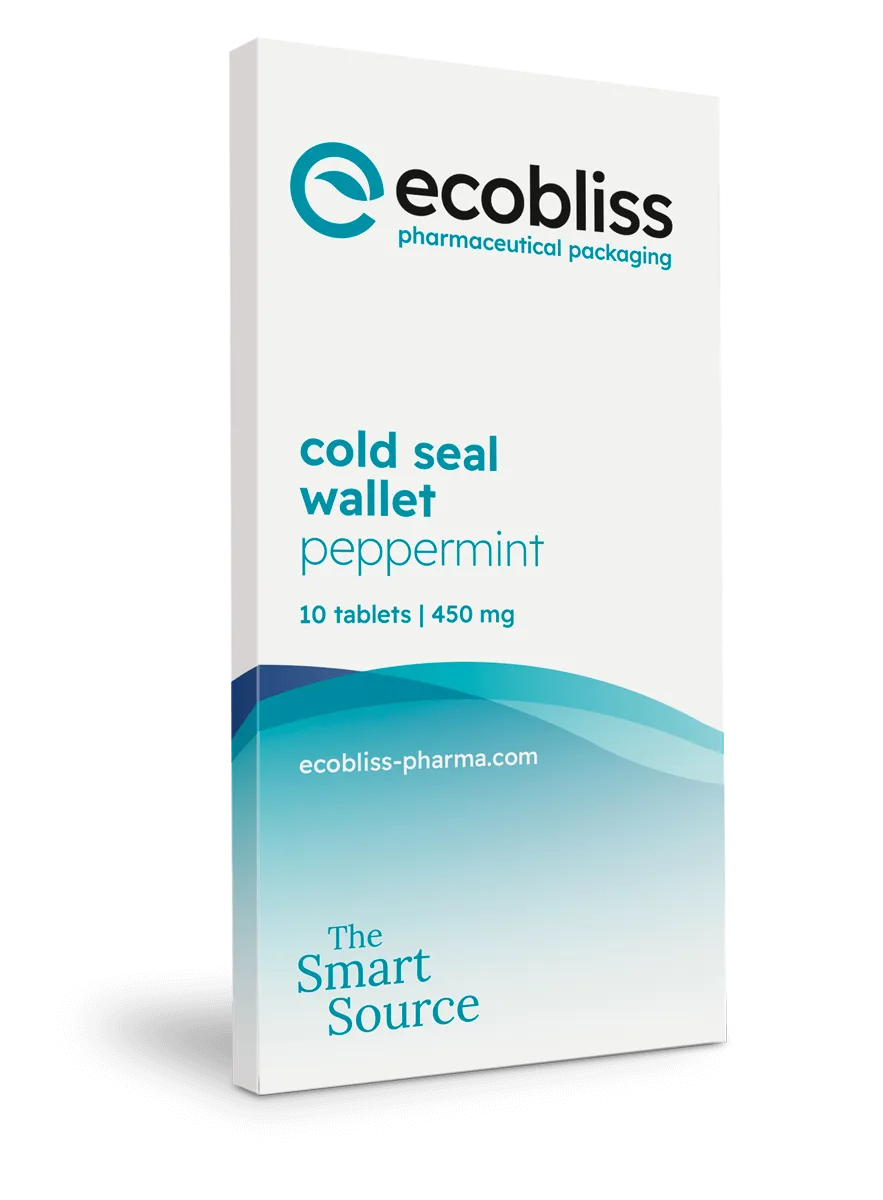
Cold seal wallets. Papppakken har et stivt ytre lag som motstår knusing og beskytter blisteren inni. Cold seal blister wallets er formatet vi bruker mest for kroniske medisiner.
Polstrede termoformede brett. For medisinsk utstyr og ampuller holder tilpassede hulromsformer produktet tett for å forhindre bevegelse under transport.
Brettbare kartonger. Standard ytteremballasje som gir strukturell støtte til primærpakningen inni.
Manipulasjonssikring og serialisering
Påkrevd av EU FMD siden 2019 for reseptbelagte legemidler: en manipulasjonssikringsenhet pluss en 2D-datamatrisekode. Vanlige løsninger inkluderer folieforseglinger, forseglingsbånd og krympeplast. Les mer om manipulasjonssikret emballasje i farmasøytisk industri.
Pasientbeskyttelse
Barnesikret, seniorvennlig åpning, design for etterlevelse. Disse beskytter mot feil på pasientsiden (utilsiktet inntak, glemte doser, doseringsfeil). Locked4Kids håndterer barnesikringssiden. Kalender wallets håndterer etterlevelsessiden.
Slik spesifiserer du riktig beskyttelse
Start med stabilitetsdataene. Derfra velger du materialbeskyttelsen. Legg deretter til lag med strukturelle, manipulasjonssikre og pasientsidefunksjoner produktet ditt trenger. Hopp over lagene produktet ditt ikke trenger, ellers overkonstruerer du.
Hvis du ønsker en ny vurdering av en gjeldende pakkespesifikasjon, send oss en beskrivelse. Vi peker på beskyttelseslagene som faktisk er viktige for produktet ditt.
Be om en gratis prøve nå!
.avif)