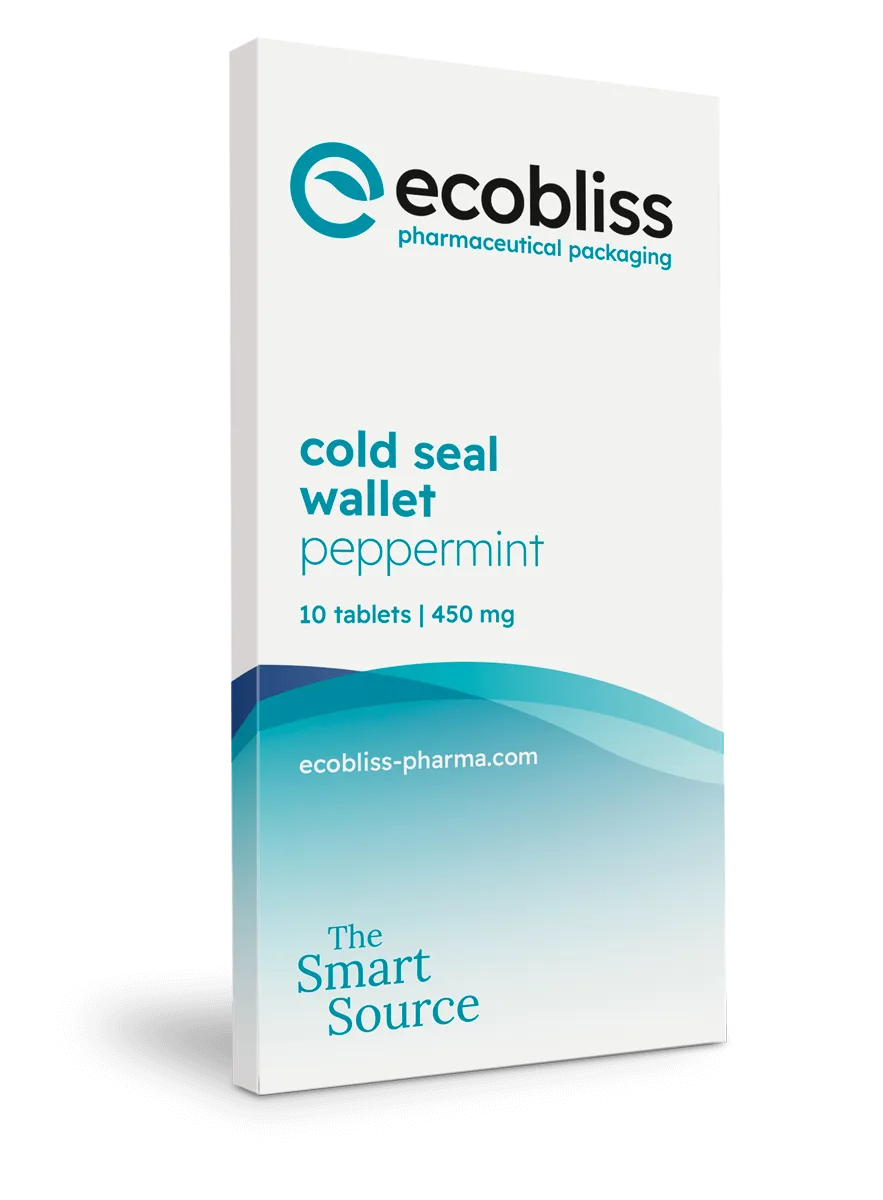
Secondary contract packaging is the work of taking a primary pack (a blister, vial, syringe) and turning it into the patient-facing carton, wallet, or kit that ships to the pharmacy. It's the layer that carries the brand, the leaflet, the tamper-evidence band, the FMD 2D Data Matrix code. It's also the layer where most launch problems show up, and the layer pharma companies most often outsource.
Why secondary is more interesting than it sounds
Primary packaging gets the regulatory attention because it touches the API. Secondary packaging gets less because it doesn't. But secondary is where the patient sees your product, where regulators see your tamper-evidence, where pharmacists scan your serialization code.
A wallet with a printed calendar lifts adherence by roughly 30% over a generic carton. That single change is worth more in real-world clinical outcomes than tweaking the API formulation. The decision isn't "which carton looks nice". It's "how does this wallet support the patient on day 90, day 365, day 720".
What secondary packaging includes
- Folding cartons: paperboard outer carton with patient leaflet inside.
- Cold seal blister wallets: paperboard wallet bonded to the blister, often with a calendar layout for adherence.
- Multi-component kits: clinical trial supplies, combination therapies.
- Multi-pack assembly: hospital-friendly bundles of primary packs.
- Tamper-evidence: foil seals, perforated tabs, shrink bands.
- FMD serialization: 2D Data Matrix code, track-and-trace ready.
- Booklet labels: multi-language patient information for international markets.
- Child-resistant assembly: via Locked4Kids or equivalent.
Why pharma outsources secondary specifically
A pharma company can keep API synthesis and primary packaging in-house and still outsource secondary, because secondary is the most format-heavy and patient-facing layer. Different products need different wallet layouts, different markets need different language sets, different launches need different assembly volumes.
Building all that flexibility in-house means cleanroom space, validated equipment, language-capable artwork systems, and serialization integrations across markets. Most pharma companies prefer to spend that money on R&D and outsource the format flexibility to a specialist.
Where secondary launches go wrong
Two patterns we see in real launches:
Mismatched primary and secondary: the carton is spec'd before the blister geometry is finalized, the blister rubs against the carton wall in transit, the foil scratches, the pharmacist sees what looks like broken tamper-evidence and refuses to dispense.
Adherence afterthought: the patient gets a beautiful carton with a generic blister inside. Six months in, refill rates are 40% lower than the trial predicted. The wallet design that would have lifted adherence by 30% was on the next sprint that never happened.
Both are avoidable if secondary is part of the launch conversation from day one, instead of a procurement decision in month nine.
What we do for secondary contract packaging
We've spent thirty years on secondary specifically. Cold seal blister wallets are our specialty, but we run heat seal lines, child-resistant assembly, multi-language booklet labeling, and FMD serialization on the same factory floor. Our customers include the big global pharma names and a long tail of specialty pharma launching orphan drugs and specialty therapies.
If you're scoping secondary packaging for a launch in 2026 or 2027, send us the brief. We'll come back with two or three configurations and a sample. Or ask for samples if you want to feel the difference between a generic carton and a calendar wallet for chronic medication.
Request a free sample now!