

Elegir los materiales de envasado farmacéutico parece una simple decisión de compra. Pero no lo es. Se trata de un proceso regulatorio que determina si el estudio de estabilidad se supera, si el lote resiste el transporte y si la FDA aprueba la solicitud. Elegir el material incorrecto no solo supone un coste económico, sino también meses de trabajo de cualificación y, en ocasiones, el lanzamiento del producto.
Vidrio: el material inerte por defecto para líquidos e inyectables
Los viales, ampollas y frascos de vidrio predominan en los inyectables estériles, los productos liofilizados y la mayoría de las formulaciones líquidas. La razón: el vidrio es químicamente inerte. No reacciona con el producto, no libera plastificantes ni altera la composición química del principio activo durante su vida útil.
La desventaja radica en su fragilidad y peso. Un vial de vidrio se rompe. Un frasco de vidrio es pesado para transportar. Para medicamentos orales sólidos, donde la química no ofrece ventajas con el vidrio, el plástico casi siempre es la mejor opción.
Plásticos: versátiles, baratos, regulados
PVC, PVDC, HDPE, PP, PET. Cada uno tiene un perfil de barrera diferente. Cada uno libera distintas cantidades de sustancias distintas en diferentes periodos de tiempo, razón por la cual existen las pruebas de extractables y lixiviables de la USP y la Farmacopea Europea.
- PVC: la barrera antihumedad más barata y básica, la opción predeterminada para la mayoría de los productos orales sólidos.
- PVC recubierto de PVDC: mejor barrera contra la humedad y el oxígeno.
- HDPE: estándar para frascos de medicamentos de venta libre. Buena barrera contra la humedad, tapas a prueba de niños disponibles.
- PP: más resistente, con mayor resistencia al calor. Se utiliza en algunos envases de dispositivos médicos.
- PET: transparente y resistente, utilizado cuando la presentación del producto es relevante.
La cuestión biológica en el caso de los plásticos radica siempre en los extractables: qué sustancias se desprenden del polímero con el tiempo y se incorporan al principio activo. La cuestión regulatoria se centra en los lixiviables: si estos extractables superan el umbral de seguridad para el paciente. Ambos aspectos deben caracterizarse para cualquier nuevo envase.
Aluminio: la barrera más alta que el dinero puede comprar
Papel de aluminio como tapa para blíster termoformado, o Alu-Alu conformado en frío como película de formación y tapa. Su capacidad de barrera es muy superior a la del plástico. Si el principio activo es higroscópico, sensible al oxígeno o a la luz, el aluminio es lo que separa unos datos de estabilidad satisfactorios de un lote fallido.
Cuesta más. De acuerdo. El coste de un blíster de aluminio es pequeño comparado con el coste de un lanzamiento fallido.
Cartón y laminados: la capa secundaria
Las cajas de cartón y los blister wallets no suelen considerarse envases primarios porque no entran en contacto directo con el principio activo. Sin embargo, contienen la información del paciente, la marca, la banda de seguridad y el código Data Matrix 2D de la FMD. La elección depende principalmente de la facilidad de impresión, la certificación FSC y la reciclabilidad.
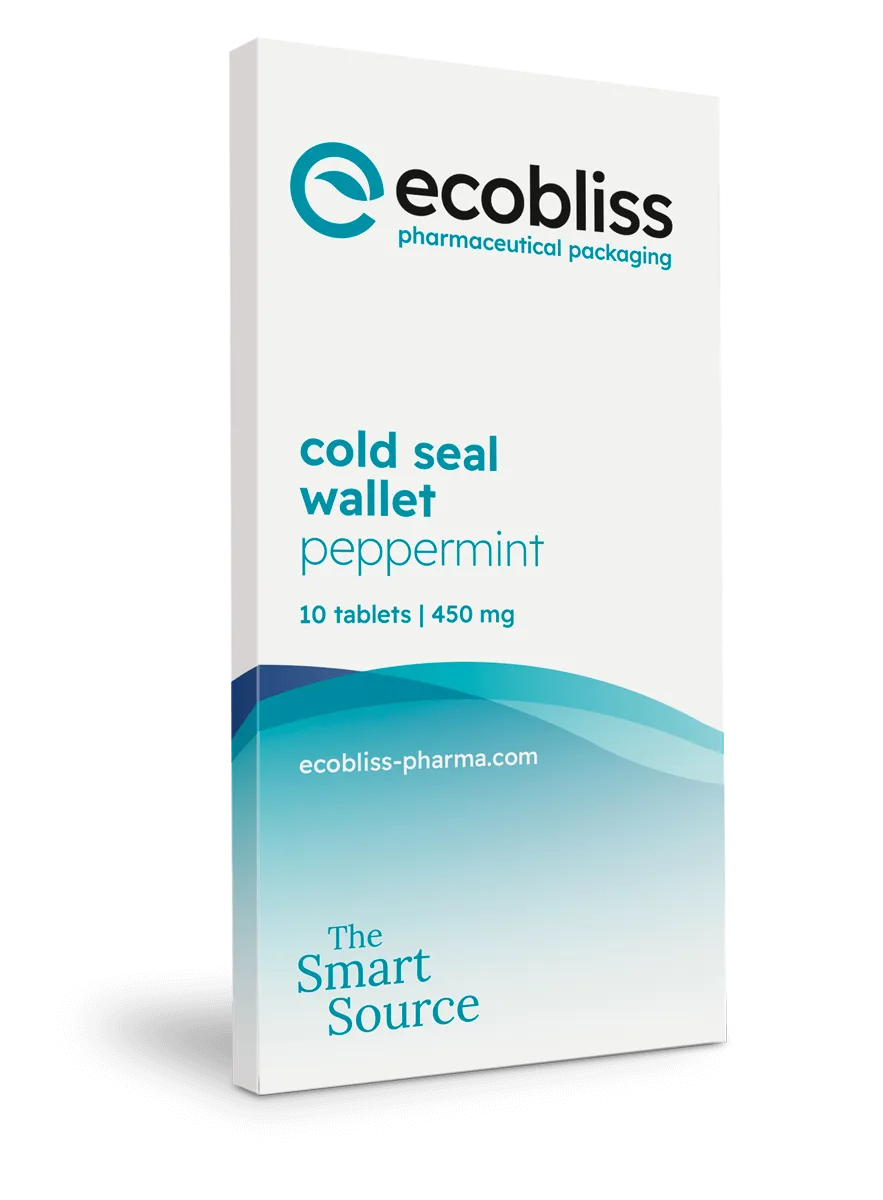
Todos los cartones de Ecobliss cuentan con la certificación FSC (licencia C194323). Los Cold Seal Wallets combinan cartón reciclable con el blister interior, lo que proporciona la barrera del plástico o el aluminio y la reciclabilidad del papel en la parte visible.
Jeringas precargadas y contenedores especiales
Para inyectables autoadministrados: jeringas precargadas de vidrio o polímero. La elección depende del principio activo (algunos no toleran la silicona utilizada en las jeringas de vidrio), del paciente (un niño o un adulto con artritis podría necesitar una jeringa de polímero con autoinyector) y del coste.
En el caso de los implantes liberadores de fármacos y otros dispositivos especializados similares, los polímeros biodegradables y la cerámica se están incorporando gradualmente al mercado. En 2026, la mayoría se encontraban en fase de investigación, con algunos productos ya aprobados.
Cómo elegir el material adecuado
A partir del estudio de estabilidad, de arriba hacia abajo. El principio activo indica el requisito de barrera. El requisito de barrera indica el material. El material indica el formato (blister, botella, vial, jeringa). El formato indica el embalaje secundario.
Las empresas pierden tiempo intentando aplicar ingeniería inversa. Primero eligen un formato porque les parece atractivo y luego intentan que el material cumpla con los datos de estabilidad. Rara vez lo consiguen. Si desea una segunda opinión sobre la elección de un material, envíenos los datos de estabilidad y las especificaciones actuales. Le diremos si ha elegido el material adecuado o si el lanzamiento les dejará en evidencia.
Solicite ahora una muestra gratuita