
Understanding how to choose primary packaging starts with the drug and follows a fixed sequence: product, patient use, market rules, and production. Because each step sets parameters for the next, early decisions directly impact stability, usability, and scalability. The ultimate goal is to develop a container closure system that protects the drug and performs reliably in real-world conditions, from the filling line to the patient's hands.
• Start with the drug product, as it dictates the necessary protection levels and barrier requirements.
• Define patient use early on to minimize dosing errors and usability risks.
• Align with market regulations from the outset to avoid costly redesigns later.
• Confirm production feasibility before finalizing the packaging format and materials.
Selecting primary packaging for a new drug product requires a structured pharmaceutical packaging decision process. You begin with product data, transition to patient needs, address market constraints, and finally evaluate production realities. This methodology ensures a robust container closure system selection and minimizes the need for late-stage modifications. For a comprehensive overview, explore the pharmaceutical packaging development process that seamlessly connects all these stages.
How to choose primary packaging starts with the drug product
The first step in understanding how to choose primary packaging is to evaluate the specific needs of the drug product. Begin by reviewing its dosage form, strength, and physical state, whether liquid, solid, or powder. Next, assess the drug's sensitivity to moisture, oxygen, light, and temperature, as these factors ultimately dictate your barrier requirement selection.
It is crucial to separate verified data from mere assumptions. If specific data is missing, stability and compatibility studies become essential to prevent early missteps that could compromise shelf life. At this stage, refrain from selecting a specific format. Instead, focus entirely on what the packaging must accomplish to safeguard product quality over time.
How to choose primary packaging for patient use
The subsequent step in learning how to choose primary packaging involves evaluating patient use. You must define how the medicine will be administered, including whether it requires a unit-dose or multi-dose presentation, the frequency of administration, and the overall treatment duration. Because complex dosing regimens naturally increase the risk of user error, the packaging must intuitively guide the patient toward correct usage.
Real-world users often face physical limitations, such as reduced dexterity or impaired vision. Consequently, factors like opening force, text readability, and structural layout directly impact both safety and medication adherence. Standard formats simply do not work in every scenario. For instance, a single capsule packaging case study demonstrates how even a one-dose product might require a highly customized approach to guarantee safe handling.
How to choose primary packaging in a market and regulatory context
The broader market context establishes key criteria for your primary packaging selection. Different geographic regions impose specific regulations regarding child-resistant packaging, tamper evidence, labeling requirements, and serialization. These mandates inevitably influence both primary and secondary packaging choices, as the spatial and structural elements must perfectly align.
Regulatory requirements should heavily guide your initial decisions, considering that late-stage changes are notoriously expensive. Furthermore, child-resistant features must still accommodate senior-friendly accessibility, meaning that usability testing must accurately reflect the real-world target demographic. Approached this way, regulatory compliance becomes an inherent part of the design process rather than a mere final checklist.
How to choose primary packaging formats and materials
Once the inputs regarding the product, patient, and market are thoroughly defined, the next step in understanding how to choose primary packaging is determining the format and material. This stage formally defines your container closure system selection. Common options include blisters, bottles, and custom formats, with each choice establishing distinct parameters for both tooling and filling lines.
Your material choices must align perfectly with the required protection levels and drug compatibility. Because these materials become integral to the formal qualification program, implementing changes later can be incredibly difficult. To prevent this, we apply design for manufacturability principles to verify feasibility early on. This proactive check ensures that the design can run smoothly in stable production environments before any final decisions are locked in.
How to choose primary packaging for volume and production
The final step in navigating how to choose primary packaging is aligning your concept with actual production capabilities. Carefully estimate your initial batch sizes, launch volumes, and projected future growth, as these figures significantly impact automation strategies, overall costs, and production planning. Small production volumes typically require highly flexible setups, whereas large volumes benefit most from dedicated, automated lines.
Ultimately, design decisions must harmonize with real-world production conditions. Verify whether your chosen format can run on existing machinery or if it demands new capital investments. If manufacturing will be outsourced, be sure to involve your pharmaceutical contract packaging partners early in the project. Their input dramatically reduces the risk of delays during scale-up and technology transfer.
Decision gates in the pharmaceutical packaging decision process
A properly structured pharmaceutical packaging decision process incorporates formal decision gates. Each gate verifies whether the current concept continues to meet all predefined requirements before the project moves forward. This methodical approach effectively mitigates risk and helps keep project timelines strictly under control.
Simple decision flow
Start by analyzing the product data to define specific protection needs. Next, confirm patient usage parameters and overall usability. Afterward, ensure complete alignment with relevant market requirements. Proceed by selecting the appropriate packaging format and materials. Finally, verify production feasibility. Because each consecutive step inherently limits the available options for the next, introducing late changes becomes increasingly difficult and costly.
Practical gate checklist
• Product protection: Does the packaging meet barrier and stability needs based on verified data?
• Patient use: Can target users easily open, comprehend, and dose the medication correctly?
• Regulatory fit: Are requirements for child resistance, proper labeling, and serialization fully addressed?
• Manufacturability: Can the pack be reliably filled, sealed, and inspected at scale?
• System alignment: Do the primary and secondary packaging components integrate seamlessly?
Always run physical trials using real materials and actual production processes. This critical step validates the complete packaging system rather than just a theoretical concept.
Common mistakes in how to choose primary packaging
A frequent mistake when figuring out how to choose primary packaging is selecting a specific format far too early in the timeline. This premature decision often necessitates a complete redesign once the actual product data becomes clear. Another prominent issue involves ignoring design for manufacturability in your packaging, which frequently causes failures during the filling or sealing stages.
Development teams may also severely underestimate patient risks, particularly concerning complex dosing regimens. Additionally, locking in material choices prematurely can block vital improvements later in the process. Finally, skipping real-world production tests almost guarantees unforeseen issues during scale-up. Relying on a deliberate, step-by-step approach is the best way to avoid these common pitfalls.
FAQ about how to choose primary packaging
What is the first step in primary packaging selection?
Start directly with the drug product. Define its chemical properties and physical sensitivities, as these factors determine the required level of environmental protection.
When should material selection start?
Material selection should only begin after the product, patient, and market inputs are entirely clear. This sequence ensures that the chosen materials genuinely meet real-world functional needs.
How does child resistance affect design?
Child-resistant packaging mandates specific mechanics for opening and closing the container. However, the design must remain easily accessible for senior patients, making rigorous user testing an absolute requirement.
What is a container closure system?
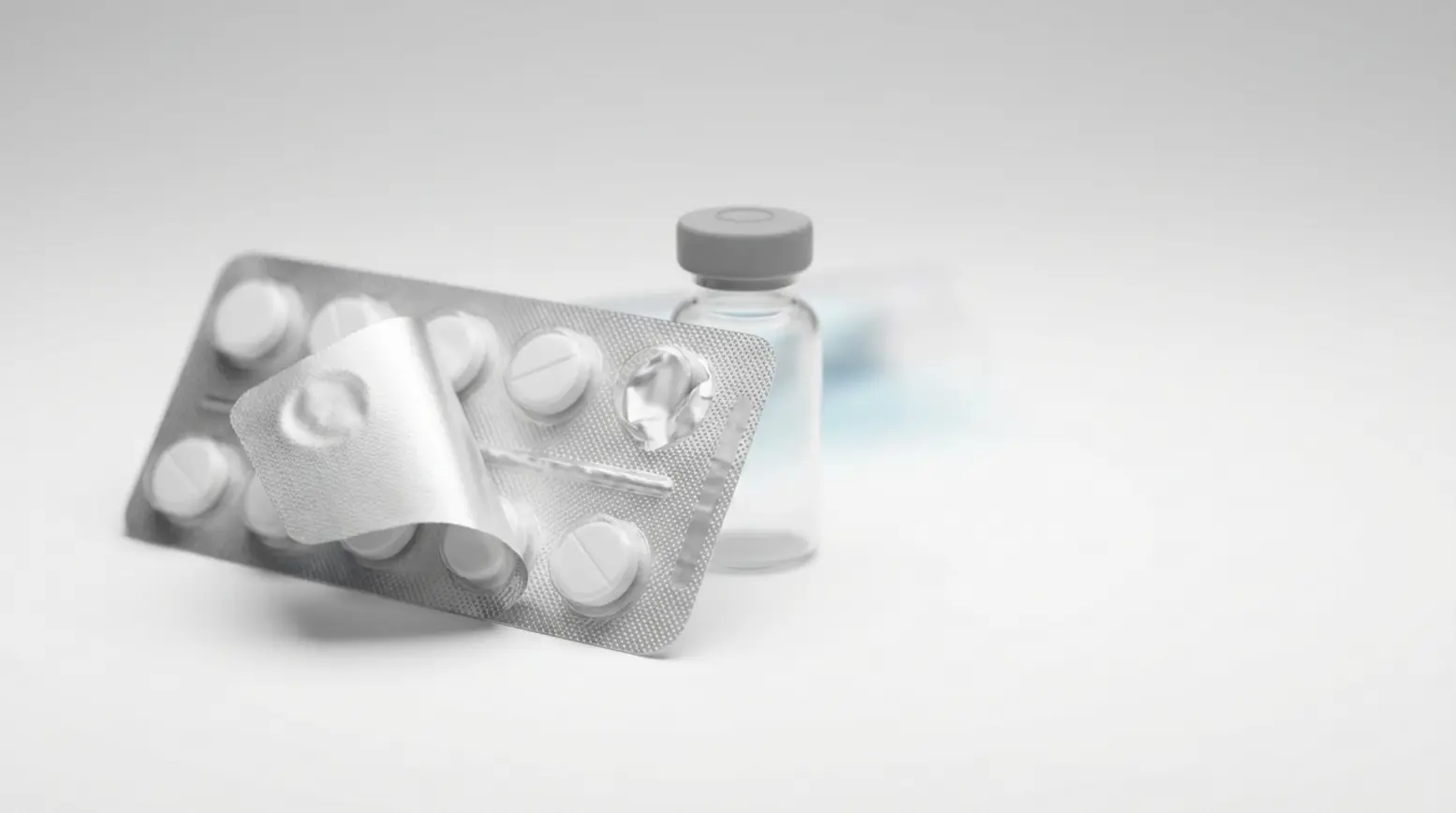
It is the complete system that physically holds and protects the drug. This includes both the primary container and its closure, such as a bottle paired with a cap or a formed blister sealed with lidding foil.
How do you reduce risk in packaging decisions?
Employ a highly structured decision-making process, conduct testing early, and confirm manufacturability long before locking in the final design. Always work with actual materials in realistic production settings.
The next step in your primary packaging choice
By following this structured framework, you can easily justify your design decisions and substantially reduce developmental risks. Thoroughly review each input, confirm all assumptions, and validate every step before moving forward. Because every pharmaceutical product features unique constraints, securing expert input can bridge the gap between product needs and production realities. We invite you to discuss your primary packaging choice with us so we can review your container closure system and ensure it perfectly fits your specific product, patient, and market requirements.
Request a free sample now!