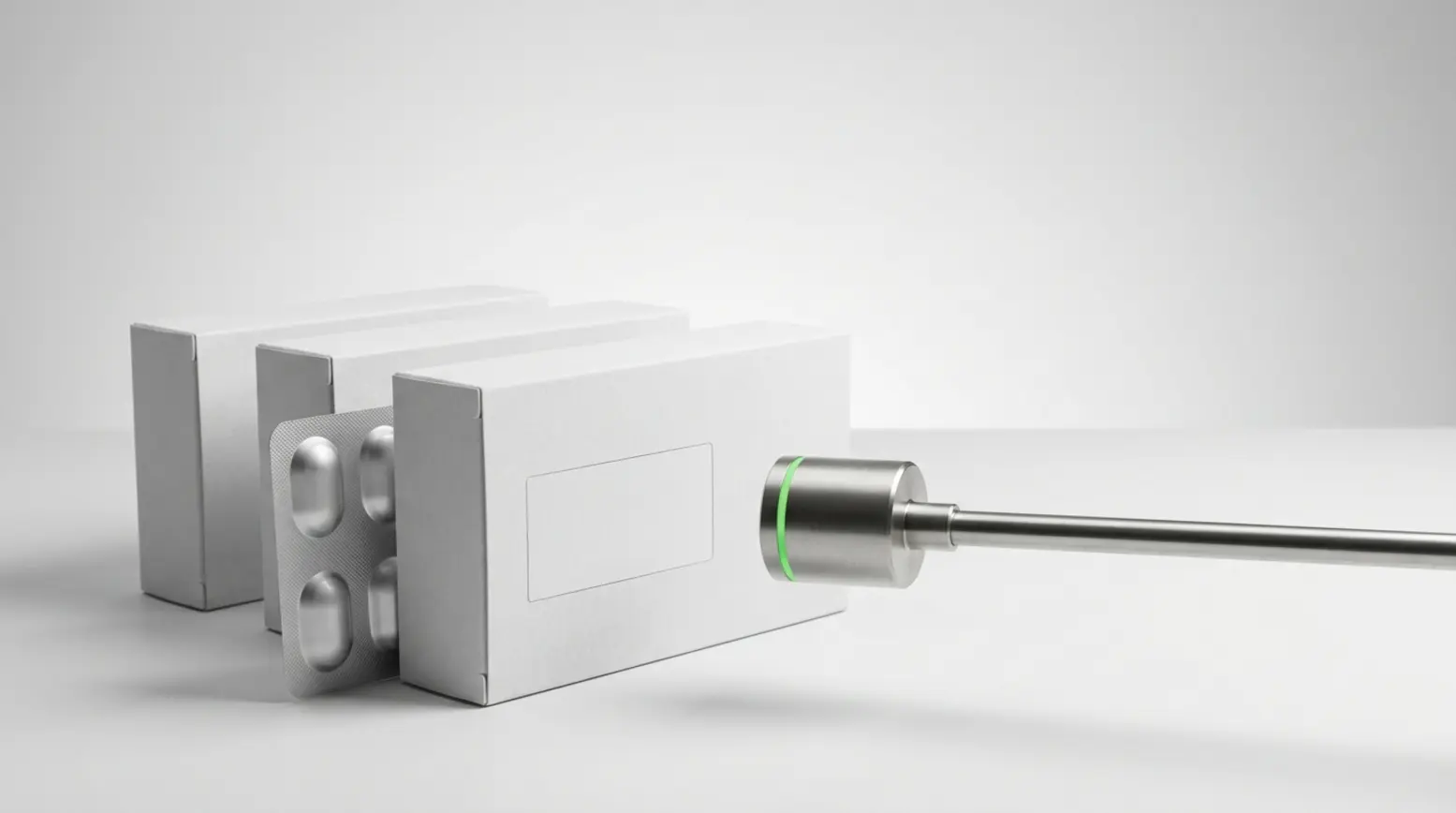

If you are producing 200 packs instead of two million, the central answer remains simple: a small batch can still require serialization. Batch size does not determine this requirement on its own; rather, the regulatory scope follows the product, its prescription status, and the target market. If the medicine falls within scope, the run still requires coding, verification, accurate records, and final control of every serial number. For this reason, teams must confirm the scope early with their regulatory departments, select the appropriate route, and carefully plan data management, scrap handling, and batch closure before production even begins.
• A small volume does not exempt a medicine from the serialization scope.
• Regulatory scope depends entirely on the product, its prescription status, and the destination market.
• Both inline and semi-automatic serialization are viable for low-volume runs.
• The cost per pack is usually higher since setup and documentation requirements remain largely unchanged.
• Specialty medicines demand tighter control because stock is limited and each individual pack can hold significant value.
Why serialization for small batches still applies to a 200-pack run
Many teams handle small-scale launches, country-specific packs, or specialty medicines involving only a few hundred units. In these scenarios, the primary focus should be on scope rather than volume. A medicine that falls within the scope of a target market will still require the same unique identifier logic and control steps as a much larger commercial run. This is the core point behind serialization for small batches, and addressing it from the very beginning of a project is crucial.
If the scope is evaluated too late, teams may be forced to revise artwork, overhaul the packaging plan, or adjust the data handover process. Such delays slow down the project and lead to avoidable rework. Consequently, product managers, procurement teams, project managers, and packaging engineers benefit significantly from reviewing the scope early with the regulatory team, aligning their strategies before artwork and production schedules are finalized.
How serialization for small batches works on a low-speed line
There are two common approaches to low-volume pharmaceutical serialization. One method utilizes a low-speed serialization line equipped with inline printing and verification. The other relies on semi-automatic serialization performed in tightly controlled steps. Both routes can be highly suitable for specialty medicine serialization; however, the best choice ultimately depends on the specific volume, pack format, line compatibility, and the level of manual handling a team can effectively manage.
Inline printing and verification
During an inline process, the pack moves seamlessly along the line while a code is printed, and a camera immediately verifies that this code is clear and readable. The system then logs the correct status for each serial number to ensure that accepted and rejected packs are never mixed. This route is typically an excellent fit when the pack format integrates well with the line and the overall process remains stable throughout the run.
Even during a small run, the team must perform pre-batch line checks, execute test prints, calibrate the camera setup, ensure secure number handling, and maintain comprehensive records. Small-batch pharmaceutical packaging does not bypass any of these steps because every single pack still requires a reliable code and a definitive status.
Semi-automatic serialization in controlled steps
In a semi-automatic serialization route, packs are handled in a strict, predefined order. They are presented, printed, read, checked, and released step by step. This approach is highly beneficial when volumes are low, formats are overly complex, or the overall run size does not justify a full inline setup. Furthermore, it proves extremely useful when serializing a launch batch that involves multiple artwork versions or highly restrictive planning changes.
Naturally, this route must still remain fully controlled and thoroughly documented. It requires secure serial number handling, rigorous print checks, meticulous batch records, and a definitive release decision. When a project is planned well, semi-automatic serialization is a highly practical solution rather than a weaker alternative.
What both routes must still control
Both routes demand the same foundational controls because the status of every serial number must remain crystal clear at all times. Serial numbers must be kept secure throughout the entire process. Furthermore, readers or cameras must accurately verify whatever is printed, and batch records must be impeccably complete. Finally, the run requires strict final closure, which includes a comprehensive serial number reconciliation and a small-batch review for used, rejected, damaged, sampled, reworked, and unused serials.
| Route | Best fit | Key controls | Main trade-off |
|---|---|---|---|
| Inline printing and verification | Steady runs on a suitable line with a standard pack format | Print quality, camera verification, status control, and batch record closure | Setup effort can feel disproportionately high for a very short run |
| Semi-automatic serialization | Low volumes, complex formats, or launch batches requiring greater flexibility | Controlled presentation, printing, reading, release, and final serial number checks | Increased manual handling requires tighter planning and coordination |
If a short run does not justify a dedicated setup, some teams opt for pharmaceutical contract packaging for small batches to ensure that the work and coordination remain strictly controlled from start to finish.
What drives cost in serialization for small batches
The primary logic behind the cost is straightforward. A significant amount of work occurs long before the first saleable pack is ready, and these fixed efforts do not scale down proportionally with volume. Because of that, serialization for small batches often has a higher cost per pack than a large run. This holds true even if the actual physical production time is brief.
Fixed setup work
Before production even starts, the team may need to perform line clearance, batch setup, data preparation, testing, system checks, documentation, and final review planning. Furthermore, some projects demand extra coordination due to uncertain launch timing or last-minute artwork changes. In such fluid situations, teams frequently seek out flexible packaging support for a launch batch, ensuring that the packaging plan remains highly practical while various inputs are still shifting.
Why unit cost rises in a small batch
In a large run, the initial setup effort is spread across many thousands of packs. In a small run, however, that exact same preparation may only support a few hundred units. Therefore, the unit cost is inherently higher. Procurement teams must always compare the full scope of work, as packing time alone fails to reveal the true effort involved. Data checks, in-process controls, robust documentation, and final reconciliation all remain vital parts of the job.
Scrap, rework, and unused serials
Scrap becomes far more consequential when the batch is small and replacement stock is scarce. A failed print, a damaged carton, or a sample taken during the run can have an oversized impact when only a few packs exist in total. The team needs to establish a clear sample pack serial status, define definitive rules for rework, and keep a precise record of all unused serial numbers upon closure. This diligence is especially important in high-value medicine packaging, where even one rejected unit can negatively affect supply or disrupt launch timing.
We have frequently encountered this challenge in very small, high-value formats. As demonstrated in the single-capsule packaging case, taking a tailored approach to small-quantity packaging proves incredibly useful in practice.
Why serialization for small batches needs extra control for specialty medicines
Specialty medicines frequently combine low volumes with high product value, limited replacement stock, and deeply complex artwork requirements. Because of these factors, every single pack and every individual code matters more. A rejected pack is no longer just a packaging issue; it can severely disrupt stock planning, limit market supply, and derail launch timing.
A common example is a launch batch featuring multiple market versions yet yielding only a small total quantity. The project may need to accommodate samples, country-specific text, and late-stage updates to data transfers. In such cases, rare disease packaging serialization and similar specialty projects require immaculate status control from start to finish. For more background on this wider context, our article detailing packaging for orphan drugs explains exactly why low volumes and high unit values often appear together.
Choosing a practical route for serialization for small batches
Finding the right route depends entirely on the true shape of the project. Teams must first confirm which specific markets are in scope, exactly how many packs are planned, whether the chosen format is ready for coding and reading, and who will be responsible for sending and approving the serial data. Answering these questions helps the team select a route that perfectly matches both the production volume and the packaging design.
Questions to ask before the run
Before production commences, the team should define exactly how samples, damaged packs, rejects, and any required rework will be managed. Establishing these protocols helps avoid sudden delays during the run and actively supports much faster batch closure at the end. Creating a simple plan early on effectively prevents confusion down the line, especially when serializing a launch batch with several distinct market versions.
When outsourcing may help
Some companies prefer not to build dedicated internal capacity just for a short run, which is often a sensible choice when the volume is low or the packaging format is highly unusual. While outsourcing does not change the strict regulatory scope, it can make packaging execution and overall coordination much easier for a low-volume project.
Where one integrated partner can reduce handovers
Small runs can easily become burdensome when design, component supply, coding, and packaging responsibilities are split across multiple parties. Every single handover adds yet another step to plan and verify. Because of this, relying on one integrated partner can drastically reduce complexity and support much faster alignment across pack design, manufacturability, component production, packaging, and serialization.
We proudly support that full packaging journey in-house whenever it fits the project parameters. We design the packs, review manufacturability early in the process, produce our own components, and provide comprehensive primary and secondary packaging, including serialization. We can even supply the necessary packaging machinery if a customer ultimately decides to bring the work in-house.
Decision checklist for a small-batch serialization project
Use this checklist before locking in your final run plan. It helps product, procurement, project, and packaging teams stay tightly aligned on all key decisions, thereby reducing the risk of late-stage changes during execution.
• Scope: Confirm directly with the regulatory team which specific products and markets fall into scope.
• Route: Choose between inline or semi-automatic serialization based on volume, packaging format, and line compatibility.
• Pack review: Double-check that the pack format is entirely ready for coding, reading, and practical physical handling.
• Scrap plan: Define upfront how samples, damaged packs, rejects, and potential rework will be managed.
• Data handover: Agree upon exactly who will send, check, and ultimately approve the critical serial data.
• Closure: Plan out the final report and thorough reconciliation processes for all used and unused serial numbers.
When you are ready to review your anticipated volume, target markets, pack format, and launch timing, you can discuss a small-batch serialization project with us. We will gladly help you assess the most practical route and the precise packaging steps needed to support it.
Common questions about small-batch serialization
Does a small batch avoid serialization requirements? No. Producing a small batch does not automatically place it outside of regulatory scope. Scope depends solely on the product itself, its prescription status, and the intended destination market, which is why the regulatory team must confirm this detail first.
Is semi-automatic serialization less controlled? No. A semi-automatic process can be completely controlled and meticulously documented. It still demands secure number handling, robust print checks, strict status control, accurate batch records, and a final serial number review.
Why is the cost per pack often higher in a small run? This occurs because the fixed amount of work remains largely the same. Rigorous setup, testing, documentation, and final closure still have to happen, meaning fewer total packs must carry the burden of the same basic preparation effort.
What happens to damaged packs or unused serials? They require a clearly recorded status during final batch closure. This critical accounting must include all damaged units, line rejects, pulled samples, rework outcomes, and any unused serial numbers.
Can one supplier manage design, packaging, and serialization? Yes. For many projects, partnering with a single, integrated supplier can cover a much larger portion of the packaging journey. We routinely support structural design, early manufacturability reviews, direct component production, primary and secondary packaging operations, serialization, and even machinery supply for customers who ultimately choose to insource their operations.
Request a free sample now!