
Unit dose packaging is the format where each dose sits in its own sealed cavity. Tablets in blister cavities, syringes in molded trays, single-dose sachets for powders. The opposite is bulk packaging: thirty tablets in a bottle, the whole batch sharing the same air every time the cap opens.
Most modern pharma defaults to unit dose for solid orals. The reasons go beyond convenience.
What unit dose actually delivers
Three operational benefits that drive the format choice:
Stability through the full shelf life. Each cavity is its own sealed microenvironment. The cavity you open in month 12 still has the same stability profile as the one you open in month 1. Compare that to a bottle, where every dose shares the same air starting from the moment the cap first comes off.
Dose tracking. The patient can see at a glance whether they took their Tuesday dose. The empty cavity is the receipt. For chronic medications, that's the difference between adherence and non-adherence.
Tamper evidence. A torn foil is obvious. A bottle that's been opened mid-transit looks the same as one that hasn't. EU FMD made tamper-evidence mandatory for prescription medicines in 2019, which accelerated the unit-dose shift.
Common unit dose formats
Cold seal blister wallets
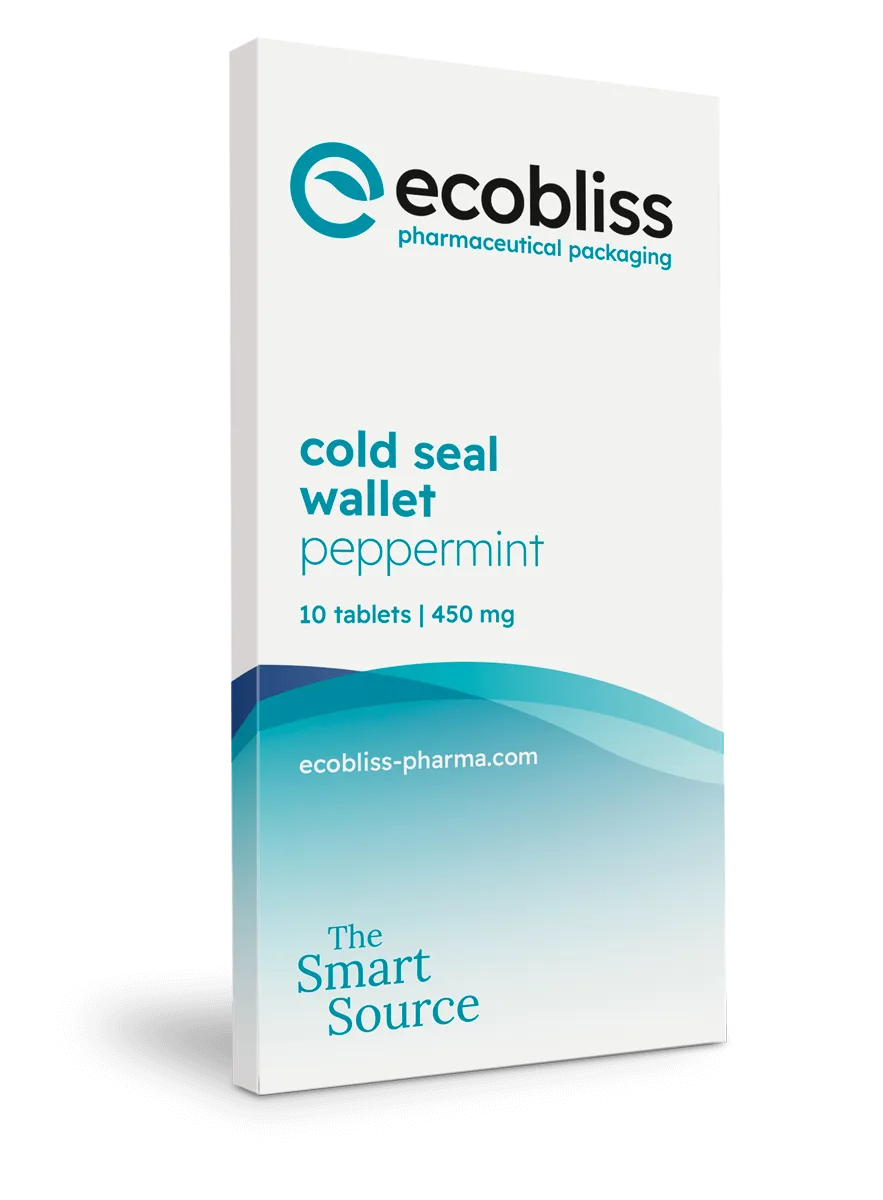
Paperboard wallet bonded around a blister with cold seal adhesive. Each cavity holds one dose. The wallet adds a printable surface for calendar layouts. Preferred for chronic medications and clinical trial supplies. More on the format here.
Push-through blisters
Traditional thermoform PVC or PVDC-coated PVC, sealed with foil lidding. The patient pushes the tablet through the foil. Default for most generic pharma packaging.
Strip packs
Two layers of foil sealed around individual tablets in a continuous strip. Cheap, common in OTC markets, occasionally used in hospital dispensing.
Sachets
Multi-layer foil for powders, granules, or single-dose liquid formulations. Preferred for products that don't fit a blister cavity geometry.
When unit dose is the wrong choice
A few cases where bulk packaging makes more sense:
- Very high-volume OTC where the cost-per-unit advantage of bulk packaging outweighs the stability benefit.
- Hospital dispensing workflows where the pharmacy repackages from bulk to patient-specific units.
- Antibiotics where the patient takes the entire course over 7-14 days and bottle packaging is fine.
For everything else, unit dose wins on stability, adherence, and compliance. That's why most modern prescription pharma defaults to it.
Where we help
We run unit dose packaging across all the formats above, with cold seal blister wallets as the specialty. If you're scoping a new launch and want to compare bulk vs unit dose for your specific product, send us the API and target market. We'll come back with a side-by-side analysis and a sample of each format.
Request a free sample now!