
The design-to-serialisation process follows five practical steps: design, manufacturability review, packaging component production, line packing with serialisation, and, in some projects, an insourcing route. This sequence helps teams make decisions at the right time, as late changes can severely impact tooling, artwork, materials, coding, and line setup. Put simply, the design-to-serialisation packaging chain works best when each step has a clear input, a distinct output, and a firm decision gate before the next stage begins.
• These five steps help project teams control timing, approvals, and technical risks.
• The pack format should typically remain flexible early on and be frozen only after manufacturability is confirmed.
• Artwork creation should start once dimensions, panels, and print areas are sufficiently stable.
• Serialisation becomes a line priority when printing, camera checks, rejection logic, and data exchange must all work together.
• Insourcing can be part of the plan, but final qualification and approval still depend on the full pack and regulatory pathway.
Why the design-to-serialisation packaging chain needs clear decision gates
Many resources discuss packaging, compliance, or serialisation as entirely separate topics. In real-world projects, however, they are intrinsically linked. The design-to-serialisation packaging chain provides a singular project view of the entire packaging development process, allowing teams to see what must be decided, when it should be decided, and what happens if a change occurs too late. This is critical because, while pharmaceutical packaging steps often overlap, their handovers still require strict control.
A decision gate is simply a checkpoint. Here, the team confirms that all key inputs are ready, allowing the next stage to proceed with significantly less risk. If a format change happens after tooling, artwork, or line settings are fixed, costly extra work typically follows. Therefore, establishing strong gates helps reduce rework and supports better project ownership across design, quality, supply, regulatory, and operational teams.
A highly useful way to review this process is through a simple five-step flow or a decision gate table. In practice, many teams utilize a project map detailing each stage, the main inputs, the expected outputs, and the individual responsible for giving approval before the next step begins.
Step 1 in the design-to-serialisation packaging chain: design
What is decided in this step
This initial stage establishes the pack concept and the early design-to-serialisation route. The team reviews the proposed format, material pathways, content structure, and initial alignment with product, patient, and market needs. At this point, the concept should guide the project without freezing every detail prematurely, as unresolved issues may still arise from product, regulatory, or commercial teams.
What the customer must provide
The customer must provide the product form, pack count, dosing logic, target markets, patient requirements, sales forecasts, and any available approved content. These critical inputs shape the pack from the very start. If a specific item is still pending, the project can proceed, but the associated risks must remain highly visible so the team can plan accordingly.
What is delivered
The output is a comprehensive pack concept detailing a proposed format, material route, and information structure. This establishes a practical foundation for the next stage. It also ensures everyone agrees on the pack's fundamental requirements before the manufacturability packaging review begins.
Key guidance for this step
Avoid freezing the format too early. Maintaining flexibility at this stage is crucial as it protects the remainder of the packaging development process. If product specifications or user requirements become clearer later on, the team can still adjust the concept before deep technical work commences, ultimately resulting in fewer downstream changes.
Step 2 in the design-to-serialisation packaging chain: manufacturability check
What is reviewed
This stage tests whether the concept can perform reliably in a stable production environment. Simply put, a manufacturability packaging check asks whether the pack can successfully form, seal, fold, feed, code, and undergo reliable inspection. It also evaluates tolerances, material behaviour, product protection, and overall line compatibility. A design may look perfect on paper, but it must ultimately function flawlessly under actual production conditions.
What is decided in this step
The team decides whether the proposed design and the chosen production route align properly, determining if the format is finally ready to be frozen. In many projects, this is the exact moment when design flexibility narrows and production stability takes priority. Consequently, passing this gate effectively prevents the most expensive downstream changes.
What the customer must provide
The customer must supply product requirements related to protection and handling, any known operational constraints or line limits, and final confirmation of critical functional needs. For instance, specific barrier requirements, feeding limitations, and unique handling instructions must be clarified at this point, as they directly influence both the pack structure and the line routing.
What is delivered
The result is an agreed-upon, production-ready design alongside clear acceptance criteria. These criteria help subsequent teams clearly understand what must work seamlessly and what needs regular checking. By doing this, the project moves forward with far fewer assumptions and much better overall control.
Key guidance for this step
The pack format is typically frozen only after this detailed review confirms that the design and the intended manufacturing route perfectly align. Timing here is critical because any later updates can drastically affect tooling, artwork, materials, coding areas, and line setups. For many project teams, this represents the most important decision gate in the entire chain.
Step 3 in the design-to-serialisation packaging chain: packaging component production
When artwork enters
The pharmaceutical artwork process should commence only when dimensions, panels, print areas, and technical limitations are sufficiently stable. This is crucial because final artwork heavily relies on the physical pack structure. If the core structure is still evolving, valuable proofing and approval work can be lost, and project timelines can easily slip.
What is decided in this step
The team agrees on the controlled specifications, the proof and sample pathways, and the overall readiness for packaging component production. This marks the specific stage where the project formally transitions from mere production intent to highly controlled execution details. If country or product variants are involved, they must be reviewed with immense care, as they impact both written content and physical materials.
What the customer must provide
The customer remains entirely responsible for final artwork approval, integrating necessary regulatory, quality, and market inputs. Furthermore, the team needs the final approved text, market-specific content, and accurate variant control inputs wherever relevant. While a variant may initially appear to be a simple data issue, it often simultaneously alters layouts, print controls, and physical packaging components.
What is delivered
The deliverables include physical proofs, samples, and approved specifications that seamlessly support the next handover into active execution. Because we produce our packaging components in-house, the original design intent and fine production details stay closely aligned during this critical stage. This connection helps keep decisions transparent and significantly reduces any avoidable interpretation gaps.
Key guidance for this step
Artwork approval remains a dedicated customer process, even when internal production support is closely involved. Variant control must be handled with immense care, as later market shifts can impact both data configurations and physical materials. For project teams planning market updates post-launch, proactive packaging lifecycle management can effectively support controlled changes over time.
Step 4 in the design-to-serialisation packaging chain: primary and secondary packing, including serialisation
What is decided in this step
This step defines exactly how approved components transform into a finished pack on the production line. The team agrees on code content, optimal print positioning, camera inspection criteria, rejection logic, aggregation requirements, and line data exchanges. This is the pivotal moment where the design-to-serialisation packaging chain transitions into a purely physical packaging task, as the line must accurately print, read, reject, and report data during active execution.
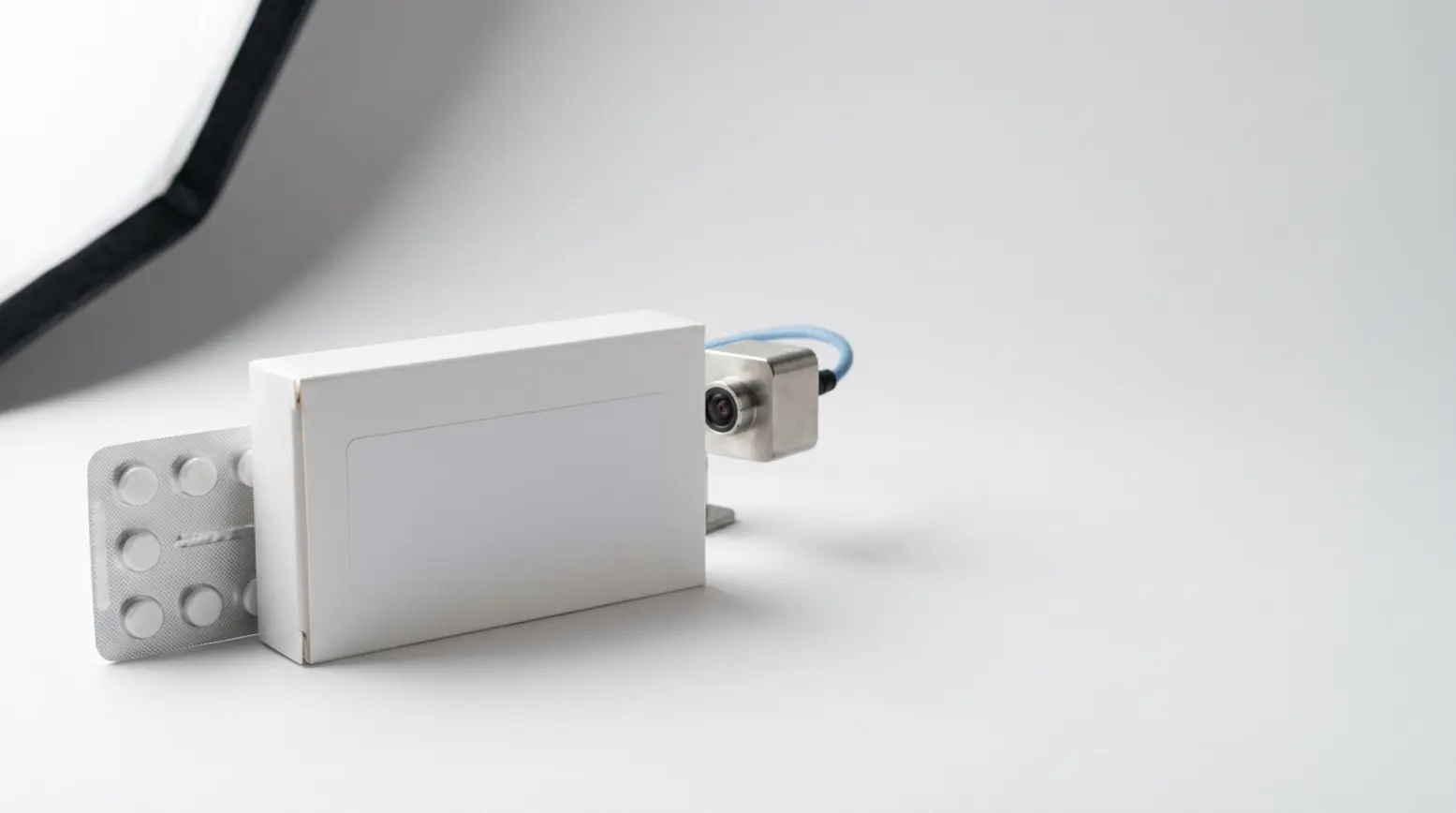
If a team requires basic background knowledge first, our comprehensive article on serialization in the pharmaceutical industry explains all the main terms. Within this project perspective, the critical factor is timing. Serialisation immediately stops being purely a software topic the moment physical packs move through real equipment and every distinct control point must work in perfect harmony.
What the customer must provide
The customer must provide all market and product requirements for line execution, the approved serial data setup, specific operational rules, final packaging components, and fully approved artwork inputs. If aggregation is necessary, this requirement must be identified early enough to allow for proper execution planning. This is also the exact point where primary and secondary packing decisions must remain perfectly aligned with both the line route and the overarching reporting logic.
What is delivered
The final output is the completely finished packed product at the execution stage, featuring appropriately applied serialisation wherever relevant. This encompasses both primary and secondary packing steps throughout the full chain. Executing the finished secondary pack can easily sit within specialized secondary contract packaging and serialisation services when that route best suits the project.
EU safety features in simple terms
Since 9 February 2019, the EU falsified medicines framework has mandated specific safety features on the majority of prescription packs. The two primary features are a unique identifier embedded in a 2D barcode and an anti-tampering device. The printed data matrix on medicine packs typically carries the product code, serial number, batch number, and formal expiry date. These specific topics are frequently linked to overarching EU serialization requirements and FMD serialization protocols, but exact pack approval still heavily depends on the broader product and market context.
We intentionally keep this article at a higher project level since local regulatory details can vary significantly. If you want more operational background on exactly how codes and distinct pack features work together, our dedicated page exploring serialization and authentication packaging explains that intricate connection in much greater detail.
Key guidance for this step
Never treat serialisation as a purely software-based exercise. On the production line, print quality, code positioning, camera setups, rejection logic, aggregation, and seamless data exchanges all need to work concurrently. Because of this complexity, the step relies entirely on earlier decisions regarding formats, artwork, and strict component control. If those preceding decision gates are weak, physical line execution becomes exponentially harder.
Step 5: the option to insource with blister and sealing equipment
What this option means
Some customers prefer to bring portions of the packaging activity in-house. In such cases, ensuring a tight fit between the pack design and the available blister and sealing equipment becomes a crucial project priority. As the overall operating model changes, the handover plan must naturally adapt as well. While this option can be highly useful, it requires early visibility, as initial equipment assumptions directly affect many later choices.
What is in scope and outside scope
We can readily support aligning the pack design with this specific equipment route; however, supplying primary packaging machines remains outside our direct scope. Establishing this boundary clearly and early is vital, as it keeps responsibilities realistic and helps teams accurately plan qualification and testing protocols in the appropriate locations.
What the customer must provide
The customer must provide their internal equipment plan, qualification procedures, testing frameworks, and formal approval routes, all linked to the full pack and broader regulatory strategy. These comprehensive inputs matter significantly because simply choosing equipment does not automatically qualify the final pack. The wider, end-to-end process still needs to be rigorously reviewed in context.
What is delivered
The ultimate result is a much clearer fit between the chosen pack design and the selected equipment route when utilizing this insourcing model. This clarity greatly supports future planning and eventual handovers. However, all qualification, testing, and final approvals still rely heavily on the complete pack specifications and the customer’s distinct regulatory pathway.
Key guidance for this step
If insourcing is even a future possibility, mention it as early as possible. A late change to the operating model can severely disrupt format choices, initial line assumptions, and scheduled testing plans. Therefore, even a completely optional insourcing route must be clearly visible on the project map from day one.
Common handover points in the pharmaceutical packaging process steps
Design to manufacturability
This handover occurs when an initial concept begins moving toward full production readiness. The team must be completely clear on the product needs, the proposed physical format, and any major technical risks before proceeding. If these critical points remain ambiguous, subsequent review phases will inevitably carry much more uncertainty.
Manufacturability to artwork and component production
This critical handover works best when all dimensions and technical limitations are stable enough for the pharmaceutical artwork process to commence safely. If this particular decision gate is weak, proofs and samples will likely need continuous rework, leading to a frustrating increase in approval rounds.
Component production to packing and serialisation
This handover kicks off when the fully approved components are ready for physical line execution. At this stage, the line demands absolute clarity regarding coding, camera inspections, pack flows, rejection handling protocols, and secure data reporting. If even a single point is missing, execution planning slows down considerably, and operational risk sharply increases.
Execution to lifecycle change
Post-launch, regional market variants and any subsequent updates must be controlled with extreme care. Changes can easily affect the serial data setup and the physical components simultaneously, meaning that strict ownership should remain perfectly clear. This is exactly why comprehensive change control must be deliberately planned as an integral part of the full process, rather than being treated as a casual afterthought.
Questions project teams often ask
When should the pack format be frozen?
The format is generally frozen immediately after the manufacturability review confirms that the core design and the production route fit together seamlessly. Freezing the design too early introduces significant risk, as subsequent necessary updates may negatively impact costly tooling, intricate artwork, tight coding areas, and complex line setups.
When can artwork start safely?
Artwork creation can begin safely once dimensions, key panels, printable areas, and strict technical limits are proven stable enough. Proceeding prudently reduces the likelihood of repeated approval cycles, heavily changed layouts, and costly new physical proofs later in the project lifecycle.
Why is serialisation a line topic and not only a data topic?
Serialisation becomes a pressing line topic because the physical code must be printed in the exact right place, successfully read by automated cameras, logically accepted or rejected by the system, and actively linked to ongoing line data exchanges. If any single component fails on the physical packaging line, overall execution fails completely, even if the underlying data logic is perfectly correct.
Where do EU safety features fit into the process?
They strictly fit into the execution stage, where the previously approved components are actively packed, uniquely coded, thoroughly inspected, and continuously reported on the production line. The unique identifier, the printed data matrix on medicine packs, and the physical anti-tampering device all require highly practical line control alongside fully approved written content and structural pack designs.
What changes when a customer wants to insource equipment?
The project must deliberately incorporate the internal equipment plan, qualification protocols, dedicated testing routes, and explicit approval paths. Initial pack design choices might also require a secondary review to ensure that the chosen route remains entirely practical for the customer’s own bespoke operations and strict timelines.
Next step for your project
If you are actively planning a new pack or an impending pack change, rigorously prepare your basic requirements first: format ideas, specific target markets, current artwork status, exact product needs, and non-negotiable timing limits. This groundwork makes initial project discussions vastly more useful, as the primary risks, handover points, and crucial decision gates become highly visible early on. It also actively helps your core team accurately decide whether the current project route is still flexible or firmly ready for physical execution.
When you are completely ready to review your intended route from early concept straight through to line packing, you can confidently discuss your packaging project with our team. We can then meticulously review the physical pack, the foundational project inputs, the proposed handover points, and the most overwhelmingly practical route for your overall plan.
Request a free sample now!