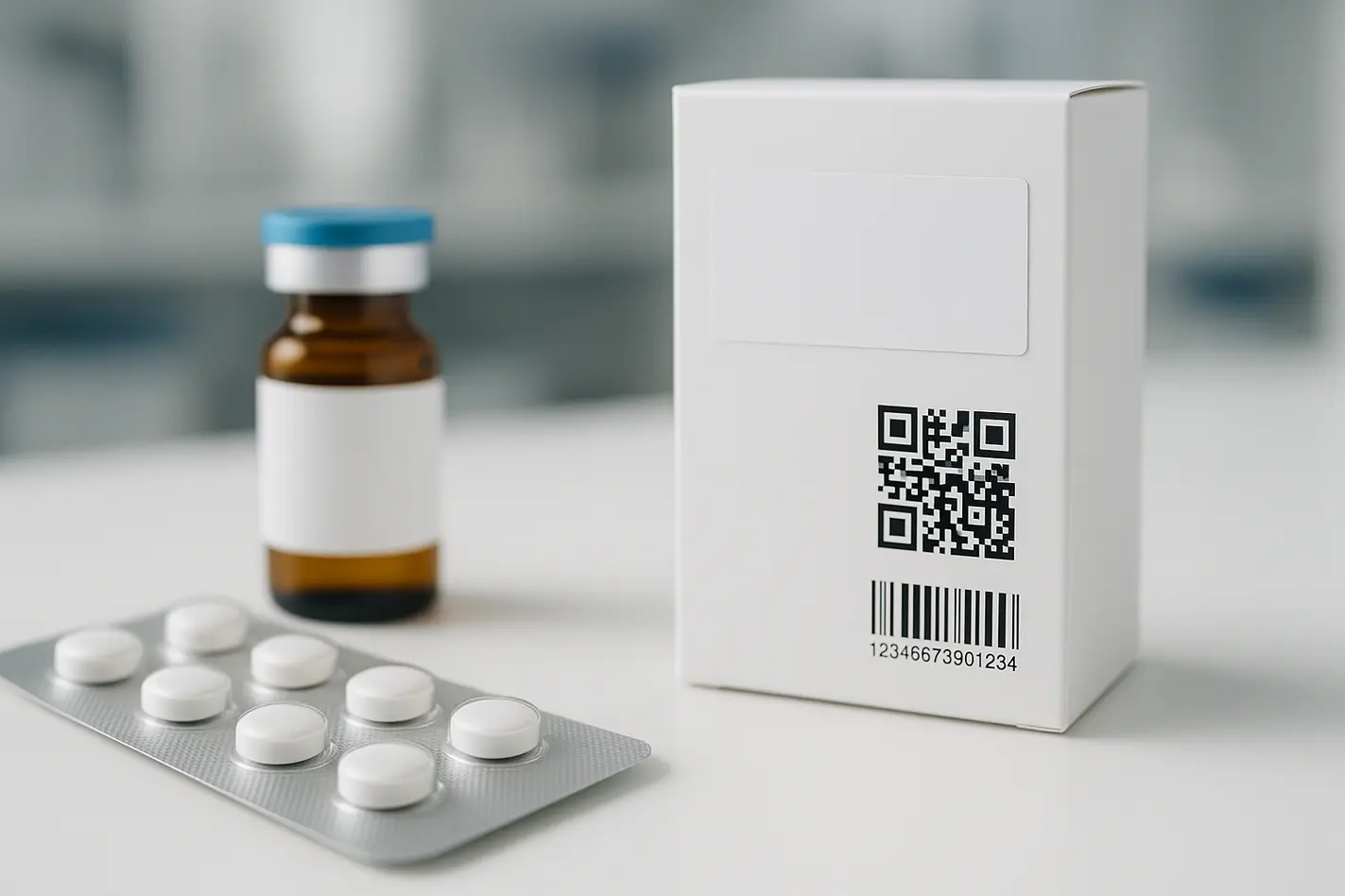

Pharmaceutical serialization assigns a unique 2D Data Matrix code to every prescription pack. The code carries the product code, batch number, expiry date, and serial number. At dispense, a pharmacist scans it. The scan checks against the EU national repository. If the serial is valid and unused, dispense proceeds. If not, the pack stays on the shelf.
That's the simple version. The operational reality is more complicated.
How the EU FMD system actually works
EU FMD 2011/62/EU mandates two safety features: a tamper-evidence device, and a unique 2D Data Matrix code. Both have been required for prescription medicines since February 2019.
The serialization side runs through a network of national repositories under EMVO (European Medicines Verification Organization). The flow:
1. Manufacturer generates serial numbers per batch.
2. Manufacturer prints 2D codes on packs at the packaging line.
3. Manufacturer uploads serial data to the EMVO hub.
4. EMVO routes serials to national repositories.
5. Pack ships through the supply chain.
6. Pharmacy scans the code at dispense.
7. Repository confirms the serial is valid and unused.
8. Pharmacy decommissions the serial. No future dispense possible.
If the serial doesn't decommission cleanly, the pack can't dispense. That's the deterrent against counterfeit packs.
Where serialization breaks in practice
Three common operational failures:
Print quality issues. The 2D code prints with insufficient contrast or alignment. Pharmacy scanner can't read it. Pharmacist refuses to dispense or has to type the serial manually, which slows dispensing significantly.
Repository synchronization gaps. The manufacturer uploaded the serials but the national repository hasn't synchronized yet. The pharmacy scans, gets "unknown serial", refuses to dispense. Real returns problem.
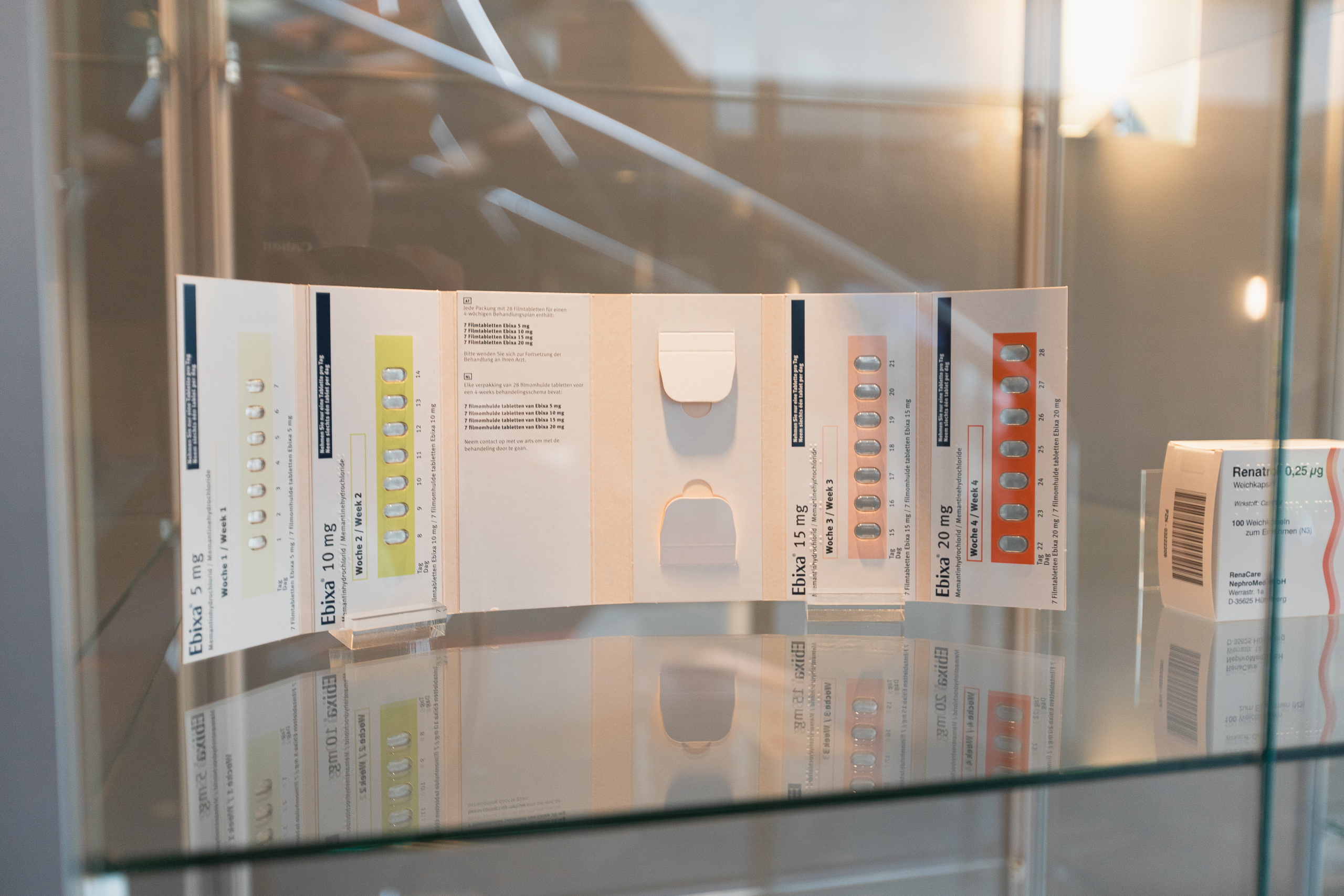
Aggregation errors. The serial on the carton doesn't match the serials on the blister wallets inside. Aggregation tracking breaks down, recalls become harder.
All preventable with rigorous QA on the printing and aggregation steps.
Authentication features beyond FMD
FMD serialization is the regulatory floor. Many pharma companies layer in additional authentication:
Holograms and color-shifting inks. Visible authentication, harder to counterfeit than standard print.
Microtext and guilloche patterns. Covert features that reveal counterfeit attempts under inspection.
UV/IR fluorescent features. Verifiable only under specific lighting, useful for spot-check authentication.
Forensic features. DNA tagging or substrate taggants for high-value specialty therapies.
How we handle serialization
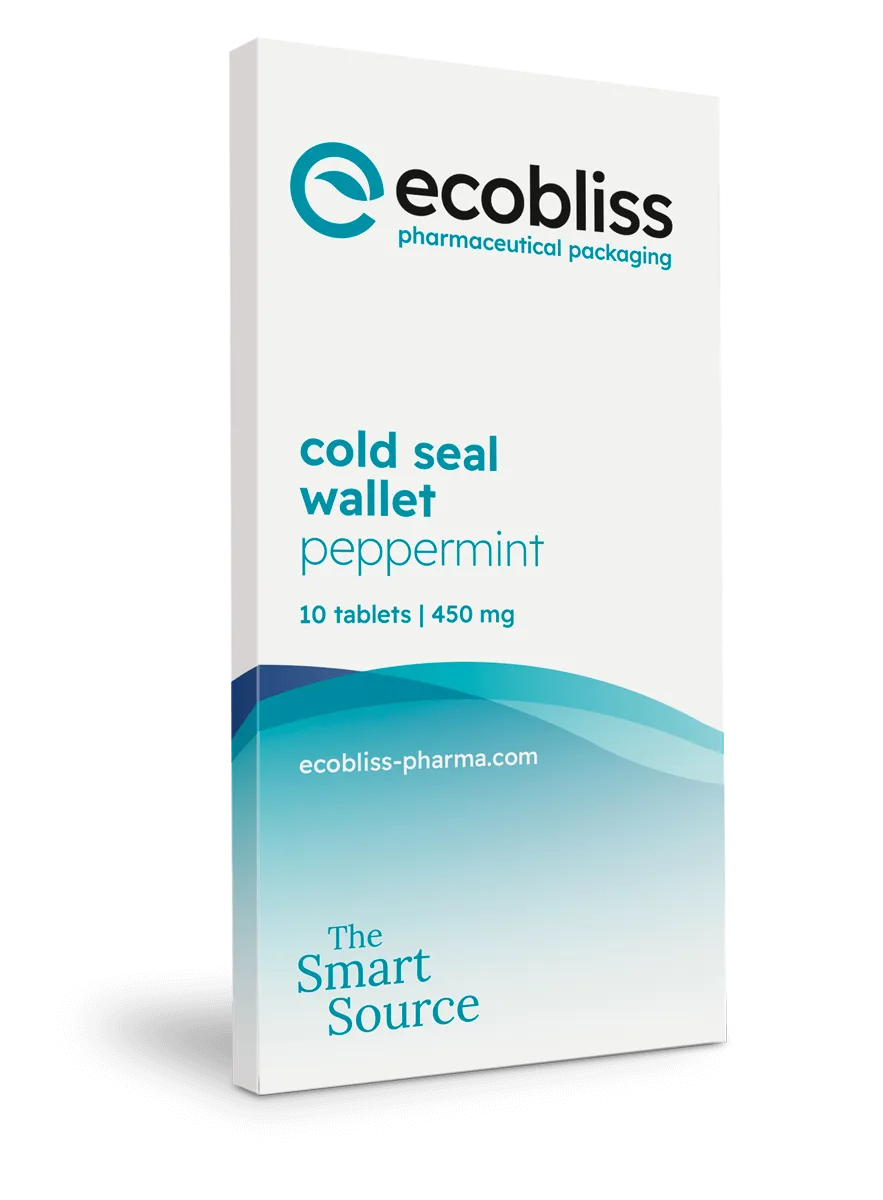
We run FMD-compliant serialization on every cold seal wallet and folding carton we ship to EU markets. The 2D Data Matrix code is printed at the cartoning station, the serial uploads to EMVO before the pack leaves the facility, and aggregation is tracked from individual wallet through to pallet.
For higher-value products we layer in microtext on the wallet, UV-fluorescent inks under specific lighting, and the 2D Data Matrix code with track-and-trace integration.
If you're scoping serialization
The conversation starts with the markets. EU markets need FMD. US markets need DSCSA. Other regions vary. From there we work through the print specifications, the aggregation flow, and any additional authentication features.
Send us the brief if you're spec'ing serialization for a launch.
Request a free sample now!