Cardboard has the best sustainability story in packaging. Renewable, recyclable, biodegradable, low carbon footprint compared to plastic. The story is broadly true. The catch is that pharma packaging adds complications most cardboard discussions don't address.
Why cardboard wins on paper
Sourcing: when it's FSC-certified, the cardboard comes from forests managed for sustainable yield rather than clear-cutting. The fiber is renewable on a 30-year cycle, which is fast in environmental terms.
Recyclability: established global infrastructure, with paper and cardboard recycling rates in the EU around 80%. Each fiber can be recycled five to seven times before it's too short to bond again.
End-of-life: biodegradable. If a cardboard pack ends up in a landfill, it breaks down in months without microplastic residue. Plastic doesn't.
Carbon footprint: 30-50% lower than equivalent plastic packaging in most life-cycle studies. The numbers move with the energy mix used in production, but cardboard usually wins.
Where cardboard's eco story breaks
A few cases where the headline doesn't apply:
Coated cardboard. Plastic film or aluminum coating on the cardboard surface defeats recycling. The mixed-material can't be processed in standard paper streams.
Virgin pulp without certification. If the cardboard came from clear-cut forests, the renewability argument doesn't hold. FSC and PEFC certifications matter.
No recycling infrastructure. In markets without paper recycling, cardboard ends up in landfill or incineration like everything else.
Wet contamination. Cardboard contaminated with food residue or chemicals can't go in paper recycling. Pharma cartons are usually clean enough, but it's worth checking.
Pharma's specific challenges
Pharma packs need barrier protection that cardboard alone can't provide. The blister cavity protects the API from moisture and oxygen, the cardboard wallet around it carries the printed information. So the question becomes: can you separate the layers at end-of-life?
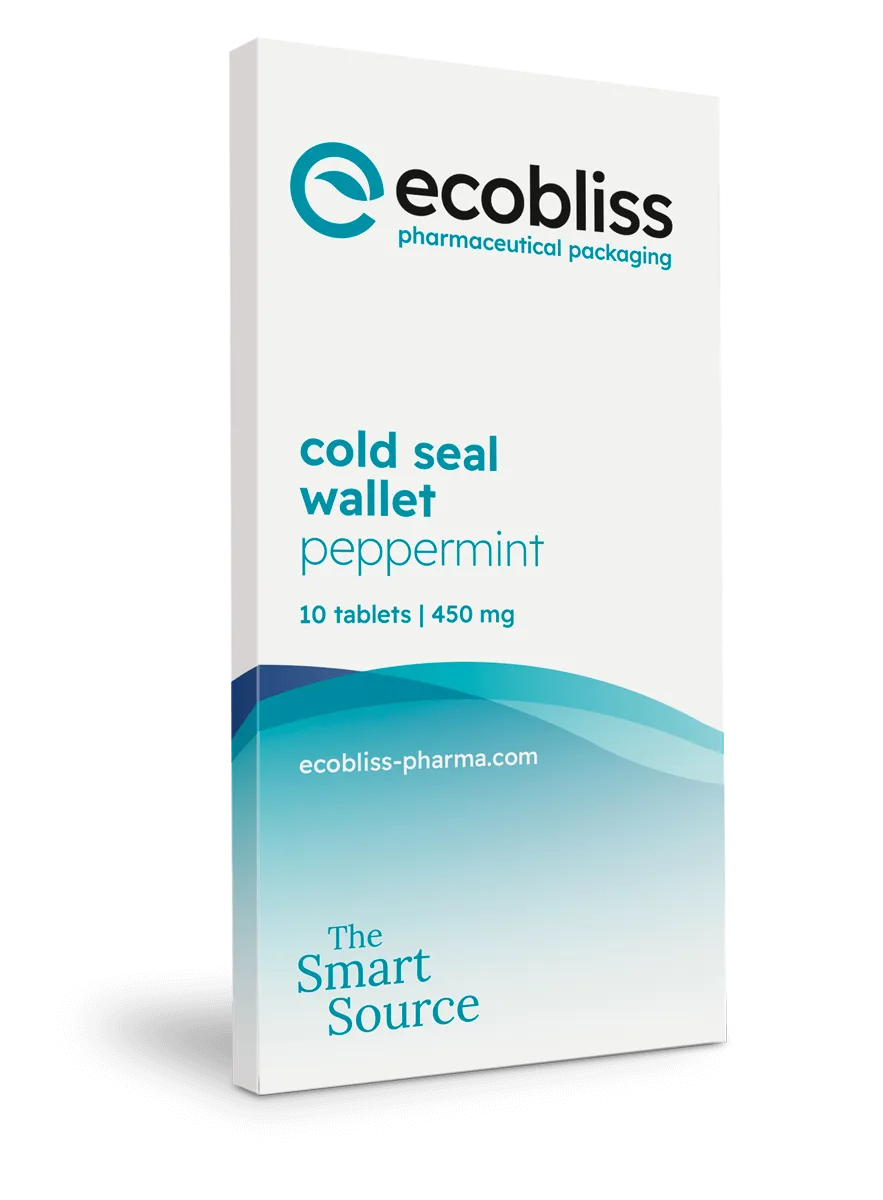
Cold seal blister wallets are the format that handles this best. The blister cavity is plastic or aluminum, the wallet is FSC-certified paperboard, the bonding is water-based solvent-free adhesive. The patient can tear the wallet from the blister, recycle the wallet, and send the (small) blister to general waste.
Compare that to a heat-sealed mixed-material pack where the layers are fused together, and the whole thing goes to landfill or incineration.
What we actually do
All Ecobliss cartons and wallets use FSC-certified paperboard (license C194323). Our cold seal adhesive is water-based and solvent-free, which keeps the cardboard layer recyclable. We publish carbon footprint numbers per pack on request, so the sustainability claim is verifiable instead of marketing.
If you're doing an ESG review on your packaging and want concrete numbers, drop us a line. We send actual life-cycle data, not vague claims.
Request a free sample now!