
Yes, pharma companies can often use a single pack for multiple markets through late-stage customisation packaging. The pack remains partly finished until the target market or specific order is clear. Then, the final country-specific components are added during a controlled packaging step. While this approach can reduce finished stock and lower the risk of obsolete inventory, it is only viable when the approved artwork route, packaging design, and serialisation plan allow for it.
• A semi-finished pharmaceutical pack can stay open until the final destination market is known.
• Common parts typically include the product, the primary pack, and some base secondary components.
• Late-stage steps can involve leaflet insertion, the over-labelling of medicines, booklet labels for medicines, carton printing, and final code application.
• The primary benefit is improved stock flexibility, particularly in low-volume specialty medicine packaging.
• The main risk is a higher control burden, as artwork, counts, line clearance, serialisation, and rework must remain tightly managed.
What late-stage customisation packaging means in pharma
In the pharmaceutical industry, late-stage customisation packaging means holding a partly finished medicine pack until its final market is known. Although the product is already packed up to a defined stage, one or more market-specific parts are still missing. These final elements are added later in a strictly controlled step. This explains why the model is highly useful for "one pack, many markets" strategies, provided the legal and technical routes support it.
A semi-finished pharmaceutical pack is, therefore, a controlled intermediate state rather than an informal hold point. It requires a clear batch status, strict storage rules, rigorous component control, and a defined next step before final release. Because of these requirements, late-stage customisation packaging is a formal packaging process and not merely a planning concept.
What can remain common across markets
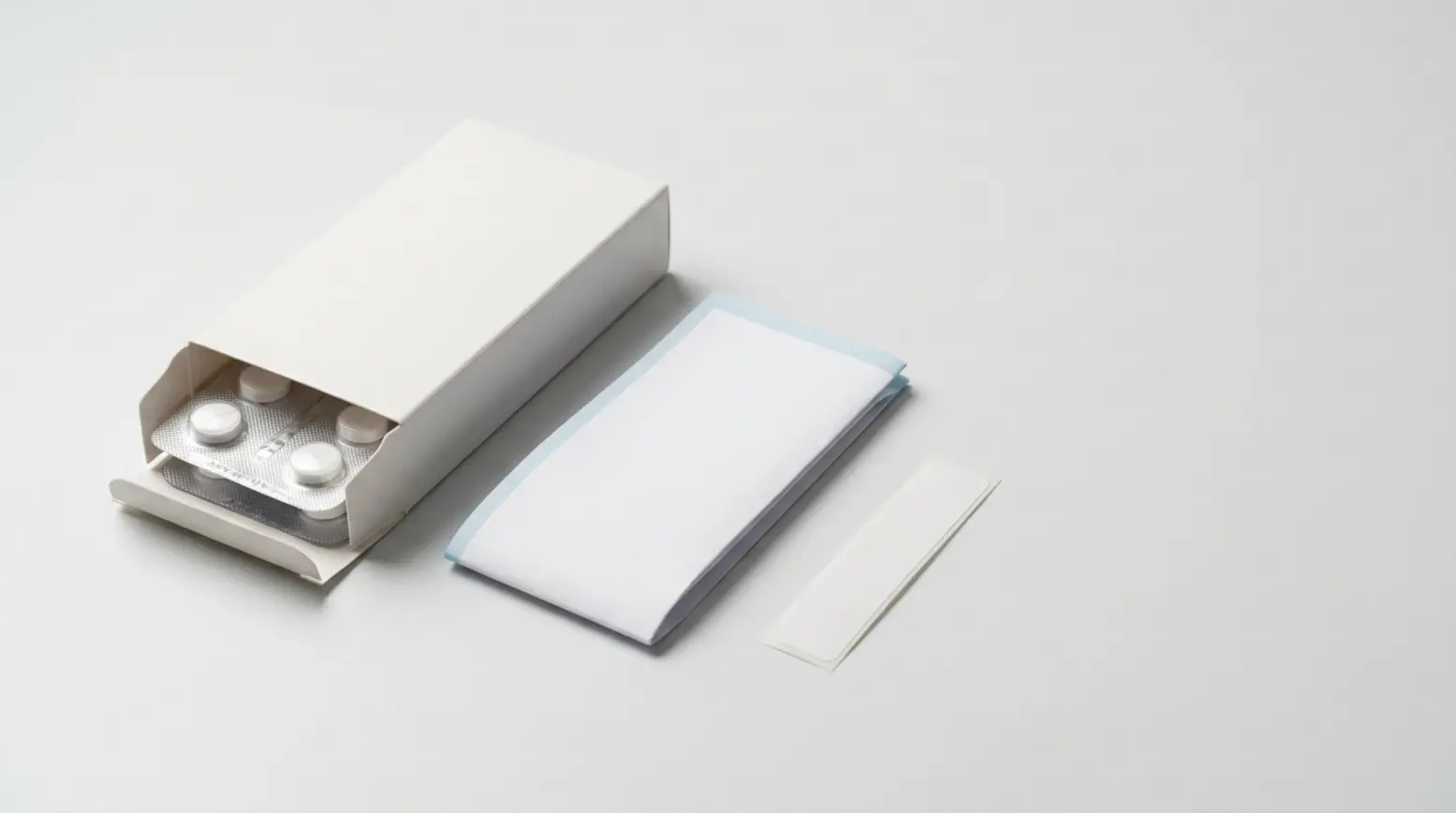
In a suitable project, the medicine itself can remain identical across different countries. The primary pack can also stay common, whether it is a blister, vial, syringe, or bottle. Furthermore, some base secondary components may be shared, such as an unprinted carton or another universal part. This approach ensures that common stock is prepared early, allowing the final market decision to be made at a later stage.
What can stay open until the final controlled step
The open elements are usually the market-facing parts of the pack. These may include market-specific pharmaceutical artwork, labels, leaflets, booklet labels for multilingual medicines, outer carton print, and final market codes. Since the exact route depends heavily on the regulatory plan and the approved artwork setup, teams should determine early on which parts can stay open and which parts must be fixed sooner.
When late-stage customisation packaging works best
Late-stage customisation packaging is most effective when demand fluctuates frequently and each country version involves a small volume. This scenario is common in low-volume specialty medicine packaging, where a finished country pack can quickly become unusable if forecasts shift. A multi-market medicine pack can mitigate that risk by allowing the final market version to be chosen later, once the demand signal becomes much clearer.
The model can also support pharmaceutical inventory postponement strategies. If a company serves several small markets, a common pack route may significantly reduce the number of finished stock-keeping units (SKUs). This creates greater flexibility when orders shift between countries or when launch timelines change.
Why the inventory benefit matters
The primary benefit is straightforward. Teams will likely need fewer finished country versions in stock, meaning less inventory is stranded in the wrong market format. The volume of obsolete stock may also drop because the final market choice is delayed. This is precisely why many companies review life-cycle management and postponement packaging when market demand is unstable and country volumes are small.
Why forecasts still matter
Forecasts remain crucial because the final packaging step requires capacity, approved materials, and a clear release path. While late customisation does reduce stock-related risks, it does not eliminate the need for careful planning. Teams must still estimate volumes, lead times, and specific country demand. For a deeper dive into this topic, our article on packaging planning and forecasts explains exactly how uncertain demand influences packaging choices and stock timing.
Which steps are used in late-stage customisation packaging?
Several practical routes are commonly utilised in late-stage customisation packaging. Frequent examples include outer carton printing, the over-labelling of medicines, leaflet insertion, the application of booklet labels for medicines, and final code application. Since each route constitutes a physical packaging step, each requires line clearance, print checks, accurate component counts, and robust reject handling. Ultimately, the chosen route must perfectly align with both the approved artwork and local market rules.
Some projects retain a plain carton and print the specific market version later. Others rely on a common printed part, adding a market-specific label at a subsequent stage. Leaflets may also be inserted just prior to release if the packaging route is designed for it. We provide secondary contract packaging for late-stage customisation, ensuring that these final steps are executed with strictly controlled checks before product release.
Over-labelling versus late carton printing
These are distinct processes that naturally create different risks. Over-labelling medicines involves applying new information onto an existing pack component. Conversely, late carton printing means the carton itself becomes the market-specific printed component during a later step. Because the control points differ between the two, their associated risks differ as well. Therefore, teams must carefully review artwork version control, print verification, label application accuracy, and component reconciliation for their chosen route.
Common components and final configuration
Good pack architecture makes late-stage market choices much easier. A modular design helps teams prepare common parts early while keeping the final setup open until the last possible moment. As a design example, the 4-in-1 modular packaging case demonstrates how a single format can seamlessly support different handling stages. It serves as a highly useful design reference, although every pharmaceutical project will still require its own specific technical and regulatory review.
Where late-stage customisation packaging introduces risk
Reducing stock does not eliminate the need for strict quality controls. In many cases, it actually increases them. Late-stage customisation packaging often introduces additional line steps, more checks, and extra changeovers, creating more potential points of failure. Placing the wrong market version on the correct medicine remains a serious packaging error, as the information on the pack must match the destination market precisely.
Rework also demands a perfectly clear procedure. A pack should never be moved from one market version to another through an informal label swap or a manual artwork change. Instead, each step must be planned, verified during execution, and thoroughly documented after the run. This rigorous approach is particularly important for high-value products with small batch sizes, where every unit matters and each variant must adhere to strict country-specific requirements.
Why reconciliation remains critical
Reconciliation is a central priority because open parts are added so late in the process. Rigorous line clearance must confirm that all traces of the previous market version are fully removed before the next run begins. Component counts must perfectly match the batch record. Label control must remain stringent, and reject handling must be entirely clear and traceable. Ultimately, these controls minimise the risk of market mix-ups and ensure absolute confidence at the time of release.
Why low-volume, high-value packs require extra care
Low-volume, high-value packs typically present the strongest business case for pharmaceutical postponement packaging, as finished country stock can quickly turn into expensive waste. At the same time, the impact of a packaging error is significant due to the small batch sizes and the high value of the product itself. Therefore, teams should always weigh the potential inventory benefits against the additional control burden before committing to this route.
How serialisation shapes late-stage customisation packaging
Serialisation represents a rigid process point in the pharmaceutical industry. The unique identifier must correspond exactly to the final saleable pack and its destination market. This requirement includes applying the correct market code, ensuring the correct data setup, and, where mandated, assigning the specific country-level serialisation code or national number. As a result, late-stage customisation serialisation must be planned from the very beginning and explicitly linked to the final market step.
Once an active serial status is involved, the pack can no longer move freely between market versions. Rejects, rework, and any late-stage changes must remain directly connected to the serial data through a strictly controlled process. A simple manual artwork swap is never sufficient, as product release relies entirely on correct coding, accurate reporting, and flawless final market data.
The serialisation point in the packaging process
The precise coding point should be defined early in the project. If the market destination is still open during earlier stages, the team must know exactly when the pack officially becomes the final pack for sale. From that definitive moment, the serial data belongs exclusively to that specific market version. Final release then hinges on correct print quality, precise market data, and a successful data upload.
Rework and market changes after coding
Once coding is complete, any change to the target market requires a formal review. The team must carefully assess the impact on the serial status, the system data, the pack information, and the final release criteria. This strict requirement is why serialisation often establishes the practical limit for how long the final market choice can be delayed. If the packaging process reaches that coding point too early, flexibility drops rapidly.
Planning late-stage customisation packaging with a single partner
Projects of this nature generally succeed when design and execution are deeply connected from the outset. Because we work across the entire packaging journey, we can seamlessly align pack design, manufacturability, component production, primary and secondary packaging, and serialisation within one cohesive plan. Furthermore, if a customer wishes to insource the process at a later date, we can supply the necessary packaging machinery. This comprehensive support is vital, as small country volumes and unstable demand leave little room for gaps between the initial design, the materials used, and the actual line execution.
Our role is to actively support packaging feasibility, structural pack design, component supply, packaging execution, and life-cycle flexibility. Meanwhile, the customer retains full regulatory ownership, including artwork approvals and market route decisions. Maintaining this clear boundary matters, as the packaging pathway will only succeed when it perfectly fits the legal regulatory route defined for the product.
Why manufacturability matters early
A pack might appear perfectly flexible during a project meeting, yet still fail on the production line if it proves difficult to run or inspect. Therefore, excellent manufacturability must be built into the process early. We design with production fit in mind, knowing that late-stage market steps are only valuable when they can be executed in a highly stable and repeatable manner. Fragmented supplier networks often create unnecessary handovers, and every extra handover inevitably introduces additional risk.
What to define before the project begins
Well before launch, teams should clearly define the country list, the expected volumes, the artwork variants, the pack format, and the anticipated forecast patterns. They should also establish the precise trigger for the final market choice, the exact serialisation point, the rework rules, and the inventory rules governing the semi-finished pharmaceutical pack. These early definitions help teams avoid rushed, last-minute decisions that are notoriously difficult to control on the packaging line.
Decision checklist for late-stage customisation projects
A simple review can quickly reveal whether this model truly fits the product and the intended process. The checklist below proves useful because it focuses closely on the practical packaging steps, which is where the primary risks and benefits usually surface.
• Common components: Identify which parts will remain identical across all markets, such as the product itself, the primary pack, and any base secondary components.
• Open elements: Determine which components will stay open until a later stage, including labels, leaflets, booklet labels, carton printing, or final codes.
• Market trigger: Establish the specific event that determines the final market version, such as a firm order, an allocation step, or a scheduled release plan.
• Serialisation point: Pinpoint the exact step where the pack officially becomes the final saleable market version, ensuring accurate coding and reporting.
• Checks and reconciliation: Clearly outline the line clearance, print checks, component counts, label controls, and reject handling procedures for the late-stage step.
• Rework control: Document exactly what rework is permitted, who holds the authority to approve it, and how it directly links to serial status and artwork version control.
• Inventory rules: Define how much partly finished stock will be retained, where it will be securely stored, and the maximum time it may remain open before final completion.
Questions teams often ask
Can every medicine use late-stage customisation packaging?
No. The approved artwork, specific country requirements, and the selected packaging route ultimately dictate what is possible. While some products inherently allow for more flexibility than others, every single project requires a highly specific review long before the pack is designed or the final line step is selected.
Is over-labelling the same as printing a market carton late?
No. Over-labelling medicines simply adds information onto a pre-existing component. In contrast, late carton printing actually creates the market-specific printed component during a later stage. Because these processes operate differently, their corresponding controls, operational checks, and failure risks differ as well.
What is a semi-finished pharmaceutical pack?
It is a tightly controlled intermediate pack state. The medicine and several core packaging components are already packed, but one or more market-specific parts remain intentionally open. Those final parts are added later, once the market is definitively known and the formally approved regulatory route permits that step.
Why is serialisation such an important limit?
Serialisation permanently fixes the link between the unique code and the final saleable pack. Once the pack carries active, market-specific data, it cannot easily be transitioned to another country version. Consequently, any proposed change after coding requires a rigorously controlled review of the serial data, the code status, and the subsequent impact on product release.
When does "one pack, many markets" make the most sense?
It typically makes the most sense when country volumes are small, demand forecasts shift frequently, and the medicine carries a high monetary value. Under those circumstances, the potential stock benefits can be incredibly strong, provided the process controls are robust enough to manage the added packaging complexity effectively.
Ready to review your pack setup?
If you are exploring a "one pack, many markets" strategy for a new or existing product, it helps to evaluate the packaging logic as early as possible. Be sure to prepare the country list, the expected volumes, the artwork variants, the pack format, and the forecast patterns so the discussion remains entirely practical from the start. You can discuss a late-stage customisation project with us once your full pack and processes have been properly reviewed.
Request a free sample now!