
EU Directive 2004/27/EC made Braille mandatory on the outer packaging of all human medicinal products in the EU. The mandate is simple: every prescription pack carries the medicine name and strength in Braille on the carton. The implementation details are where most launches stumble, because Braille has technical requirements that most packaging designers don't think about until the pack reaches end-user testing.
Why Braille on packaging matters
Roughly 30 million people in Europe live with sight loss serious enough to affect daily living. Without Braille on the carton, they depend on a sighted family member or caregiver to identify their medicine. That dependence creates real safety problems: wrong medication taken, missed doses, accidental overdose.
Braille on the outer pack restores independence to the patient, which is the actual point of the regulation.
What the directive requires
EU Directive 2004/27/EC mandates:
- Medicine name in Braille on the outer packaging.
- Medicine strength in Braille on the outer packaging.
- Member states can extend the requirement to additional information (some have).
- The Marketing Authorisation Holder is responsible for implementation.
The directive doesn't specify the technology, the dot dimensions, or the testing protocol. Those live in EU pharmacopoeial standards and the Marburg Medium specification.
Marburg Medium: the technical standard
Most pharma Braille follows Marburg Medium dimensions:
- Dot diameter: 1.3 to 1.6 mm.
- Dot height: 0.20 to 0.50 mm above the carton surface.
- Distance between dots within a cell: 2.5 mm.
- Distance between cells: 6.0 mm.
- Distance between lines: 10.0 mm.
Below those dimensions the Braille is harder to read with reduced touch sensitivity (which is itself common in elderly patients). Above those dimensions the Braille gets damaged in transit because the dots stick up too far.
How Braille gets onto the carton
Three common methods:
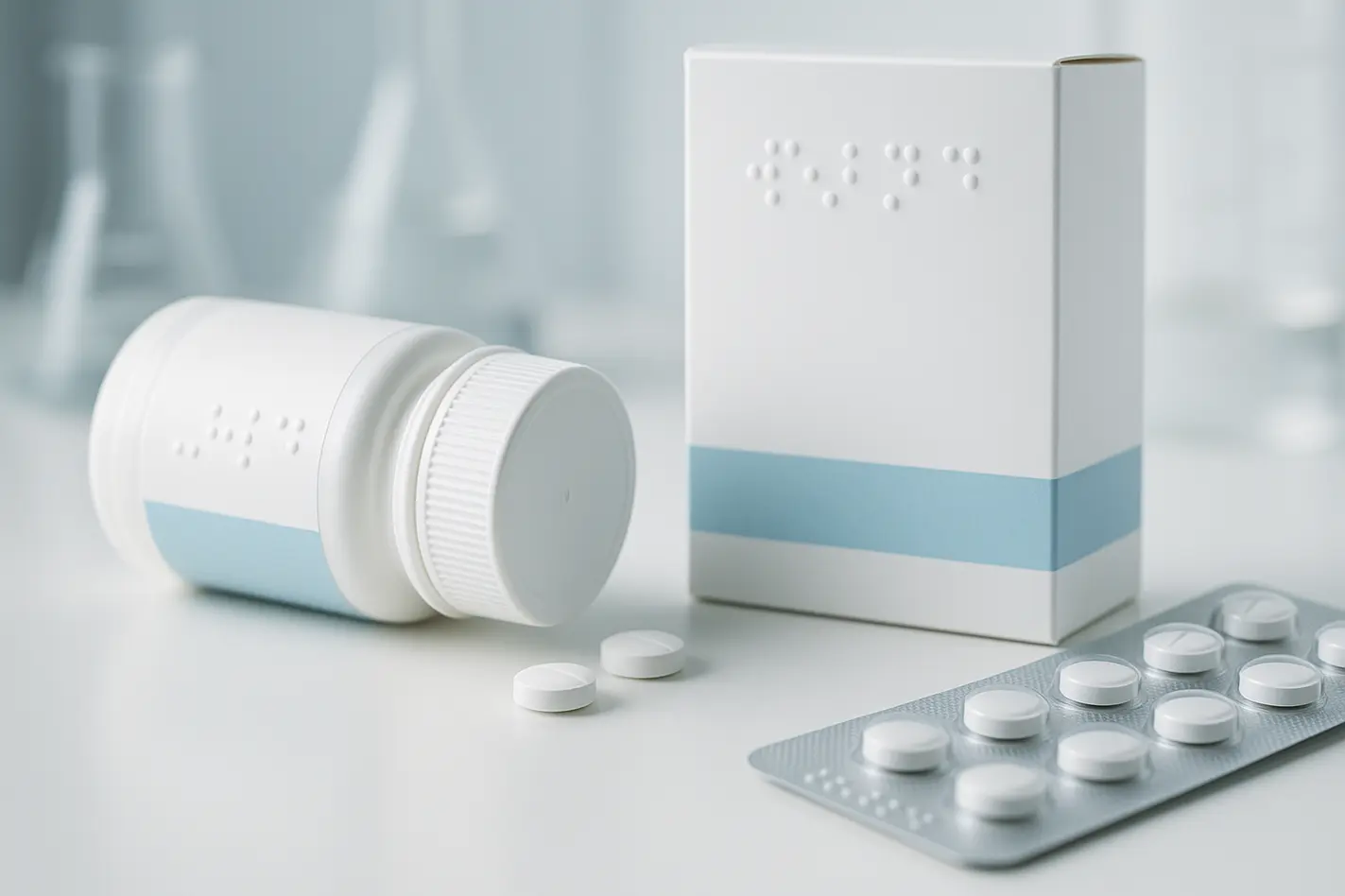
Embossing during cartoning. The most common technique. The cartoning machine includes a Braille embossing station that presses dots into the paperboard. Tactile clarity holds well through transit. Default for prescription medicines.
Screen-printed UV-cured ink. Raised dots printed with thick ink. Works for cartons that can't be embossed. Less durable than embossing.
Laser engraving. Used for plastic or laminated surfaces. Less common for paperboard cartons.
Braille on cold seal blister wallets
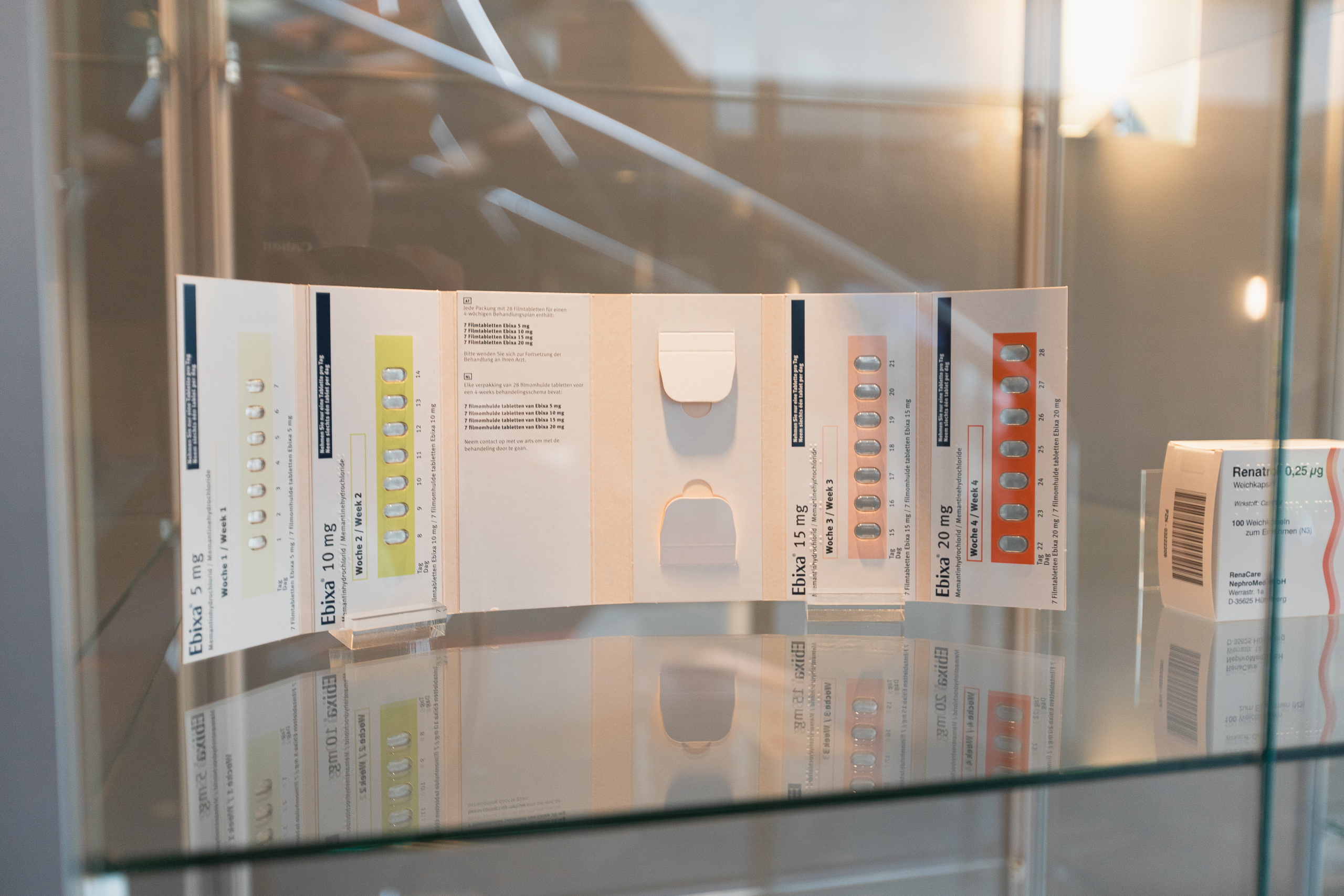
We apply Braille via embossing to cold seal blister wallets and folding cartons. The rigid paperboard structure of cold seal wallets retains tactile clarity even after extended handling, which makes them genuinely usable for visually impaired patients across the full shelf life.
Where Braille implementation goes wrong
Two patterns:
Translation errors caught late. The Braille was generated from the medicine name, but the international name doesn't match the local name in some markets. Catch this in artwork review, not at site activation.
Tactile clarity tested with sighted people. The Braille looks fine, the visually impaired user finds it unreadable because the dot height is wrong. Always test with end-users, not internal proxies.
If you're spec'ing Braille
Specify Braille on the artwork file from the start, not as a post-finalization addition. Coordinate with regulatory affairs to confirm multi-country requirements. Test with visually impaired test panels for tactile clarity.
We've been embossing Braille on pharma packaging for EU launches since 2005. Send us the brief and we'll work through the implementation, including end-user validation.
Request a free sample now!