
Mono-material blister packaging can support recycling goals, but it can also compromise moisture and oxygen protection. This is why the right starting point should always be the medicine itself, rather than current material trends. In the pharmaceutical industry, mono-material blister packaging is only a viable option when stability data, shelf-life targets, seal performance, and finished pack integrity demonstrate that the product remains fully protected. If these results are weak, the packaging structure must be changed before making any recyclability claims.
• Mono-material blister packaging can be easier to sort by design, but local recycling still depends on collection and processing capabilities in each market.
• A mono-material blister may offer a lower barrier than PVDC-coated or aluminium-based structures, so product sensitivity must always come first.
• A mono-PP blister can be realistic for certain products with moderate barrier requirements, but it must be rigorously tested after forming and sealing.
• Finished pack performance matters more than a material data sheet, as corners, cavity shapes, and seals can reduce the actual barrier.
• If stability or seal results fail, halt the concept and alter the structure before making any sustainability claims.
What mono-material blister packaging means in practice
Defining the forming web and lidding in simple terms
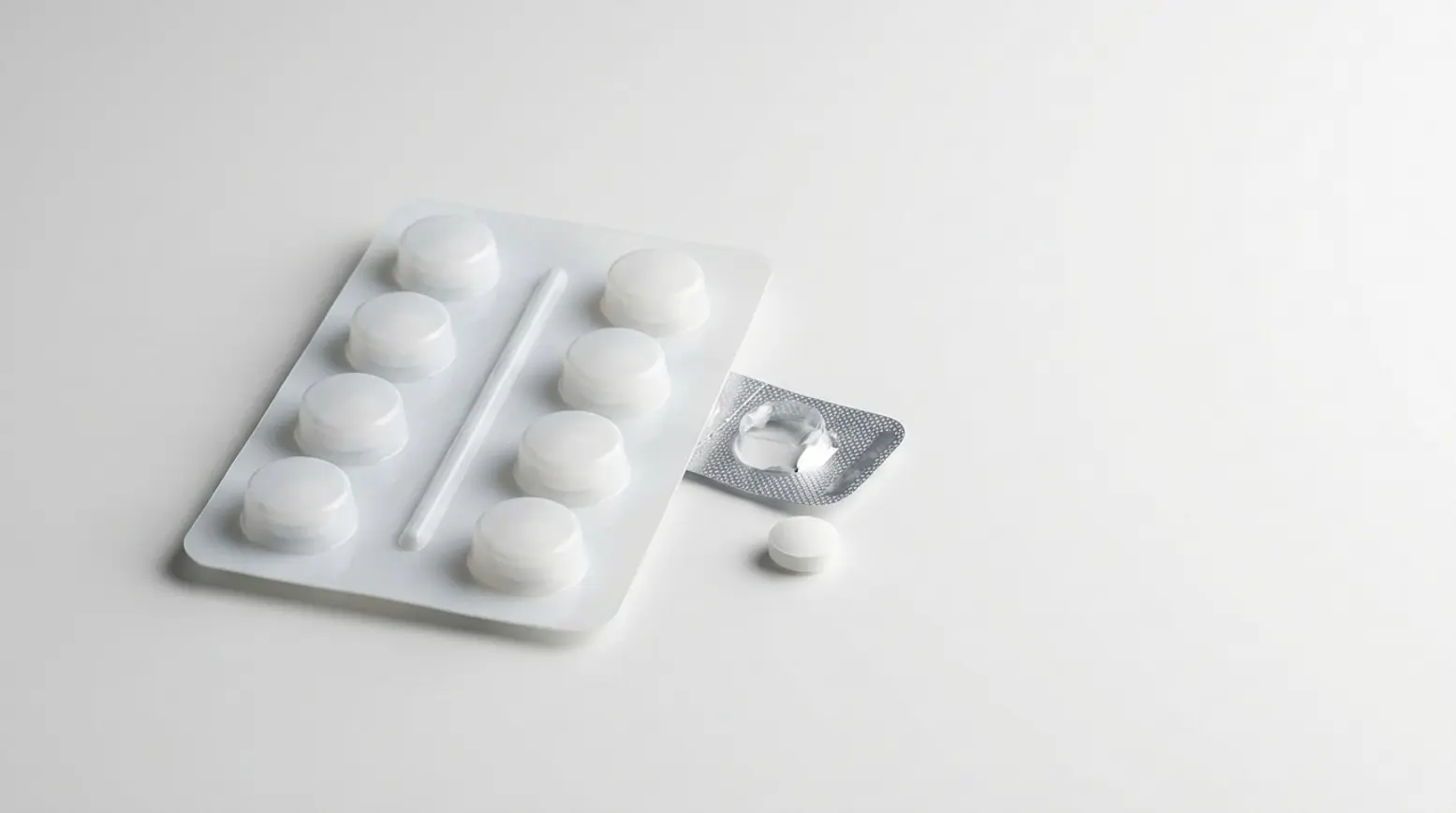
A blister pack consists of two main components. The forming web is the sheet that creates the cavities for tablets or capsules, while the lidding seals those cavities closed. In mono-material blister packaging, both parts come from the same polymer family. A mono-PP blister is a common example. This format typically includes a mono-material forming film paired with matching polymer blister lidding, resulting in a pack that is fundamentally simpler by design.
Why same-family polymers are easier to sort than mixed structures
The primary goal here is design simplicity. When the blister base and lid utilize a single polymer family, the resulting pack often fits better into standard recycling streams compared to mixed structures that combine plastic and aluminium. Consequently, teams frequently explore mono-material blister formats as part of a broader "design for recyclability" strategy. The concept is highly practical because reducing the number of material types makes end-of-life sorting significantly easier.
Why mono-material packaging does not guarantee local recyclability
Effective pack design is only one part of the equation. True end-of-life outcomes depend heavily on local collection infrastructure, sorting rules, and regional recycling capacities. Therefore, a pack can be mono-material by design yet still fail to be recycled in certain markets. For a broader perspective on this issue, our article on recycling blister packs explains why local systems ultimately determine the final outcome.
When mono-material blister packaging is realistic for pharmaceutical products
Start with stability data and shelf-life targets
The first critical question always centers around the product itself. Begin by analyzing stability data, shelf-life targets, and required storage conditions. This evaluation reveals whether mono-material blister packaging is genuinely worth testing for a specific medicine. Taking this step helps teams avoid poor early decisions, ensuring that a sustainability plan supports product needs rather than overriding them.
Identify moisture-sensitive and oxygen-sensitive risks
Some medicines absorb moisture very quickly, while others degrade upon oxygen exposure. If a product exhibits these sensitivities, its barrier requirements may already be too high for an aluminium-free blister solution. In such cases, adopting a simpler structure introduces genuine product risk. This fundamental limitation explains why mono-material pharmaceutical packaging is not suitable for every formulation.
Where a mono-PP blister may be a realistic option
A mono-PP blister might be effective when a product has moderate barrier needs and the cavity design supports robust performance post-forming. However, the final verdict still relies on shelf life, climate conditions, and seal quality. For product managers, this means the project should only advance when concrete test results validate the approach. For engineers, it reinforces that actual pack trials carry far more weight than broad assumptions regarding recyclable blister packaging.
What mono-material blister packaging can cost you in barrier performance
Moisture barrier versus PVDC-coated structures
This represents the primary trade-off. While a mono-material structure offers design simplicity, it often provides significantly less moisture protection than PVDC-coated films. If an existing pack relies on that elevated barrier level, switching materials could shorten shelf life or heighten storage risks. Therefore, strict barrier targets must be defined well before any material simplification begins.
Oxygen protection versus aluminium-based structures
Aluminium-based blisters are commonly specified because they offer exceptional protection against both oxygen and moisture. A polymer-based alternative typically cannot replicate that exact level of defense. This discrepancy is critical for oxygen-sensitive medicines, as even minimal oxygen ingress can compromise long-term stability. For that reason, mono-material blister packaging is not a universal replacement for aluminium-based packs, even when PPWR blister design considerations are part of the broader discussion.
Why formed corners, seal areas, and cavity shapes change the result
Barrier performance goes far beyond the specifications listed on a flat film data sheet; it depends heavily on the physical changes that occur during forming and sealing. Deep cavities, sharp corners, and weak seal areas can severely diminish a pack's actual barrier capabilities. Consequently, the finished blister may perform very differently than the raw material would suggest in isolation. This highlights why cavity geometry and seal design must factor into the decision-making process from the very beginning.
The table below serves as a useful tool for early project discussions. However, it does not replace product-specific testing, as actual results will always depend on the specific medicine, cavity shape, and processing line settings.
| Structure | Moisture barrier | Oxygen barrier | Recyclability potential | Forming ease | Sealing risk | Patient use considerations |
|---|---|---|---|---|---|---|
| Mono-material blister | Medium to lower, depends on structure | Medium to lower, depends on structure | Can be better, but depends on local systems | Needs study by cavity design | Needs matching lid and seal window | Opening force and stiffness must be checked |
| PVDC-coated blister | Higher than many simple polymer structures | Moderate, depends on full structure | Often harder for recycling routes | Well known in many applications | Can be stable, but still must be validated | Familiar use, depends on final format |
| Aluminium-based blister | Very high | Very high | Different recovery logic, often a mixed pack challenge | Depends on pack architecture | High protection, but process still matters | Push-through behaviour can differ by design |
How to test mono-material blister packaging before making claims
Run a forming window study for the cavity geometry
The initial study should confirm that the web forms well across a realistic process window. This involves checking cavity depth, corner thinning, material distribution, and overall repeatability. If the film forms poorly, the barrier properties will predictably drop in those weakest areas. We always design with manufacturability in mind, as early geometric choices typically dictate whether a concept proves robust or fragile in production.
Run a seal window study for the lidding and forming web
Next, carefully test the seal between the lidding and the forming web across various temperatures, pressures, and dwell times. A seal that performs perfectly in a controlled laboratory setting may still fail on a high-speed production line. Establishing a usable process window is vital because line variation is an unavoidable reality. This testing phase also helps teams fully understand whether a recyclable pharmaceutical primary packaging concept can run reliably in everyday practice.
Test finished pack barrier and integrity under defined conditions
Once forming and sealing are complete, rigorously test the finished pack under strictly defined conditions. Check both moisture and oxygen performance, and then conduct integrity testing that accurately reflects real-world transport and handling. Ultimately, the final pack's performance matters far more than any initial raw material claims. If the formed corners, cavities, or seals prove weak, any intended sustainability message must be paused.
Use a stop rule if stability or seal performance fails
Implementing a clear "stop rule" helps development teams make more disciplined decisions. If product stability, seal performance, or finished pack integrity fails during testing, the structure must be redesigned immediately. Do not move ahead with recyclable pharmaceutical primary packaging claims until the technical results are entirely sound. For a broader perspective on making responsible material decisions, our page regarding sustainable pharmaceutical packaging choices provides excellent context.
• Product stability targets: Shelf life and specific storage conditions should be firmly defined before any material choices are locked in.
• Barrier requirements: Moisture and oxygen sensitivities must be clearly understood, as this directly dictates whether a mono-material route is even realistic.
• Forming study: Cavity geometry should perform consistently well across a realistic process window.
• Seal study: The lid and web must seal reliably, successfully accommodating normal process variations.
• Finished pack testing: Barrier efficacy and overall integrity must be proven on the final manufactured pack, not merely assumed from flat film data.
• Local end-of-life check: Regional collection, sorting, and recycling routes should be comprehensively reviewed for each target market before making any public claims.
Design choices around mono-material blister packaging that affect usability and production
Thickness and stiffness
Material thickness affects multiple factors simultaneously. It directly influences overall stiffness, cavity strength, in-hand feel, and sometimes even forming behaviour. While a stiffer pack might improve automated handling, it can inadvertently increase the required patient opening force. For this reason, the selected material gauge must thoughtfully balance barrier necessities with intuitive user handling.
Machinability and line performance
A structural concept that looks brilliant on paper still has to run flawlessly during active production. Critical variables like feed behaviour, forming consistency, sealing response, and output stability all matter significantly. While product managers frequently focus on launch timelines, engineering teams prioritize process validation. Both perspectives are essential; if a structure cannot run reliably, the underlying risk simply shifts downstream into production and supply chains. We actively support projects across design, component production, primary packing, and secondary packing, ensuring that these complex questions are addressed as one continuously connected process.
Patient opening and safe use
Patient opening dynamics should be evaluated early in development, particularly for specialty medications where dosing clarity is paramount. Any change to the base film or lidding can drastically alter the required push-through force and the tactile feel of opening the pack. Because these modifications can either assist or hinder the user, the finished blister should always be tested by hand in addition to machine testing. Our Lundbeck sustainability case clearly demonstrates how usability and environmental goals can be successfully balanced in a real-world project.
Adding instructions with a wallet or carton
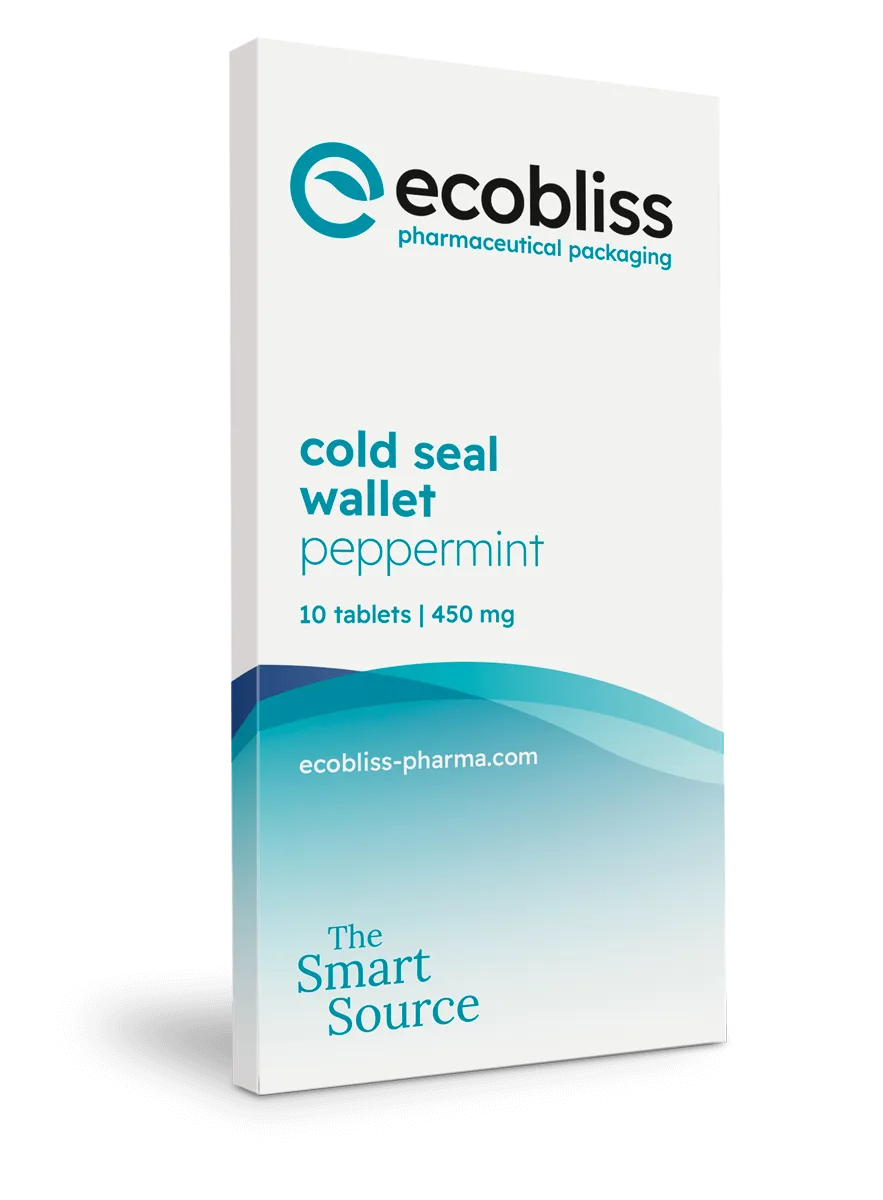
When more space is required for patient instructions, the primary barrier itself does not necessarily have to change. A well-designed wallet or carton can easily accommodate guidance, dosing steps, and essential brand information right around the blister. In this setup, the primary pack remains entirely focused on product protection, while the secondary packaging actively supports patient usability. A cold-seal blister wallet is an excellent example of how additional information space can seamlessly surround a compact blister format.
Physical review is highly beneficial in these situations, as overall stiffness, opening feel, and daily pack handling are simply easier to judge in the hand. Teams wishing to compare user experiences before embarking on a tailored development path can always request a blister wallet sample for a practical, hands-on review.
FAQ about mono-material blister design
Is a mono-material blister always recyclable? No. While the design may theoretically fit into a recycling stream more cleanly, local collection methods, sorting technologies, and existing recycling infrastructure still dictate the actual result.
Is an aluminium-free blister always the better choice? No. Highly sensitive medicines often require much stronger moisture or oxygen protection, meaning barrier necessities must always take precedence.
Can a recyclable pharmaceutical primary packaging claim be made early? No. Such claims should strictly follow rigorous assessment and testing. You must first secure reliable data on product stability, film forming, seal strength, and finished pack integrity.
Does PPWR blister design imply one standard solution? No. Future readiness ultimately depends on the specific packaging structure, the target market, and the available recycling routes. Any claim about regulatory readiness should only follow a thorough pack assessment.
What is the best first step when reviewing mono-material blister packaging? Start directly with product stability data, shelf-life targets, and specified storage conditions. This approach establishes a clear baseline for deciding whether the concept should advance into physical forming and sealing trials.
Embracing a mono-material format can be a highly useful direction, provided the product formulation allows it. However, the order of development decisions still matters profoundly. Start with stability, prove the seal integrity, test the finished pack, and only then discuss potential recyclability. If the barrier result proves too weak, restructure the pack design and ensure the medicine remains thoroughly protected above all else.
Request a free sample now!