


Protective packaging in pharma is the umbrella term for everything that keeps the medicine safe between manufacturing and patient use. The interesting question isn't which protective features are out there, it's which features actually solve which threats. Most overspending in pharma packaging comes from layering defenses against problems the product doesn't have.
The four main threats
Pharmaceutical products fail in transit or storage from four broad causes. Each calls for different protective features.
Environmental degradation. Moisture, oxygen, light, temperature. Different APIs degrade at different rates from each. The protective answer is barrier materials matched to the stability profile.
Mechanical damage. Tablets crushing, glass vials breaking, foil tearing. The protective answer is structural cushioning at the secondary or tertiary level.
Tampering and counterfeiting. Pack opened or substituted in transit. The protective answer is tamper-evidence plus serialization.
Patient misuse. Wrong dose, wrong patient, accidental ingestion by children. The protective answer is unit dose packaging, child-resistance, and adherence design.
Material-based protection
Different materials defend against different threats:
Aluminum foil. Highest moisture, oxygen, and light barrier in pharma packaging. The default for hygroscopic, photosensitive, or oxygen-sensitive APIs. Used as lidding on thermoformed blisters or as cold-formed Alu-Alu.
PVDC-coated plastics. Mid-range moisture barrier, much better than PVC alone. Cost-effective for moderately sensitive APIs.
ACLAR. High moisture barrier with light protection.
Glass. Inert, doesn't react with the product, gas-tight. Default for sterile injectables and lyophilized products.
Tyvek. Porous to sterilization gas but blocks bacteria. Default for medical device sterile barrier packaging.
Structural protection
Beyond materials, the pack geometry protects against mechanical damage:
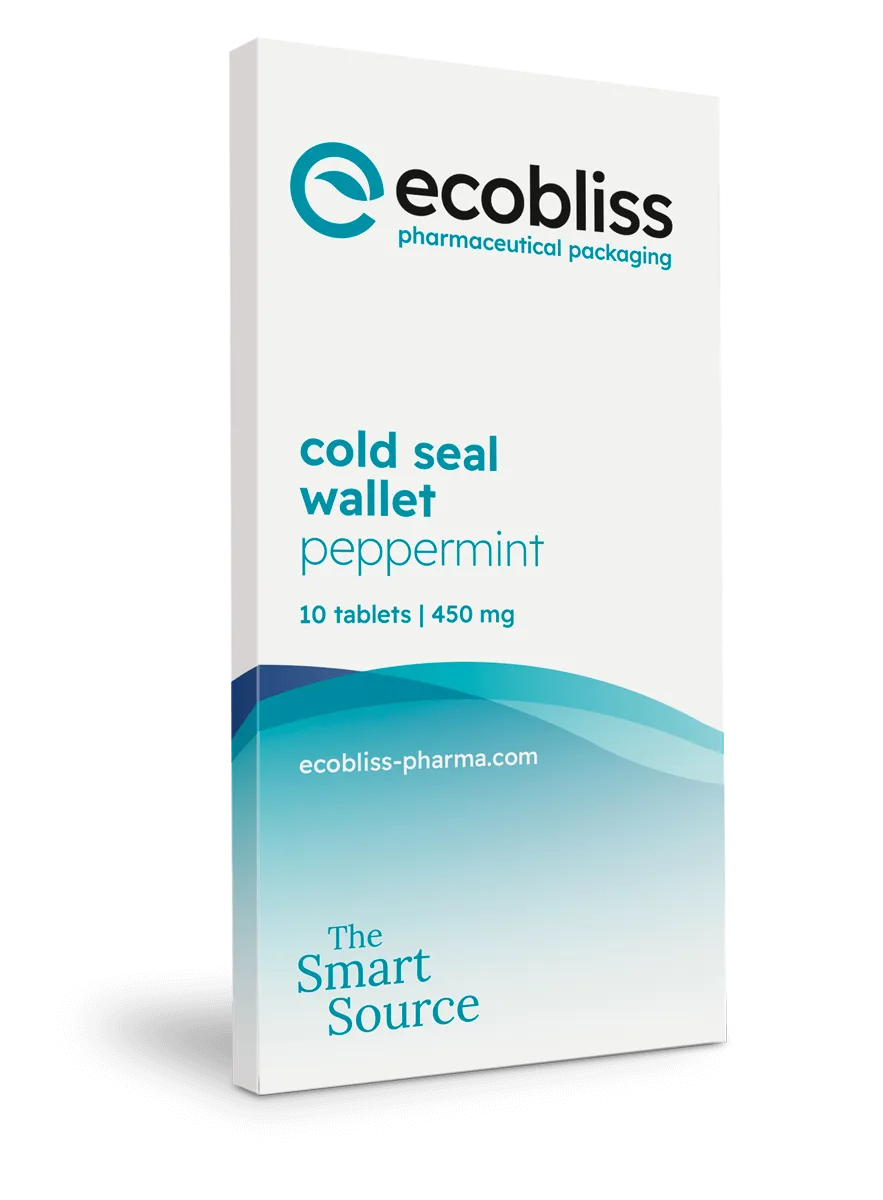
Cold seal wallets. The paperboard wallet adds a rigid outer layer that resists crushing and protects the blister inside. Cold seal blister wallets are the format we use most for chronic medications.
Cushioned thermoformed trays. For medical devices and ampoules, custom cavity shapes hold the product tightly to prevent movement in transit.
Folding cartons. Standard outer packaging that adds structural support to the primary pack inside.
Tamper-evidence and serialization
Required by EU FMD since 2019 for prescription medicines: a tamper-evidence device plus a 2D Data Matrix code. Common implementations include foil seals, tamper bands, and shrink wrap. Read more about tamper-evident packaging in pharma.
Patient-side protection
Child-resistance, senior-friendly opening, adherence design. These protect against patient-side failure modes (accidental ingestion, missed doses, dosing errors). Locked4Kids handles the child-resistance side. Calendar wallets handle the adherence side.
How to spec the right protection
Start with the stability data. From there pick the material protection. Then layer in the structural, tamper-evidence, and patient-side features your product needs. Skip the layers your product doesn't need, otherwise you're over-engineering.
If you want a second opinion on a current pack spec, send us the brief. We'll point at the protection layers that actually matter for your product.
Request a free sample now!
.avif)


